
Go Unlimited with Magzter GOLD
Get unlimited access to 10,000+ magazines, newspapers and Premium stories for just
Try GOLD - Free
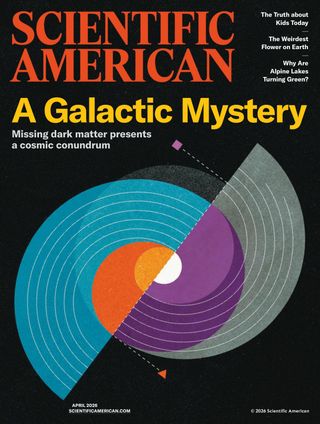
A Galactic Mystery
Scientific American
|April 2026
Dwarf galaxies without dark matter present a cosmic conundrum
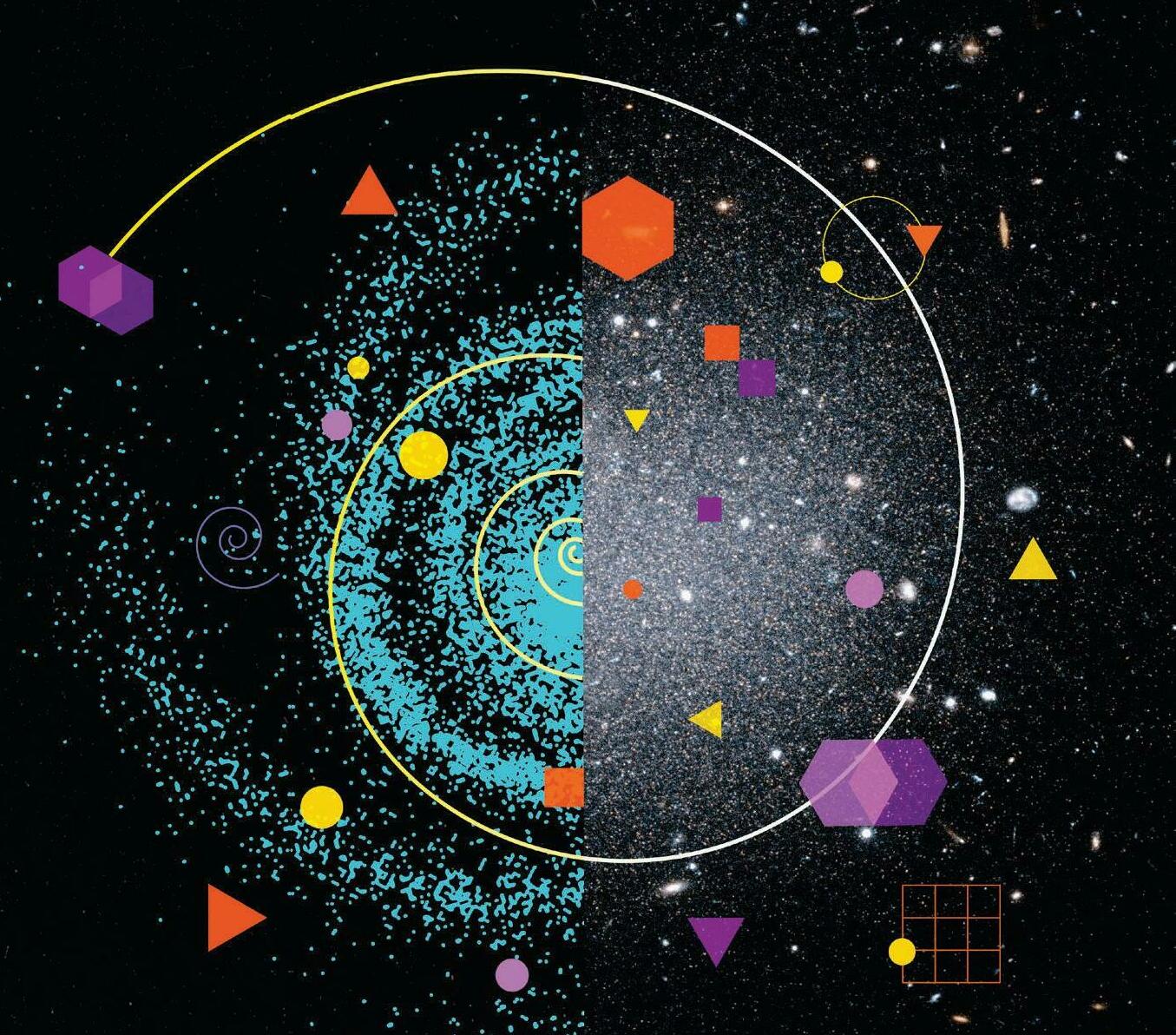
THE FIRST TIME I HEARD ABOUT GALAXIES without dark matter, I was sitting in my very first graduate class at the University of São Paulo. It was 2018, and the discovery had just been announced. A team had found a small, strange galaxy that appeared to lack dark matter, the invisible material that was thought to make up most of the matter in the universe and considered essential to the formation, evolution and stability of galaxies. The find was big enough that it made it to Brazilian television.
Our professor used the news to open the semester. It sparked months of discussions. Dwarf galaxies—smaller, puffier conglomerations of stars than spiral galaxies such as the Milky Way—were long thought to be dominated by dark matter. Could they actually form and survive without it? Was the result real, or could it reflect flawed assumptions or uncertainties? Were we witnessing a problem in our models of galaxy formation?
Again and again we returned to a deceptively simple but surprisingly hard question: What defines a galaxy? It turns out there’s no single answer. For example, in 2011 two astronomers, Duncan Forbes of Swinburne University in Australia and Pavel Kroupa of the University of Bonn in Germany, conducted a survey called What Is a Galaxy? Their results highlighted just how varied the definition can be, even among experts. Most astronomers agree on these basics: galaxies are massive, gravitationally bound systems of stars, gas and dust, with an important but poorly understood complement of dark matter. The provocative discovery of a galaxy that apparently lacked this invisible stuff called that definition into question.

This story is from the April 2026 edition of Scientific American.
Subscribe to Magzter GOLD to access thousands of curated premium stories, and 10,000+ magazines and newspapers.
Already a subscriber? Sign In
MORE STORIES FROM Scientific American

Scientific American
The Business of Space Weather
A company aims to offer better forecasts based on a new solar model

7 mins
April 2026
Scientific American
Mindless Sleep
Even without brains, sea anemones and jellyfish can sleep like humans do
1 min
April 2026

Scientific American
THE KIDS ARE ALL RIGHT
Young people are doing better than you think
12 mins
April 2026

Scientific American
Something in THE WATER
Pristine alpine lakes are being choked by algal blooms. The culprit is in the air
9 mins
April 2026

Scientific American
A Dose of Prevention
New alert systems and biomarkers are spotting drug- induced kidney damage early, before irreversible harm
6 mins
April 2026

Scientific American
Life on the Edge
Kidney damage can progress for years without symptoms. The newly diagnosed cope with everything from restrictive diets to the emotional and logistical toll of dialysis
9 mins
April 2026

Scientific American
Stopping an Autoimmune Attack
IgA nephropathy, a frequent cause of kidney failure, is underdiagnosed. New treatments mean it's more important now to find those who will benefit
8 mins
April 2026
Scientific American
Mindless Sleep
Even without brains, sea anemones and jellyfish can sleep like humans do
4 mins
April 2026

Scientific American
Microbes Afloat
BACTERIA AND THE VIRUSES that infect them are perpetually at war. Their deadly clashes push both kinds of microbes to evolve new traits that meet the challenges of every environment they inhabit, from the human digestive tract to the seafloor’s hydrothermal vents— and even the harsh conditions of space.
2 mins
April 2026

Scientific American
The Strangest Bloom
Research reveals how the corpse flower came by its peculiar traits
9 mins
April 2026
Listen
Translate
Change font size