Try GOLD - Free
A Dose of Prevention
Scientific American
|April 2026
New alert systems and biomarkers are spotting drug- induced kidney damage early, before irreversible harm
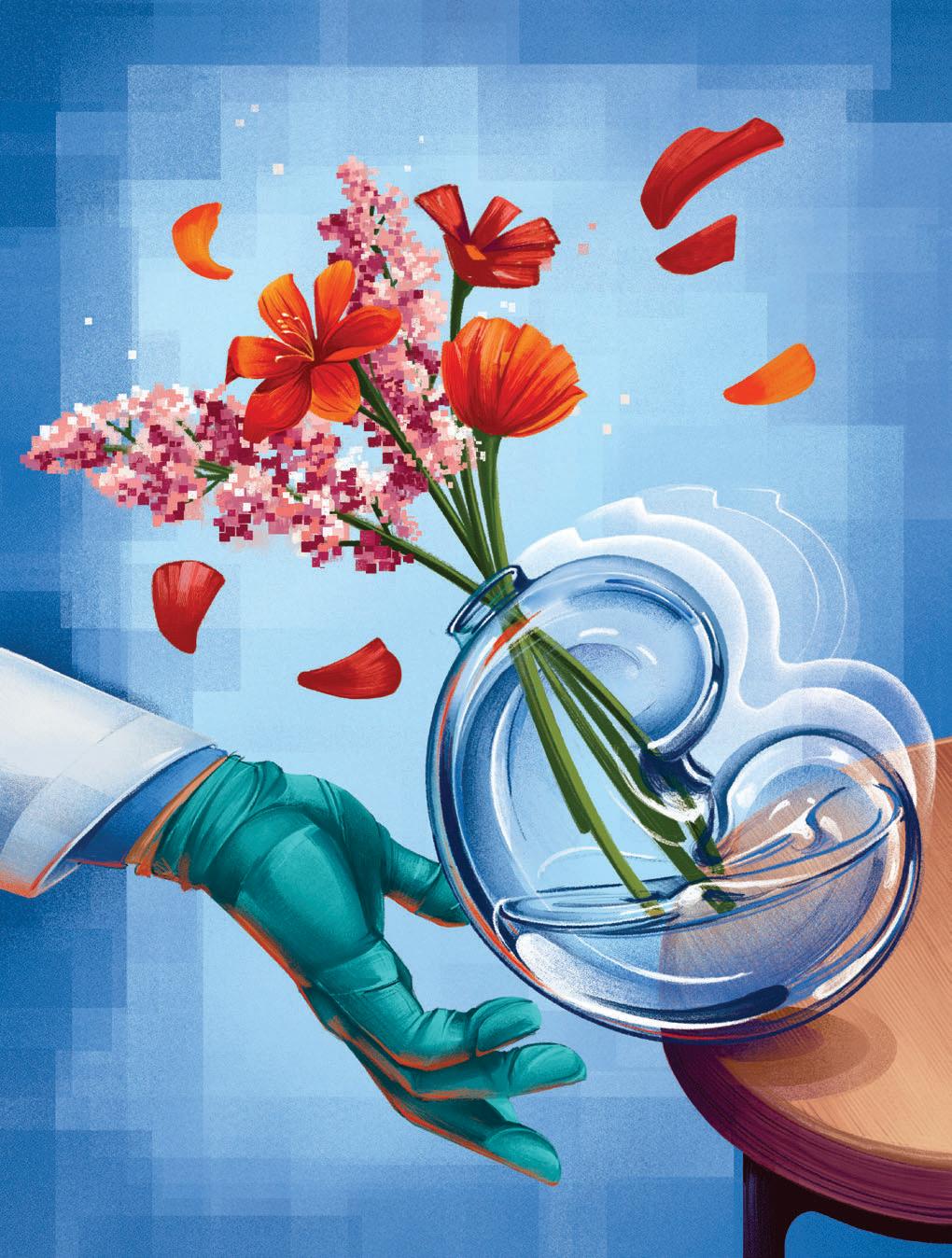
DENNIS MOLEDINA ENCOUNTERED a common problem during his training in nephrology, the specialty dedicated to kidney health. Many of the patients he saw had acute kidney injury that had been caused not directly by a disease but by a prescribed medication. Each encounter sparked a series of questions for Moledina: Should they stop the problem medicine? Was there a drug they could add to the regimen to protect the patient's kidneys? Should they biopsy the organs to determine the cause?
Acute kidney injury (AKI) is a sudden change in the kidneys' ability to filter waste products from the blood, and it affects approximately one in 10 hospitalized patients—a number that jumps to more than five in 10 for those in intensive care. But the condition often causes no pain or discomfort, and clinicians have few warning signs.
Drugs, including common antibiotics and painkillers, may treat ailments such as infections but harm the kidneys and worsen the overall problem. Some of these illnesses impair renal function as well. By the time blood levels of creatinine—a protein the kidneys typically remove—are high enough to grab a clinician's attention, it's often too late. Irreversible kidney damage has already begun. Because of the multitude of possible causes, identifying the real reason for drug-induced AKI in hospitalized people can be incredibly complex, and the condition is still underrecognized.
Historically, researchers and clinicians assumed that the kidneys healed when someone stopped taking medications and recovered from hospitalization. They would monitor patients during treatment—for instance, while they were taking a limited course of antibiotics—but didn't think short-term changes in creatinine resulted in lasting damage, says nephrologist Matthew James of the University of Calgary.

This story is from the April 2026 edition of Scientific American.
Subscribe to Magzter GOLD to access thousands of curated premium stories, and 10,000+ magazines and newspapers.
Already a subscriber? Sign In
MORE STORIES FROM Scientific American

Scientific American
Let There Be Weapons
The Department of Energy’s new Genesis Mission promises AI-accelerated discovery. Seven of its first 26 challenges focus on nuclear weapons and national security

4 mins
July/August 2026

Scientific American
How to Fix Science
The federal funding system for scientific research in the U.S. needs reform
9 mins
July/August 2026

Scientific American
Robots Can Now Fold Your Laundry
Home-helper tasks are becoming easier for robotic assistants
4 mins
July/August 2026

Scientific American
50, 100 & 150 Years
NATURAL FISSION REACTOR
3 mins
July/August 2026

Scientific American
Anna Ho
Describing the characteristics of short-lived astrophysical events
1 mins
July/August 2026

Scientific American
THE SOLILOQUY OF SCHRÖDINGER'S CAT
A MEDITATION ON LIFE AND THE VON NEUMANN–WIGNER INTERPRETATION OF QUANTUM MECHANICS
1 min
July/August 2026

Scientific American
Mikhail Kolmogorov
Developing software to reveal large genetic changes that lead to cancer
1 mins
July/August 2026

Scientific American
Jaye Gardiner
Learning how the matrix around cells and tissues impacts cancers
1 mins
July/August 2026

Scientific American
Timnit Gebru
On safeguarding independent research in the age of big tech
3 mins
July/August 2026

Scientific American
A Youthful Illusion Sharpens Memory
By making people feel as if their face is a younger version of itself, researchers can bring childhood memories into sharper focus
4 mins
July/August 2026
Listen
Translate
Change font size