Try GOLD - Free
How to Fix Science
Scientific American
|July/August 2026
The federal funding system for scientific research in the U.S. needs reform
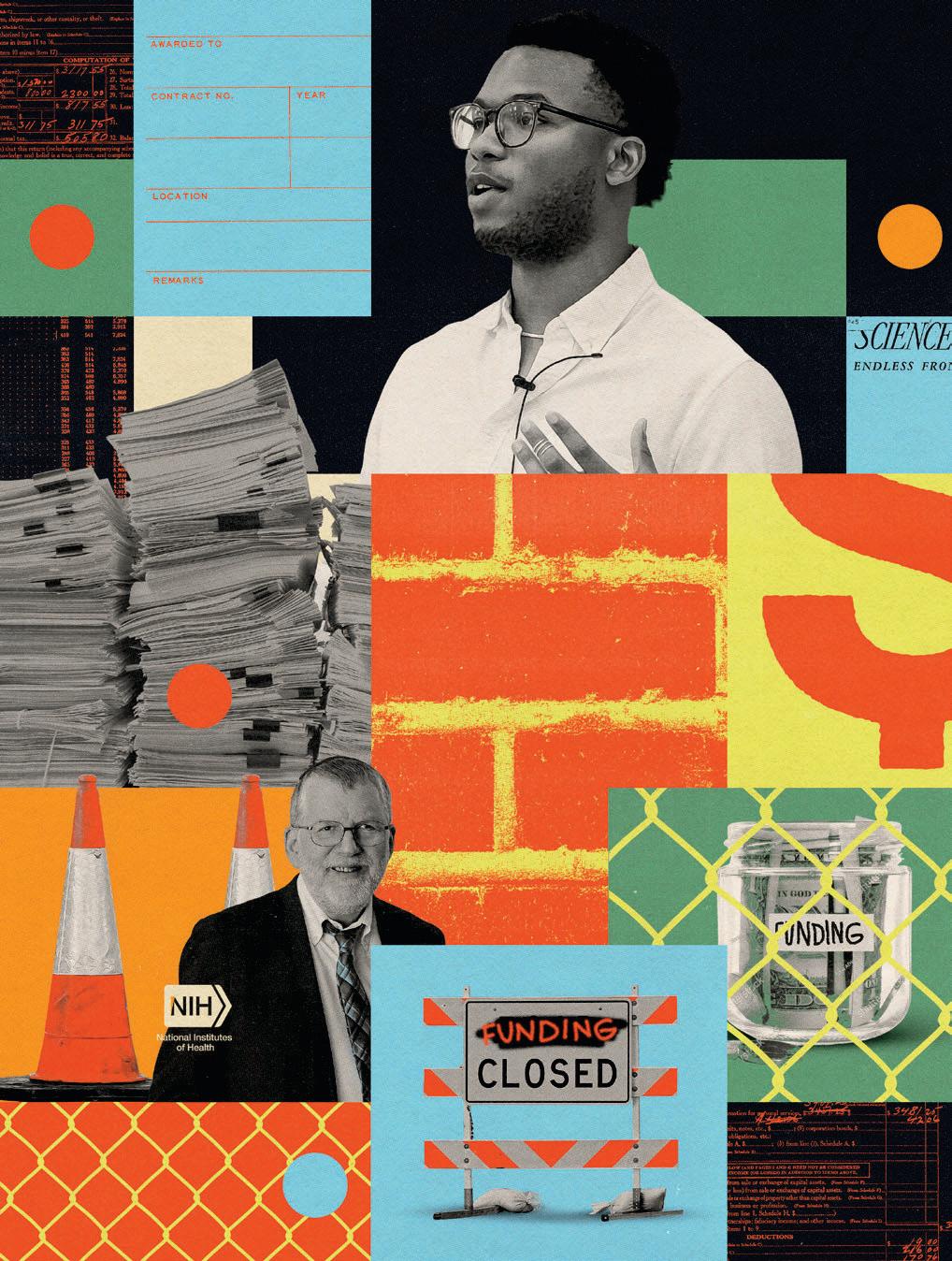
MICHAEL GREEN HADN'T PLANNED TO START his scientific career by confronting the head of the National Institutes of Health. But his research funding was unexpectedly stalled at the science Goliath, and its chief, the health economist and Trump administration appointee Jay Bhattacharya, was taking questions.
On the February 26 episode of the science podcast Why Should I Trust You?, the head of the federal biomedical institution was giving a “message to early-career researchers” and fielding their queries. Green asked via recorded message why his NIH grant—funding, first awarded in 2024, to investigate the reasons sick people don’t seek medical care—was now held up. His grant officer had reached out last July, giving him a week to remove “any DEI language” from the project. Green, then a 26-year-old Ph.D. student at Duke University, didn’t know what that meant—and his grant officer couldn't tell him.
He tried removing the word “Black” from his proposal, as well as links to studies showing that many Black patients felt discriminated against in doctor’s offices. But four months later, he still was waiting. “I went into this thinking, ‘There’s a chance that [Bhattacharya] hears this and then just decides to terminate the project, and that’ll be a disaster,’” Green says. But he wanted clarity on his future.
With the grant portion of his salary for 2026 in limbo, Green, who graduated from his Ph.D. program last December, was bartending without health insurance or better job prospects. He is not the only one facing uncertainty. For many scientists working during the second Trump administration, the old rules have changed.
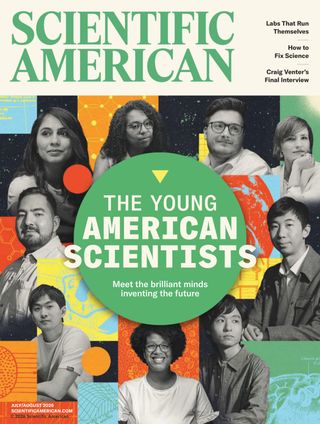

This story is from the July/August 2026 edition of Scientific American.
Subscribe to Magzter GOLD to access thousands of curated premium stories, and 10,000+ magazines and newspapers.
Already a subscriber? Sign In
MORE STORIES FROM Scientific American
Scientific American
Let There Be Weapons
The Department of Energy’s new Genesis Mission promises AI-accelerated discovery. Seven of its first 26 challenges focus on nuclear weapons and national security

4 mins
July/August 2026

Scientific American
How to Fix Science
The federal funding system for scientific research in the U.S. needs reform
9 mins
July/August 2026

Scientific American
Robots Can Now Fold Your Laundry
Home-helper tasks are becoming easier for robotic assistants
4 mins
July/August 2026

Scientific American
50, 100 & 150 Years
NATURAL FISSION REACTOR
3 mins
July/August 2026

Scientific American
Anna Ho
Describing the characteristics of short-lived astrophysical events
1 mins
July/August 2026

Scientific American
THE SOLILOQUY OF SCHRÖDINGER'S CAT
A MEDITATION ON LIFE AND THE VON NEUMANN–WIGNER INTERPRETATION OF QUANTUM MECHANICS
1 min
July/August 2026

Scientific American
Mikhail Kolmogorov
Developing software to reveal large genetic changes that lead to cancer
1 mins
July/August 2026

Scientific American
Jaye Gardiner
Learning how the matrix around cells and tissues impacts cancers
1 mins
July/August 2026

Scientific American
Timnit Gebru
On safeguarding independent research in the age of big tech
3 mins
July/August 2026

Scientific American
A Youthful Illusion Sharpens Memory
By making people feel as if their face is a younger version of itself, researchers can bring childhood memories into sharper focus
4 mins
July/August 2026
Listen
Translate
Change font size