Try GOLD - Free
Microbes Afloat
Scientific American
|April 2026
BACTERIA AND THE VIRUSES that infect them are perpetually at war. Their deadly clashes push both kinds of microbes to evolve new traits that meet the challenges of every environment they inhabit, from the human digestive tract to the seafloor’s hydrothermal vents— and even the harsh conditions of space.
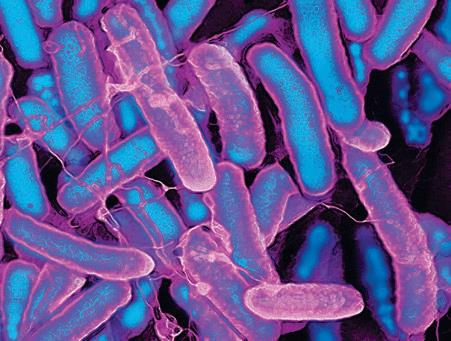
To see how microgravity changes certain microbes, researchers sent bacteria-infecting viruses called bacteriophages to the International Space Station, and they found that the viruses adapted in ways that made them even more effective at infection.
In the experiment, detailed in PLOS Biology, the team incubated specimens of common lab bacteriophage T7 alongside its foe, Escherichia coli bacteria, for varying durations. They ran the same experiment on Earth and in space; the terrestrially reared viruses infected bacteria within two to four hours, but those in space took more than four hours to breach bacteria’s defenses. The infection took longer in orbit because microgravity is an unfamiliar stressor to which both microbes must adapt, the researchers suggest.

This story is from the April 2026 edition of Scientific American.
Subscribe to Magzter GOLD to access thousands of curated premium stories, and 10,000+ magazines and newspapers.
Already a subscriber? Sign In
MORE STORIES FROM Scientific American
Scientific American
Let There Be Weapons
The Department of Energy’s new Genesis Mission promises AI-accelerated discovery. Seven of its first 26 challenges focus on nuclear weapons and national security

4 mins
July/August 2026

Scientific American
How to Fix Science
The federal funding system for scientific research in the U.S. needs reform
9 mins
July/August 2026

Scientific American
Robots Can Now Fold Your Laundry
Home-helper tasks are becoming easier for robotic assistants
4 mins
July/August 2026
Scientific American
50, 100 & 150 Years
NATURAL FISSION REACTOR
3 mins
July/August 2026

Scientific American
Anna Ho
Describing the characteristics of short-lived astrophysical events
1 mins
July/August 2026
Scientific American
THE SOLILOQUY OF SCHRÖDINGER'S CAT
A MEDITATION ON LIFE AND THE VON NEUMANN–WIGNER INTERPRETATION OF QUANTUM MECHANICS
1 min
July/August 2026

Scientific American
Mikhail Kolmogorov
Developing software to reveal large genetic changes that lead to cancer
1 mins
July/August 2026

Scientific American
Jaye Gardiner
Learning how the matrix around cells and tissues impacts cancers
1 mins
July/August 2026

Scientific American
Timnit Gebru
On safeguarding independent research in the age of big tech
3 mins
July/August 2026
Scientific American
A Youthful Illusion Sharpens Memory
By making people feel as if their face is a younger version of itself, researchers can bring childhood memories into sharper focus
4 mins
July/August 2026
Listen
Translate
Change font size