Try GOLD - Free
Asylum
Outlook
|August 21, 2025
Although the how, where and when to treat mental illness are now better understood in India, the 'why' continues to be obscure
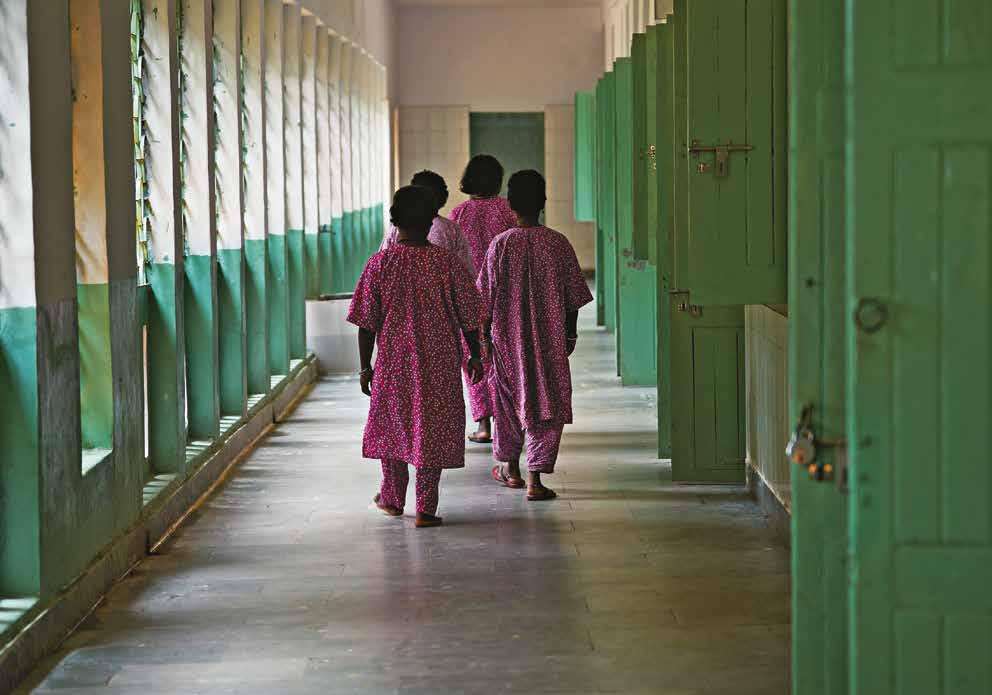
IN a damning criticism of the colonial government, a prominent psychiatrist pointed out in 1937 that “it would be difficult for the most jingoistic to affirm that, in the matter of provision for mental disorder in India, in India, the British ‘bearing of the white man’s burden’ has been quite adequate.” But have we, as an independent nation, done a better job?
The mentally ill have always been with us; and every known historical account recounts those who behaved in a mad manner. For millennia, the ‘why’ of ‘why do people go mad’ was debated, and in the absence of any other obvious observable evidence, it was assumed that it was the work of the Devil, or the consequence of moral or religious transgression. All societies and religions assumed that only these could cause a fall from grace, which altered a person in thought and deed to the extent that they could be considered beyond the pale, devoid of humanness, and thus lose their place in society.
It was only a few hundred years ago—prompted by the dramatic change in our thinking about the natural world—that sickness and disease began to be understood as a natural phenomenon. The laws of physics, chemistry and biology, and the instruments that were invented (thermometer, microscope, stethoscope, etc.) could help record the temperature of the body, measure gases in respired air, and even detect bacteria in pus. The mythical fear of illness vanished, and it simply became a problem to be solved. The appearance of doctors, who practised this new natural science in hospitals, where the sick could be treated, was thus a recent modern invention.

This story is from the August 21, 2025 edition of Outlook.
Subscribe to Magzter GOLD to access thousands of curated premium stories, and 10,000+ magazines and newspapers.
Already a subscriber? Sign In
MORE STORIES FROM Outlook
Outlook
Bloodlines Against Soulness
The Transgender Persons Amendment Bill puts a question mark over the existence and identity of the queer community

6 mins
April 11, 2026

Outlook
Iron Iran
In the fourth week of the war on Iran, the issue has moved from regime change to the territorial integrity of the nation
5 mins
April 11, 2026

Outlook
Chennai Express
M.K. Stalin has succeeded in reframing the political contest in Tamil Nadu as one between Dravidianism and its ideological adversaries
8 mins
April 11, 2026

Outlook
The Discreet Charm of the Glitterati
As a thick mist envelops an abandoned ‘haveli’, a single lightman stands shining a light on an ethereal subject, who appears to be emerging from thin air.
4 mins
April 11, 2026

Outlook
Didi in Her Favourite Shoes
As the political spotlight shifts to Special Intensive Revision deletions, Mamata Banerjee gets a breather—instead of answering uncomfortable questions over her 15-year rule, she is getting to ask questions
8 mins
April 11, 2026

Outlook
The Right in the Left
For Pinarayi Vijayan, who has ruled Kerala's political stage for nearly three decades, politics appears, above all, to be about power: power within the party, and power for the party
8 mins
April 11, 2026

Outlook
"For USA, the Entire Globe is a Chessboard"
The coordinated attack on Iran by the US and Israeli military forces has major ramifications for the future shape of global politics.
6 mins
April 11, 2026

Outlook
Centralised Dravidian
Doubts about the AIADMK's future have grown stronger and talk of the end of the Dravidian binary has resurfaced. Will this election be another watershed like 1967?
5 mins
April 11, 2026

Outlook
Un-necessary War
Beyond Islam, there is the pride of an ancient Persian civilisation that infuses Iranian identity. Unfortunately, the Americans have arrogantly belittled the power of memories
5 mins
April 11, 2026

Outlook
Man of Many Words
Himanta Biswa Sarma was not placed on the throne of Assam's governance. He arrived there, navigating parties, positions and ideological contradictions, adjusting swiftly and deftly as the political ground shifted in the eastern state. What has remained constant is his instinct for power and his ability to stay a step ahead of the politics he helps ferment
10 mins
April 11, 2026
Listen
Translate
Change font size