
Passez à l'illimité avec Magzter GOLD
Obtenez un accès illimité à plus de 9 000 magazines, journaux et articles Premium pour seulement
Essayer OR - Gratuit
Asylum
Outlook
|August 21, 2025
Although the how, where and when to treat mental illness are now better understood in India, the 'why' continues to be obscure
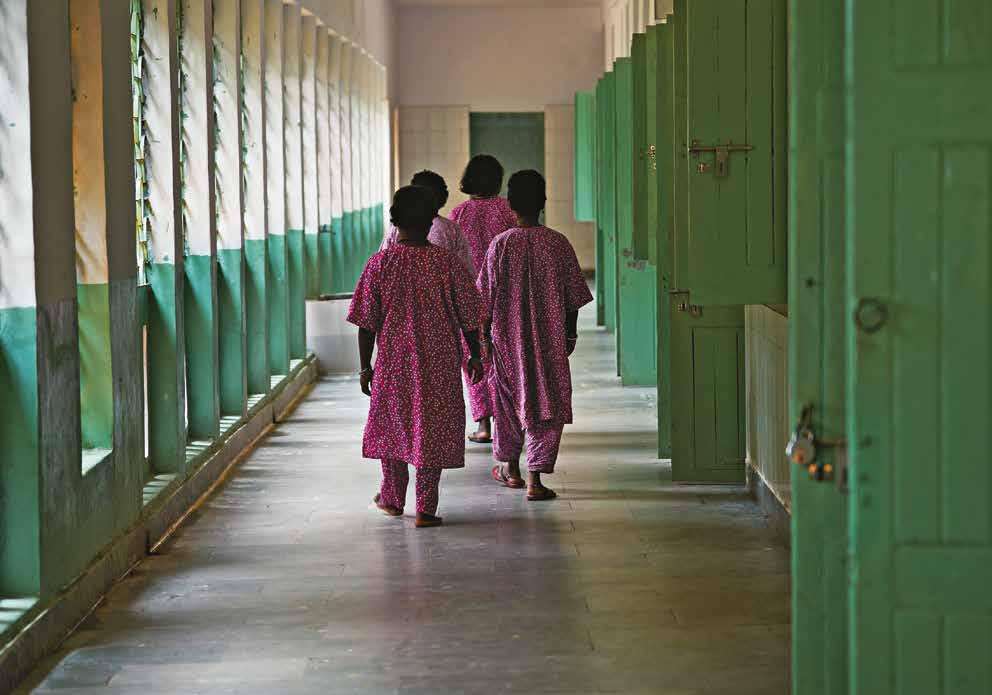
IN a damning criticism of the colonial government, a prominent psychiatrist pointed out in 1937 that “it would be difficult for the most jingoistic to affirm that, in the matter of provision for mental disorder in India, in India, the British ‘bearing of the white man’s burden’ has been quite adequate.” But have we, as an independent nation, done a better job?
The mentally ill have always been with us; and every known historical account recounts those who behaved in a mad manner. For millennia, the ‘why’ of ‘why do people go mad’ was debated, and in the absence of any other obvious observable evidence, it was assumed that it was the work of the Devil, or the consequence of moral or religious transgression. All societies and religions assumed that only these could cause a fall from grace, which altered a person in thought and deed to the extent that they could be considered beyond the pale, devoid of humanness, and thus lose their place in society.
It was only a few hundred years ago—prompted by the dramatic change in our thinking about the natural world—that sickness and disease began to be understood as a natural phenomenon. The laws of physics, chemistry and biology, and the instruments that were invented (thermometer, microscope, stethoscope, etc.) could help record the temperature of the body, measure gases in respired air, and even detect bacteria in pus. The mythical fear of illness vanished, and it simply became a problem to be solved. The appearance of doctors, who practised this new natural science in hospitals, where the sick could be treated, was thus a recent modern invention.


Cette histoire est tirée de l'édition August 21, 2025 de Outlook.
Abonnez-vous à Magzter GOLD pour accéder à des milliers d'histoires premium sélectionnées et à plus de 9 000 magazines et journaux.
Déjà abonné ? Se connecter
PLUS D'HISTOIRES DE Outlook

Outlook
'Why GDP Growth Doesn't Always Translate Into Votes'
The recent election results have once again shown that economic growth alone does not guarantee electoral victory.

3 mins
June 06, 2026

Outlook
Lights, Camera, Othering
The establishment of Israel has been accompanied by a national cinema devoted to negating and erasing the Palestinian Other
5 mins
June 06, 2026

Outlook
Goodbye to All That
Booker-winning British author Julian Barnes' Departure(s) is a unique hybrid work: playful, philosophical, whimsical
4 mins
June 06, 2026

Outlook
Collapse of Trust
As the NEET-UG 2026 paper leak forced the cancellation of India’s biggest medical entrance exam, more than 22 lakh aspirants find themselves trapped in uncertainty
11 mins
June 06, 2026

Outlook
NO LONGER A TWELFTH MAN
Bihar cricket, which has languished in the shadows for long, is all set to improve its strike rate, thanks to Vaibhav Sooryavanshi, the new Bihari kid on the block
5 mins
June 06, 2026

Outlook
BLAZE OF GLORY
The challenges of being a celebrity cricketer at a young age can be tough to handle
5 mins
June 06, 2026

Outlook
THE SWASHBUCKLERS
A new generation of fearless stars is emerging and finding its feet at the very top of an extremely competitive cricketing environment
5 mins
June 06, 2026

Outlook
THE TEEN TORNAD
At the age of 15, Vaibhav Sooryavanshi is already a cricketing legend
10 mins
June 06, 2026

Outlook
A Journey to Remember
The prerecorded message crackled over the din in the compartment: ‘Welcome to the Shatabdi Express.
4 mins
June 06, 2026

Outlook
Crossing Borders
Ruth Martin is the translator of German-Iranian author Shida Bazyar’s novel The Nights are Quiet in Tehran (originally written in German), which has been shortlisted for the 2026 International Booker Prize.
4 mins
June 06, 2026
Listen
Translate
Change font size