Poging GOUD - Vrij
Asylum
Outlook
|August 21, 2025
Although the how, where and when to treat mental illness are now better understood in India, the 'why' continues to be obscure
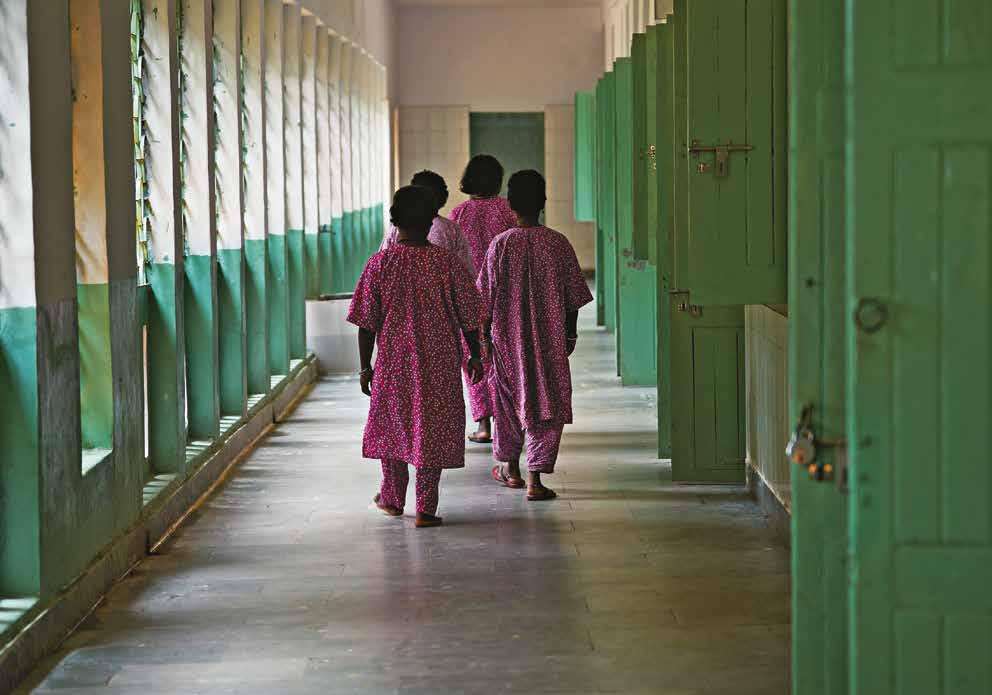
IN a damning criticism of the colonial government, a prominent psychiatrist pointed out in 1937 that “it would be difficult for the most jingoistic to affirm that, in the matter of provision for mental disorder in India, in India, the British ‘bearing of the white man’s burden’ has been quite adequate.” But have we, as an independent nation, done a better job?
The mentally ill have always been with us; and every known historical account recounts those who behaved in a mad manner. For millennia, the ‘why’ of ‘why do people go mad’ was debated, and in the absence of any other obvious observable evidence, it was assumed that it was the work of the Devil, or the consequence of moral or religious transgression. All societies and religions assumed that only these could cause a fall from grace, which altered a person in thought and deed to the extent that they could be considered beyond the pale, devoid of humanness, and thus lose their place in society.
It was only a few hundred years ago—prompted by the dramatic change in our thinking about the natural world—that sickness and disease began to be understood as a natural phenomenon. The laws of physics, chemistry and biology, and the instruments that were invented (thermometer, microscope, stethoscope, etc.) could help record the temperature of the body, measure gases in respired air, and even detect bacteria in pus. The mythical fear of illness vanished, and it simply became a problem to be solved. The appearance of doctors, who practised this new natural science in hospitals, where the sick could be treated, was thus a recent modern invention.

Dit verhaal komt uit de August 21, 2025-editie van Outlook.
Abonneer u op Magzter GOLD voor toegang tot duizenden zorgvuldig samengestelde premiumverhalen en meer dan 9000 tijdschriften en kranten.
Bent u al abonnee? Aanmelden
MEER VERHALEN VAN Outlook

Outlook
Turbulence in Tehran
To ignore or lampoon the attempts in Iran against the rule of clerics shrinks the space for the anti-imperialist Left to challenge other political ideologies, such as Hindutva

5 mins
March 21, 2026

Outlook
Not in Our Name
HE should have first corrected his own vices and then given us advice”.
3 mins
March 21, 2026
Outlook
Epic Faux Pas
For Iran, survival is victory. The martyrdom of Khamenei has had a rallying effect, and its strategy is built on domestic civil-military endurance and regional-global deterrence
6 mins
March 21, 2026

Outlook
'Winter Will One Day be Past'
This book is a true testament of friendship and an act of solidarity
4 mins
March 21, 2026
Outlook
‘Nolite Te Bastardes Carborundorum (Don't let the bastards grind you down)
\"There is more than one kind of freedom,\" said Aunt Lydia. \"Freedom to and freedom from.
4 mins
March 21, 2026

Outlook
Zan. Zendegi. Azadi
Are Trump and Netanyahu really interested in liberating Iranian women through this war?
5 mins
March 21, 2026

Outlook
Bruno ki Betiyaan
Whether future regimes sustain, reshape, or compete with Bihar's maternal welfare architecture will determine how deeply Nitish Kumar's political legacy shapes the state's democratic future
4 mins
March 21, 2026

Outlook
Capitalism Redux
The Global South must learn from the West Asian crisis that the persistence of neoliberalism alongside hyper-nationalism leads to brutality and genocidal war
4 mins
March 21, 2026
Outlook
The JNU Files
The immediate backdrop to the recent showdown at Jawaharlal Nehru University lay in earlier tensions
7 mins
March 21, 2026

Outlook
What is Trump's Endgame?
The Iran war looks like a high-stakes attempt by the US and Israel to reshape the balance of power in West Asia
6 mins
March 21, 2026
Listen
Translate
Change font size