
Gå ubegrenset med Magzter GOLD
Få ubegrenset tilgang til over 9000 magasiner, aviser og premiumhistorier for bare
Workouts Help to Treat Cancer
Scientific American
|November 2025
Exercise improves survival, limits recurrence, and can be used with surgery and drugs
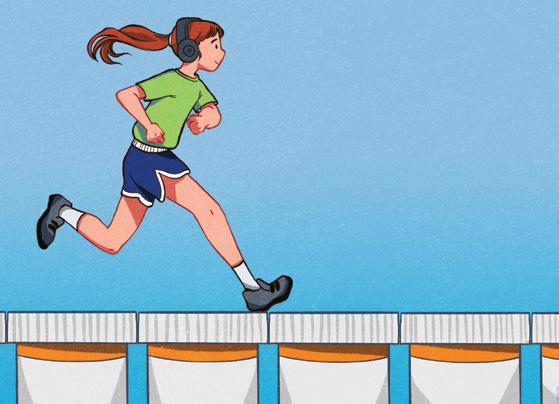
TO IMPROVE THE QUALITY of life of people with cancer, oncologists have regularly recommended exercise. Staying fit can make patients feel and function better. But exercise itself was never considered a formal treatment for the disease.
“The thinking in the medical community was that you need biomedical interventions—surgery, radiation therapy, drugs—to treat cancer,” says Kerry Courneya, a professor of kinesiology at the University of Alberta who studies physical activity and cancer.
That thinking is changing.
This year strong evidence emerged that exercise lengthens survival times and lowers recurrence risk for several cancer types. Such benefits are usually ascribed to medicine or surgery. But “exercise treats cancer as well as, if not better than, some of the current drugs that we’re offering our patients,” says Courneya, who led the first large randomized, controlled trial of the effects of workouts on cancer outcomes. It was published in July in the New England Journal of Medicine and involved more than 800 colon cancer patients. Participants with stage 3 and high-risk stage 2 cancer were assigned to a structured exercise program in addition to their oncology care. In a 10-year followup period, these people had a 28 percent lower risk of cancer recurrence, new cancers or death than similar patients who received only educational material about physical activity.

Denne historien er fra November 2025-utgaven av Scientific American.
Abonner på Magzter GOLD for å få tilgang til tusenvis av kuraterte premiumhistorier og over 9000 magasiner og aviser.
Allerede abonnent? Logg på
FLERE HISTORIER FRA Scientific American

Scientific American
Probiotic Hope and Hype
Despite their popularity, supplements with billions of \"good\" microbes help only a few illnesses, research shows

3 mins
January 2026
Scientific American
Mondays Really Are More Stressful
The start of the workweek can be a biologically measurable stressor, with consequences for long-term health that can stretch into retirement
4 mins
January 2026

Scientific American
Tiny Display
An e-paper breakthrough brings extremely high-resolution color
2 mins
January 2026
Scientific American
Fine-Feathered Snack
A bat's tracker documents a dramatic midair hunt
2 mins
January 2026

Scientific American
OUR ROBOTIC PICTURE
Will mechanical helpers ever be commonplace at home, at work and beyond?
11 mins
January 2026

Scientific American
"Use Your Words" Can Be Good for Kids' Health
Writing or expressing feelings can help adults mentally and physically. Kids are no different
5 mins
January 2026
Scientific American
Distant Diplomacy
Unrelated species “talk” and understand one another to avoid threats
2 mins
January 2026

Scientific American
Behind the Nobel
A 2025 winner reflects on the mysterious T cells that won him the prize
5 mins
January 2026

Scientific American
A Suite of Killers
Heart ailments, kidney diseases and type 2 diabetes actually may be part of just one condition. It's called CKM syndrome
10 mins
January 2026
Scientific American
Static Launch
Tiny worms leap toward their fruit fly hosts with an electric “tractor beam”
3 mins
January 2026
Listen
Translate
Change font size