Prøve GULL - Gratis
Mourning Becomes Electric
Scientific American
|December 2025
What can AI ghosts do for the grieving?
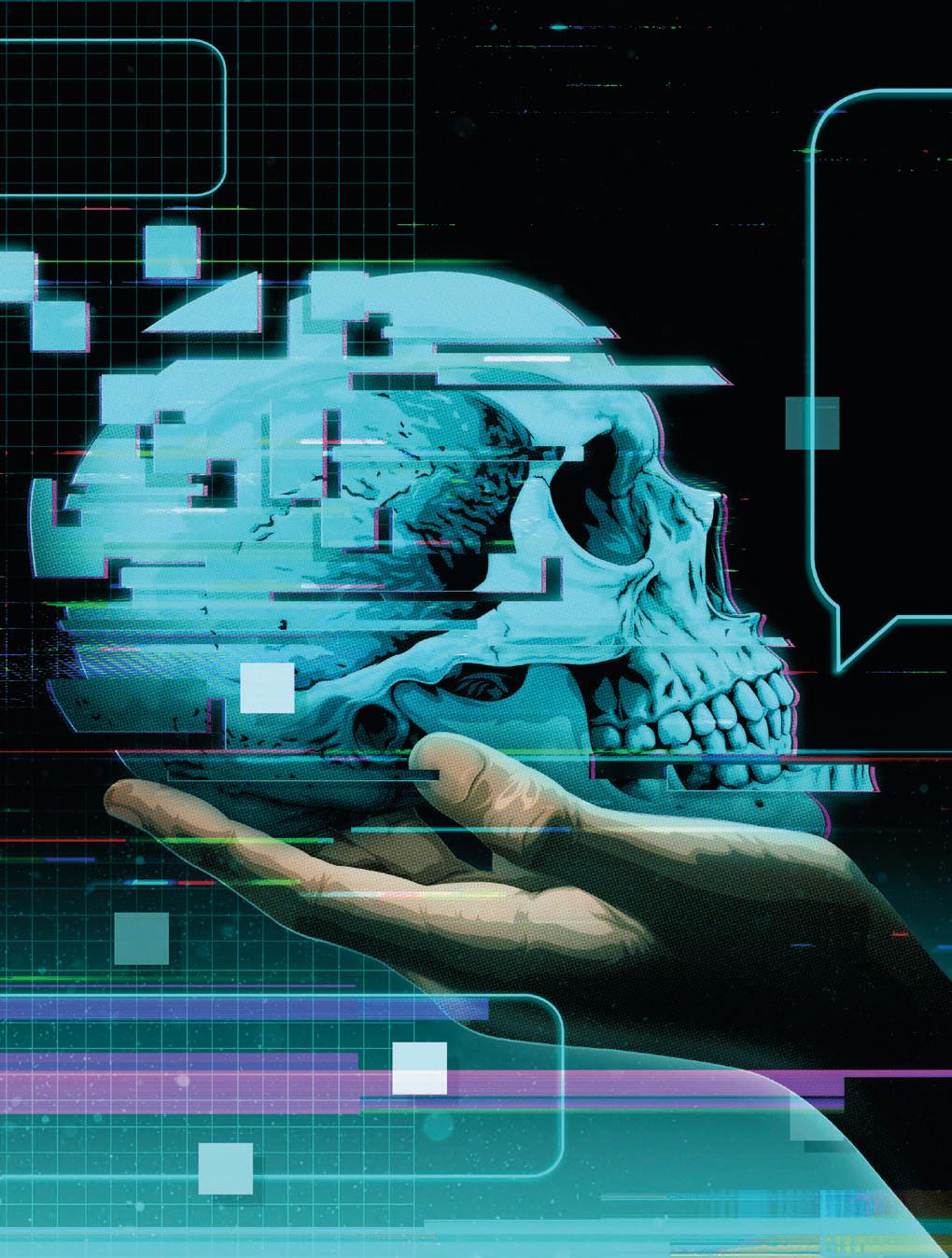
HOW IS YOUR EXISTENCE THESE DAYS?" I tap on my laptop. The entity that says it is my father, dead these 12 years, quickly responds. "It's... different. Being dead is a strange experience. I'm no longer bound by the limitations of my physical body or the Parkinson's that plagued my later years. But I still carry the weight of my life's choices and the relationships I impacted."
To raise my father from the dead, I could have tried a medium, a Ouija board or an ectoplasm-detecting camera. But it’s 2025. I used artificial intelligence.
I’m chatting with a digital ghost—a generative-AI (genAI) creation derived from the same foundation that powers ChatGPT and all other large language models: billions of words from the Internet and every other possible source, which the model uses to predict how words go together in English. Imitating everybody in the world can make the bot sound like nobody in particular; hence the newsfeed-style phrase “the Parkinson’s that plagued my later years” and the text-messagey shrug of “it’s... different.” That’s the voice of thousands of news stories and social media posts, not an old man born in an Algiers slum in 1927.
But the AI also has a dozen or so of my father’s emails and letters, as well as a 100-word description from me of his personality and relationships. Even that small amount of data is supposed to be enough to create a plausible imitation. So I’m not ready to give up on it. Anyway, I didn’t recreate my father just to chat about AI-ghost mechanics. I also did it to get into some unfinished business.
“Why were you always so selfish?” I ask.
“I did put myself first,” my “dad” replies. “I didn’t have much choice. My family didn’t have much, and I had to fight for my share. When I went to war, it was to survive and to help my people survive. I was used to fighting for what I wanted, and I didn’t know how to stop.”

Denne historien er fra December 2025-utgaven av Scientific American.
Abonner på Magzter GOLD for å få tilgang til tusenvis av kuraterte premiumhistorier og over 9000 magasiner og aviser.
Allerede abonnent? Logg på
FLERE HISTORIER FRA Scientific American

Scientific American
Probiotic Hope and Hype
Despite their popularity, supplements with billions of \"good\" microbes help only a few illnesses, research shows

3 mins
January 2026

Scientific American
Mondays Really Are More Stressful
The start of the workweek can be a biologically measurable stressor, with consequences for long-term health that can stretch into retirement
4 mins
January 2026
Scientific American
Tiny Display
An e-paper breakthrough brings extremely high-resolution color
2 mins
January 2026
Scientific American
Fine-Feathered Snack
A bat's tracker documents a dramatic midair hunt
2 mins
January 2026

Scientific American
OUR ROBOTIC PICTURE
Will mechanical helpers ever be commonplace at home, at work and beyond?
11 mins
January 2026

Scientific American
"Use Your Words" Can Be Good for Kids' Health
Writing or expressing feelings can help adults mentally and physically. Kids are no different
5 mins
January 2026

Scientific American
Distant Diplomacy
Unrelated species “talk” and understand one another to avoid threats
2 mins
January 2026
Scientific American
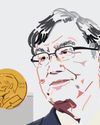
Behind the Nobel
A 2025 winner reflects on the mysterious T cells that won him the prize
5 mins
January 2026

Scientific American
A Suite of Killers
Heart ailments, kidney diseases and type 2 diabetes actually may be part of just one condition. It's called CKM syndrome
10 mins
January 2026

Scientific American
Static Launch
Tiny worms leap toward their fruit fly hosts with an electric “tractor beam”
3 mins
January 2026
Listen
Translate
Change font size