Prøve GULL - Gratis
Flashes in the Night
Scientific American
|January 2026
Celestial transients shine furiously and briefly. Astronomers are just beginning to understand them
Ann Finkbeiner is a science writer based in Baltimore. She specializes in writing about astronomy and cosmology, grief, women in science, and the intersection of science and national security. She is co-proprietor of the science blog The Last Word on Nothing.
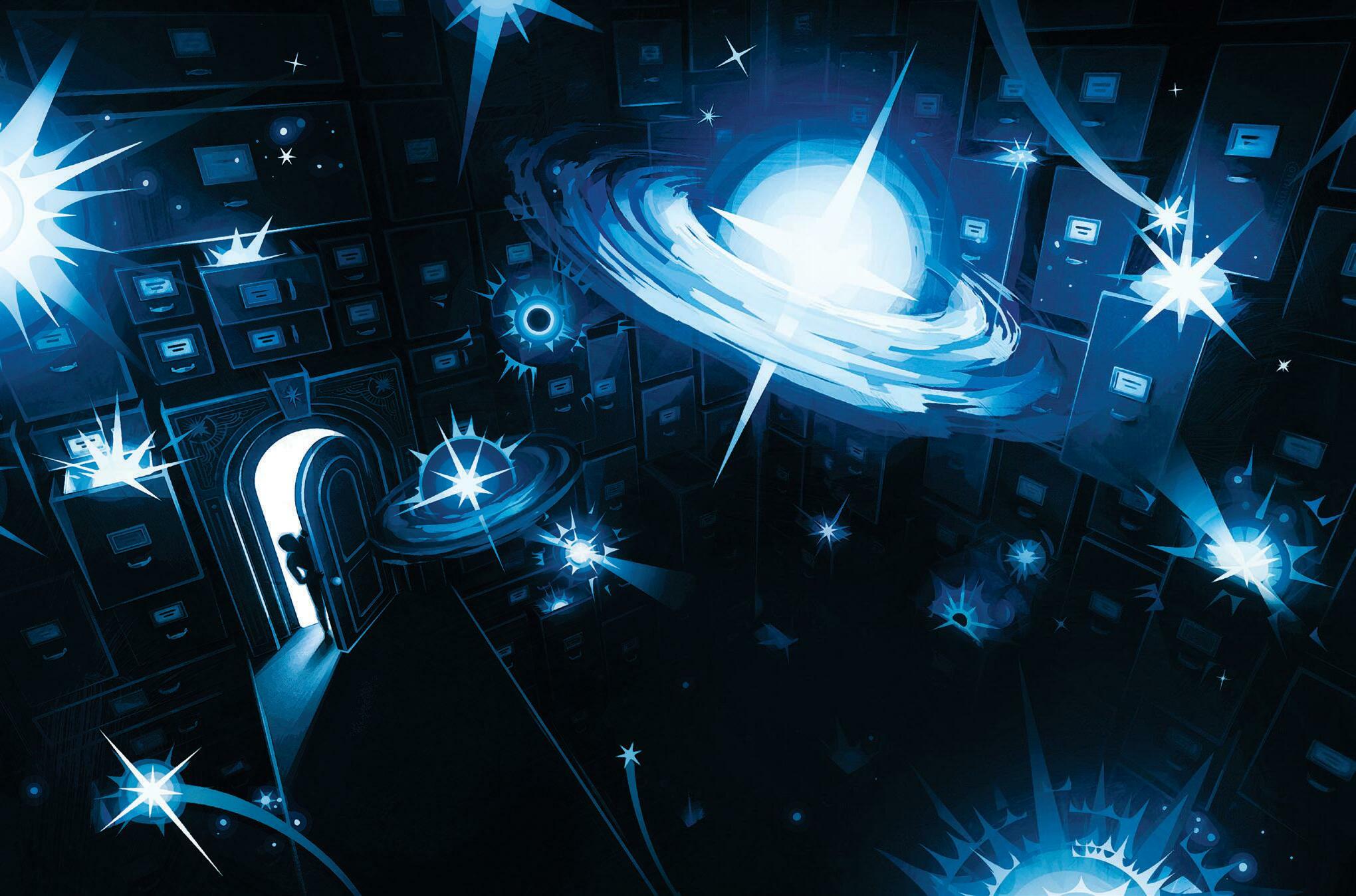
LONG, LONG AGO A CLOUD OF STARS CIRCLED A GALAXY-SIZE BLACK HOLE, safely at a distance. Then about 200 million years ago one member of the cloud bumped another, a sun-size star, and sent it toward the black hole. The black hole was a million times more massive than the sun-size star, and its gravitational pull proportionately stronger, so the star was drawn closer and closer—until it got too close. Some of the star's gas was pulled into an orbiting stream around the black hole that widened into a flat pancake called an accretion disk. The rest of the star came apart in a sudden and great flash of light.
On September 19, 2019, just before noon, the flash reached the 1.2-meter mirror of the Zwicky Transient Facility in southern California. Astronomers named the flash AT2019qiz and noted that they hadn't seen it three days before. On September 25, 2019, the 10-meter Keck I telescope in Hawaii identified AT2019qiz as a so-called tidal disruption event—a flareup that occurs when a black hole's gravitational tides rip a small object apart. The star the size of the sun exploded with 10 billion times the sun's luminosity.

Denne historien er fra January 2026-utgaven av Scientific American.
Abonner på Magzter GOLD for å få tilgang til tusenvis av kuraterte premiumhistorier og over 9000 magasiner og aviser.
Allerede abonnent? Logg på
FLERE HISTORIER FRA Scientific American

Scientific American
Probiotic Hope and Hype
Despite their popularity, supplements with billions of \"good\" microbes help only a few illnesses, research shows

3 mins
January 2026
Scientific American
Mondays Really Are More Stressful
The start of the workweek can be a biologically measurable stressor, with consequences for long-term health that can stretch into retirement
4 mins
January 2026
Scientific American
Tiny Display
An e-paper breakthrough brings extremely high-resolution color
2 mins
January 2026
Scientific American
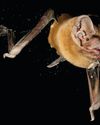
Fine-Feathered Snack
A bat's tracker documents a dramatic midair hunt
2 mins
January 2026

Scientific American
OUR ROBOTIC PICTURE
Will mechanical helpers ever be commonplace at home, at work and beyond?
11 mins
January 2026
Scientific American
"Use Your Words" Can Be Good for Kids' Health
Writing or expressing feelings can help adults mentally and physically. Kids are no different
5 mins
January 2026
Scientific American
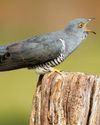
Distant Diplomacy
Unrelated species “talk” and understand one another to avoid threats
2 mins
January 2026
Scientific American
Behind the Nobel
A 2025 winner reflects on the mysterious T cells that won him the prize
5 mins
January 2026

Scientific American
A Suite of Killers
Heart ailments, kidney diseases and type 2 diabetes actually may be part of just one condition. It's called CKM syndrome
10 mins
January 2026
Scientific American
Static Launch
Tiny worms leap toward their fruit fly hosts with an electric “tractor beam”
3 mins
January 2026
Listen
Translate
Change font size