Try GOLD - Free
The catalyst within
Down To Earth
|October 01, 2025
HORMONES NOT ONLY SHAPE ONE'S HEALTH, BUT HAVE LIKELY IMPACTED GLOBAL EVENTS
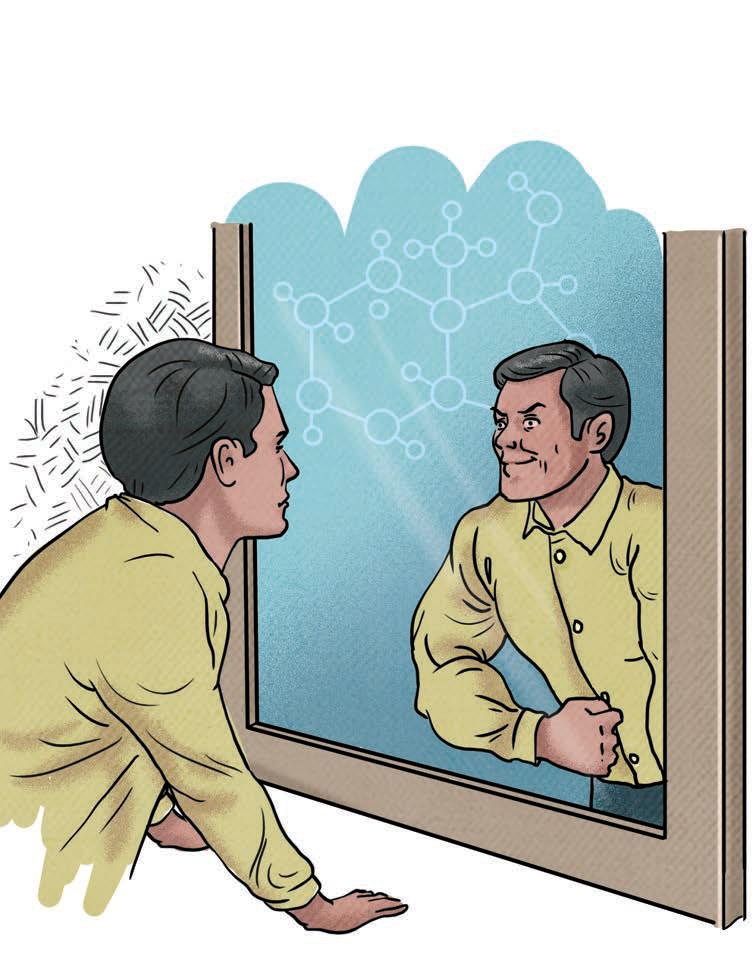
IF YOU are a history enthusiast, chances are that you would have heard of the Cuban missile crisis, the 1962 standoff between the US and the erstwhile Soviet Union that brought the world on the verge of a nuclear war. But what you might not be aware of is that hormones—chemicals that circulate in the bloodstream to carry messages or signals to different parts of the body—are likely to have precipitated the crisis.
The year was 1961. American President John F Kennedy, who had taken office just a few months ago, and Soviet prime minister Nikita Khrushchev met in Austria to discuss nuclear proliferation and the status of the German city of Berlin, which was controlled post World War II by the US and its allies (West Berlin) and the Soviet Union (East Berlin). Kennedy, who had Addison's disease—a chronic condition characterised by low production of the hormone cortisol—could not get his cortisol shot for a prolonged period since Khrushchev turned up late to the meeting. As Kennedy waited, he probably experienced fatigue, muscle weakness and low mood due to decreasing cortisol levels. Khurshchev, who did not know of Kennedy's ailment since the affliction had not been revealed to the public, took Kennedy to be weak and defensive, hypothesises author Max Nieuwdorp in The Power of Hormones. This is the reason for the Russian leader's misadventure of setting up missiles in Cuba, resulting in a naval blockade of the island nation by the US, writes Nieuwdorp.

This story is from the October 01, 2025 edition of Down To Earth.
Subscribe to Magzter GOLD to access thousands of curated premium stories, and 10,000+ magazines and newspapers.
Already a subscriber? Sign In
MORE STORIES FROM Down To Earth

Down To Earth
BEYOND COLLATERAL DAMAGE
Recent geopolitical conflicts are urging a reconsideration of what constitutes environmental harm in war and the limits of existing legal frameworks

3 mins
April 01, 2026

Down To Earth
Masterstroke
Residents of a small Kerala town reject an inadequate state-led development blueprint and create their own master plan that prioritises protection of historic water systems and urban commons
4 mins
April 01, 2026

Down To Earth
Rethinking E20
It is pertinent to explore potential of ethanol as high-value industrial feedstock
4 mins
April 01, 2026
Down To Earth
Food in the age of climate change
WHEN WE eat, we contribute to climate change. But food is also about livelihoods, about nutrition and about nature.
3 mins
April 01, 2026

Down To Earth
FADING WINTER
India's winters are warming, becoming shorter, shifting and spilling beyond their traditional bounds. The consequences are already evident in meltwater availability, forest-fire intensity and changes in flowering cycles and insect behaviour.
20 mins
April 01, 2026
Down To Earth
War on Iran strikes India's pharmaceuticals sector
Shortages of critical raw materials and rising input costs for the drug industry will have global consequences
4 mins
April 01, 2026

Down To Earth
POWER IN AN AGE OF INSECURITY
Energy transition is no longer solely about emission reduction but also about energy security
3 mins
April 01, 2026
Down To Earth
Re-discovery of fuelwood
THE WEST Asia conflict has made visible a multi-billion dollar energy market in India.
2 mins
April 01, 2026

Down To Earth
A CASE THAT RESHAPED INDIA'S ENVIRONMENT
The case of MC Mehta v Union of India stands as proof that a proactive judiciary can accelerate action even when the executive drags its feet
4 mins
April 01, 2026
Down To Earth
FOREVER DEPENDENT
India depends on global fertiliser supply chains for 70 per cent of its needs, leaving its food security exposed to geopolitical disruptions
6 mins
April 01, 2026
Listen
Translate
Change font size