Try GOLD - Free
DEEP UNKNOWN
Down To Earth
|April 01, 2023
The Earth's core works as an engine to generate heat for natural processes and produce the planet's magnetism. But as this iron-rich layer gradually solidifies into a ball, what will happen to the planet's habitability? As the world drills into and analyses the Earth's interiors, certain clues about its evolution and state emerge.

THE SECRET that drives the Earth's habitability lies some 2,000-6,000 kilometres below our feet in the core of the planet. We know that the innermost layer of the Earth is slowly turning solid, and as it does, it radiates heat that generates a magnetic field which rises to surround and protect the planet. But all our understandings on the core are based on just hypothesis; there is so much about the Earth's heart that eludes us.
In fact, the world has seen more success in space than in understanding its own planet. US space agency NASA's Voyager 1 spacecraft, launched in 1977, has travelled 23 billion km from the Earth. In contrast, the deepest hole drilled into the planet's surface is just 12.2 km (more on this later). What makes it difficult to conduct physical studies of the core is the unforgiving interiors of the Earth. Human bones could turn into dust at depths of 200 km. The base of the crust has a temperature of around 1,000°C, the bottom of the mantle is 3,000°C and the core is about 6,000°C. The pressure, too, could kill. Studies show it can range from 24-136 gigapascals (1 gigapascal or GPa is 1 billion pascals) in the lower mantle to 135-330 GPa in the outer core and 330-365 GPa in the inner core. Humans can only withstand up to a few thousand KPa (1 kilopascal or KPa is 0.012 GPa).
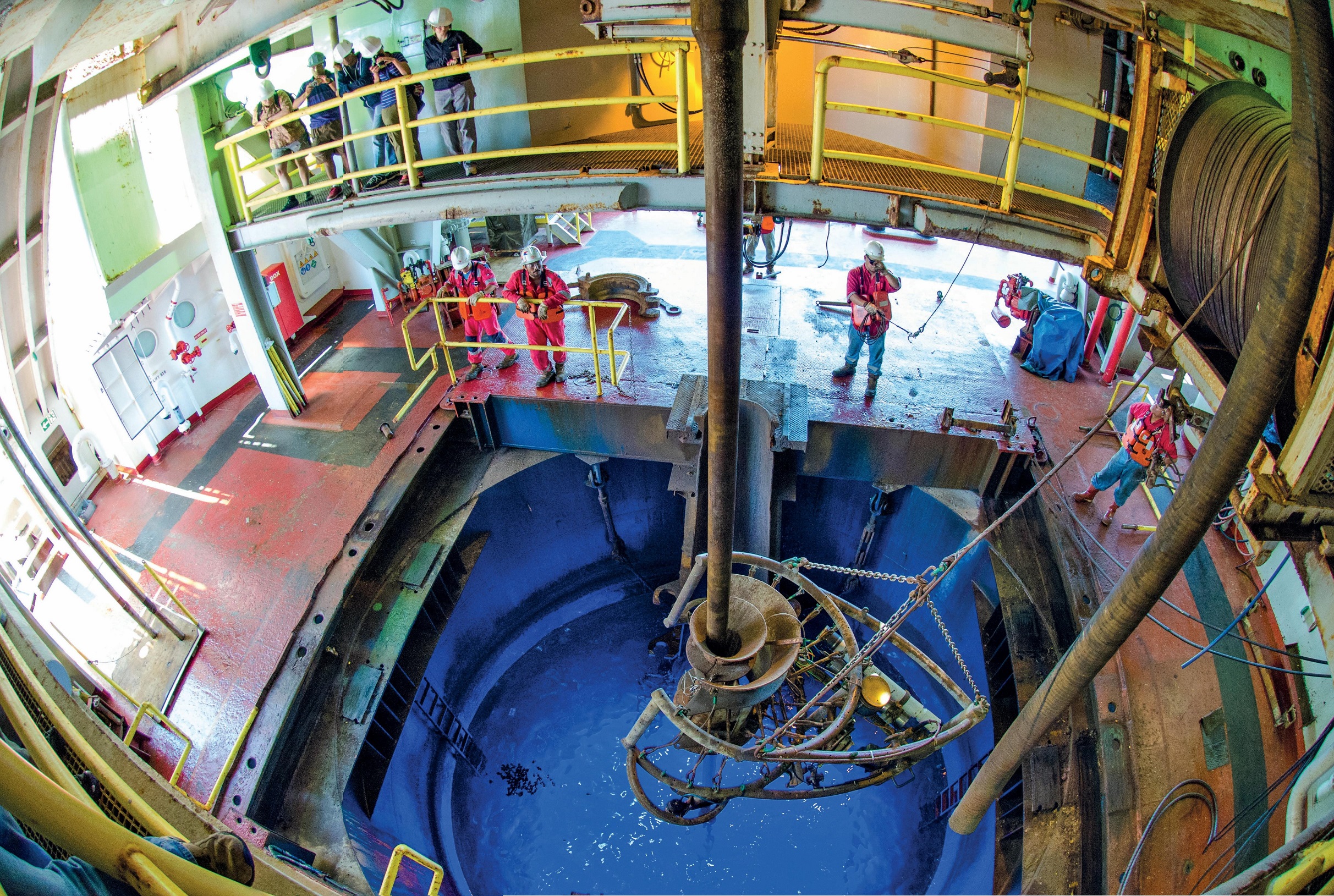
Therefore, any study that tries to throw some light on the functioning of the core is subject to abject scrutiny. Two such studies, published early this year, have triggered debate and discourse among scientists, while highlighting that we do not yet have the technological resources to reach the deep Earth and gain more concrete insights.

This story is from the April 01, 2023 edition of Down To Earth.
Subscribe to Magzter GOLD to access thousands of curated premium stories, and 10,000+ magazines and newspapers.
Already a subscriber? Sign In
MORE STORIES FROM Down To Earth
Down To Earth
Popular distrust
THE WORLD seems to be going through a period of stasis despite facing an unfathomable polycrisis.

2 mins
February 01, 2026

Down To Earth
CONSERVE OR PERISH
Periyar Tiger Reserve has rewritten Indian conservation by turning poachers into protectors and conflict into coexistence
5 mins
February 01, 2026

Down To Earth
'Rivers need to run free'
From Tibet to West Bengal, the Brahmaputra is the pulse of communities and ecosystems along its course. But what are the risks the river faces through human interventions, particularly dams, discusses journalist, author and filmmaker SANJOY HAZARIKA in his new book, River Traveller.
4 mins
February 01, 2026

Down To Earth
India is facing up to its innovation lag
There are signs now that India is acknowledging the superior strides made by China in a frontier technology like Al
4 mins
February 01, 2026

Down To Earth
Competing concerns
What are the repercussions of the EU-Mercosur pact that have made European farmers protest against the free trade agreement?
4 mins
February 01, 2026

Down To Earth
From fryer to flight
Sustainable fuel made from used cooking oil can play a pivotal role in helping India achieve its aviation emission reduction goals. Measures to collect this oil must be revamped
4 mins
February 01, 2026

Down To Earth
ACCESS OPEN
An amendment to India's nodal forest conservation law opens up forests across India to commercial exploitation by the paper industry
6 mins
February 01, 2026
Down To Earth
DRINK FROM TAP CAN BE A REALITY
As cities across India struggle to supply safe piped water, Odisha offers a success story
2 mins
February 01, 2026

Down To Earth
GREAT DRYING
The Earth is hotter than at any point in the past 100,000 years, with 2023-25 becoming the warmest three-year period on record and also breaching the 1.5°C threshold for the first time. One fallout is dwindling freshwater.
22 mins
February 01, 2026

Down To Earth
Green redemption
Restoration of grasslands of Kerala's Pampadum Shola National Park, once dominated by invasive Australian wattles, see a return of streams and native species
1 mins
February 01, 2026
Translate
Change font size