يحاول ذهب - حر
DEEP UNKNOWN
April 01, 2023
|Down To Earth
The Earth's core works as an engine to generate heat for natural processes and produce the planet's magnetism. But as this iron-rich layer gradually solidifies into a ball, what will happen to the planet's habitability? As the world drills into and analyses the Earth's interiors, certain clues about its evolution and state emerge.

THE SECRET that drives the Earth's habitability lies some 2,000-6,000 kilometres below our feet in the core of the planet. We know that the innermost layer of the Earth is slowly turning solid, and as it does, it radiates heat that generates a magnetic field which rises to surround and protect the planet. But all our understandings on the core are based on just hypothesis; there is so much about the Earth's heart that eludes us.
In fact, the world has seen more success in space than in understanding its own planet. US space agency NASA's Voyager 1 spacecraft, launched in 1977, has travelled 23 billion km from the Earth. In contrast, the deepest hole drilled into the planet's surface is just 12.2 km (more on this later). What makes it difficult to conduct physical studies of the core is the unforgiving interiors of the Earth. Human bones could turn into dust at depths of 200 km. The base of the crust has a temperature of around 1,000°C, the bottom of the mantle is 3,000°C and the core is about 6,000°C. The pressure, too, could kill. Studies show it can range from 24-136 gigapascals (1 gigapascal or GPa is 1 billion pascals) in the lower mantle to 135-330 GPa in the outer core and 330-365 GPa in the inner core. Humans can only withstand up to a few thousand KPa (1 kilopascal or KPa is 0.012 GPa).
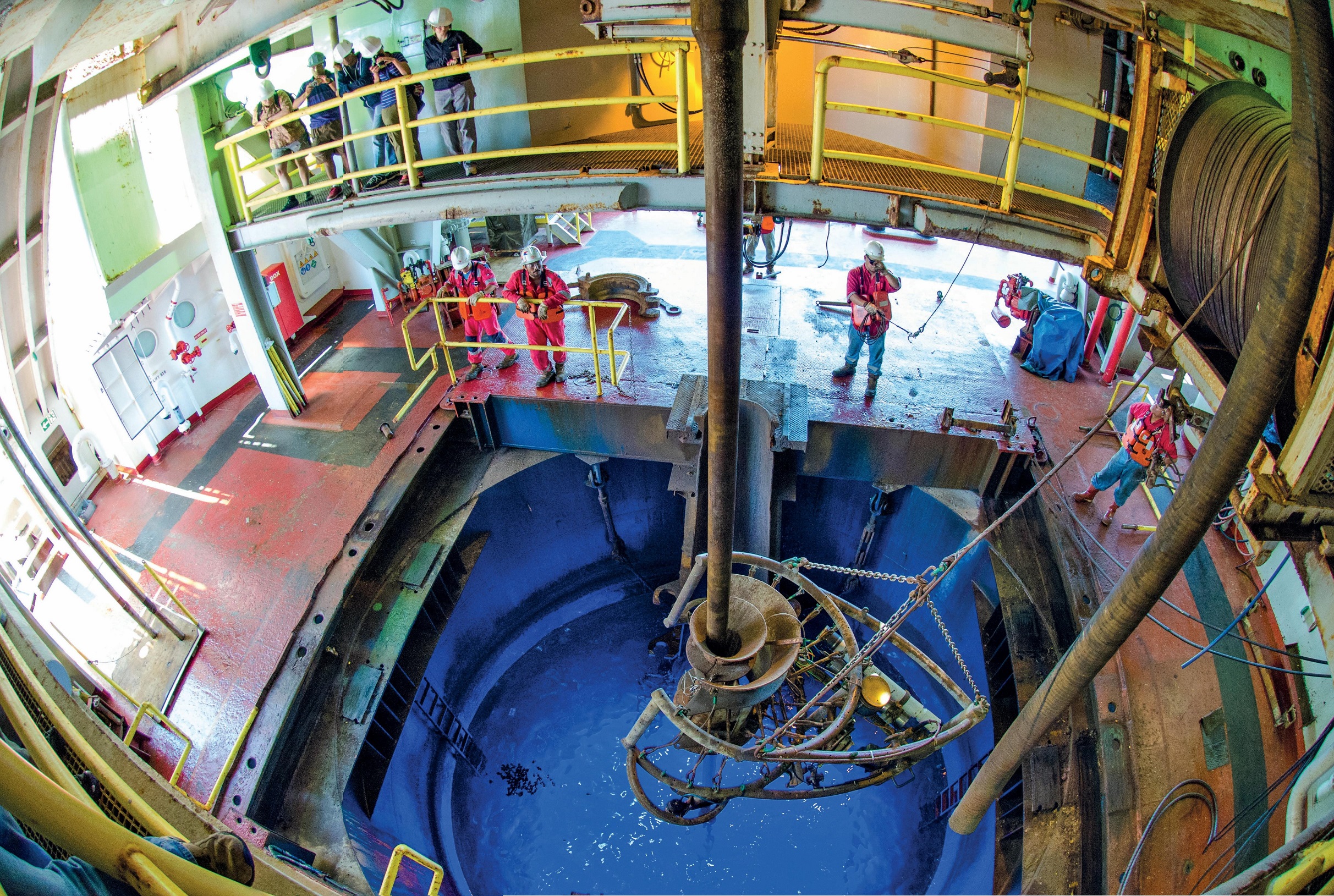
Therefore, any study that tries to throw some light on the functioning of the core is subject to abject scrutiny. Two such studies, published early this year, have triggered debate and discourse among scientists, while highlighting that we do not yet have the technological resources to reach the deep Earth and gain more concrete insights.

هذه القصة من طبعة April 01, 2023 من Down To Earth.
اشترك في Magzter GOLD للوصول إلى آلاف القصص المتميزة المنسقة، وأكثر من 9000 مجلة وصحيفة.
هل أنت مشترك بالفعل؟ تسجيل الدخول
المزيد من القصص من Down To Earth
Down To Earth
MAJESTIC SARUS STAGES COMEBACK
Involvement of farmers in conservation helps the sarus crane population soar in eastern Uttar Pradesh over the past decade

5 mins
June 16, 2026
Down To Earth
Global resistance to AI data centres hardens
India must learn how to regulate environmentally disastrous data centres that guzzle more water and power than entire nations
4 mins
June 16, 2026

Down To Earth
SUMMER SMOG
Ground-level ozone is one of the national capital's least appreciated public health threat
1 mins
June 16, 2026

Down To Earth
A FOREST IN WAIT
For five decades, Abujhmad in Chhattisgarh was closed to the country. Now, as the region opens up, ANIL ASHWANI SHARMA travels to villages in its dense forests to see how isolation has impacted the people and development
6 mins
June 16, 2026
Down To Earth
DON'T WASTE THE FUTURE
Policymakers may need to focus less on expanding programmes and more on improving their effectiveness and reach, suggests the latest NFHS-6 data
3 mins
June 16, 2026
Down To Earth
NEED A FOREST TRIBUNAL
A tribunal will provide people a dedicated independent forum where they will have a statutory right to approach
2 mins
June 16, 2026
Down To Earth
Moment or movement
ONE DEFINITION of the word metamorphosis in the dictionary is “a striking alteration in appearance, character, or circumstances”.
2 mins
June 16, 2026

Down To Earth
El Niño, amplified
As a possible super El Niño looms in 2026, scientists warn of devastations that may extend into 2027
6 mins
June 16, 2026

Down To Earth
A mindless denial
District level bodies are increasingly refusing tribal population's rights over resources guaranteed by the forest rights Act
5 mins
June 16, 2026

Down To Earth
TOOR TOUR
What makes pigeon pea so ubiquitous across cuisines in India
4 mins
June 16, 2026
Translate
Change font size