Poging GOUD - Vrij
DEEP UNKNOWN
Down To Earth
|April 01, 2023
The Earth's core works as an engine to generate heat for natural processes and produce the planet's magnetism. But as this iron-rich layer gradually solidifies into a ball, what will happen to the planet's habitability? As the world drills into and analyses the Earth's interiors, certain clues about its evolution and state emerge.

THE SECRET that drives the Earth's habitability lies some 2,000-6,000 kilometres below our feet in the core of the planet. We know that the innermost layer of the Earth is slowly turning solid, and as it does, it radiates heat that generates a magnetic field which rises to surround and protect the planet. But all our understandings on the core are based on just hypothesis; there is so much about the Earth's heart that eludes us.
In fact, the world has seen more success in space than in understanding its own planet. US space agency NASA's Voyager 1 spacecraft, launched in 1977, has travelled 23 billion km from the Earth. In contrast, the deepest hole drilled into the planet's surface is just 12.2 km (more on this later). What makes it difficult to conduct physical studies of the core is the unforgiving interiors of the Earth. Human bones could turn into dust at depths of 200 km. The base of the crust has a temperature of around 1,000°C, the bottom of the mantle is 3,000°C and the core is about 6,000°C. The pressure, too, could kill. Studies show it can range from 24-136 gigapascals (1 gigapascal or GPa is 1 billion pascals) in the lower mantle to 135-330 GPa in the outer core and 330-365 GPa in the inner core. Humans can only withstand up to a few thousand KPa (1 kilopascal or KPa is 0.012 GPa).
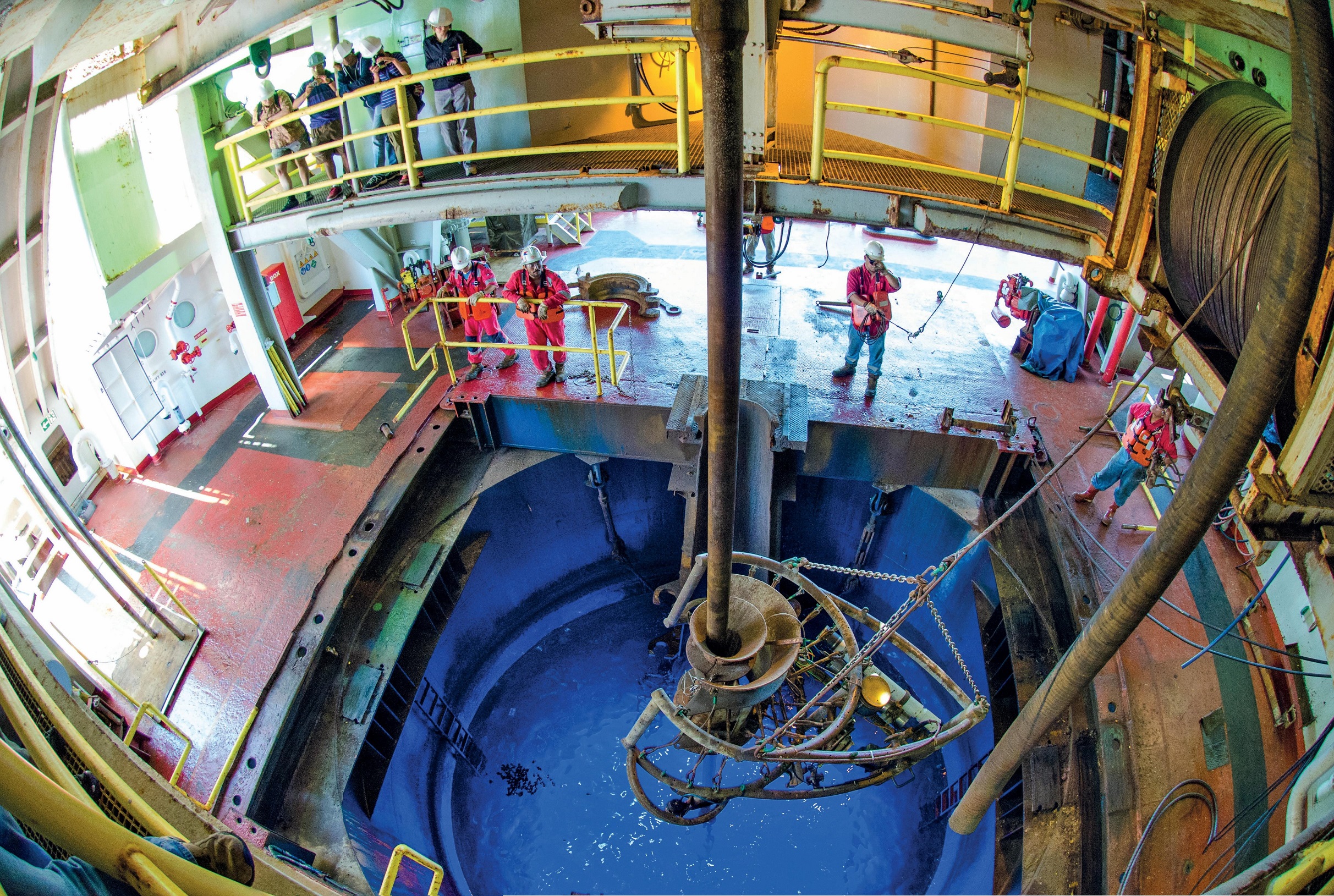
Therefore, any study that tries to throw some light on the functioning of the core is subject to abject scrutiny. Two such studies, published early this year, have triggered debate and discourse among scientists, while highlighting that we do not yet have the technological resources to reach the deep Earth and gain more concrete insights.

Dit verhaal komt uit de April 01, 2023-editie van Down To Earth.
Abonneer u op Magzter GOLD voor toegang tot duizenden zorgvuldig samengestelde premiumverhalen en meer dan 9000 tijdschriften en kranten.
Bent u al abonnee? Aanmelden
MEER VERHALEN VAN Down To Earth

Down To Earth
THE GREAT PIVOT
China's moves to transition to clean energy offer critical lessons to India

4 mins
March 01, 2026

Down To Earth
COAL V CORRIDOR
A proposal to mine coal along a corridor that links two tiger reserves in central India is a step away from getting final clearance. The move could affect movement and genetic diversity of tiger populations in the region
8 mins
March 01, 2026

Down To Earth
India's challenging AI predicament
Hobbled by lack of innovation and AI skills in its crucial technology sector, India is focusing on a ruinous plan to host data centres
4 mins
March 01, 2026
Down To Earth
China to implement zero tariffs across Africa
CHINA ON February 14 announced that it will implement zero tariffs for imports from all the 53 African nations it has diplomatic relations with, starting from May 1.
1 min
March 01, 2026
Down To Earth
Poverty, sans the threshold
MEASUREMENT OF poverty is a fundamental exercise, needed to direct development programmes.
2 mins
March 01, 2026

Down To Earth
A bridge across forever
For two decades, a Chhattisgarh village remains stuck in a loop of building temporary river crossings to access markets and sell forest produce
4 mins
March 01, 2026
Down To Earth
Liveable cities need a new model
CRY FOR my Delhi. This is my city—my family records many generations who have lived here.
3 mins
March 01, 2026

Down To Earth
Real impacts of the changing seasons
This refers to the article \"1,500 days, and an alarm for new climate\" (1-15 December, 2025).
1 mins
March 01, 2026

Down To Earth
‘It’s a systematic effort by US to dismantle climate policy’
The US, the world's largest historical emitter of greenhouse gases, has overturned its “endangerment finding”, the legal foundation for regulating emissions under the Clean Air Act since 2009.
4 mins
March 01, 2026
Down To Earth
Amazon turned carbon source in 2023 drought
EXTREME DROUGHT and a prolonged heatwave in 2023 pushed parts of the Amazon rainforest from acting as a carbon sink to becoming a carbon source for three months, according to a February 13 study published in the journal AGU Advances of the American Geophysical Union.
1 min
March 01, 2026
Translate
Change font size