يحاول ذهب - حر
WAITING TO STRIKE
February 16, 2026
|Down To Earth
Sal heartwood borer is considered the biggest threat to forestry in India, especially to the sal tree, where it lives and breeds.
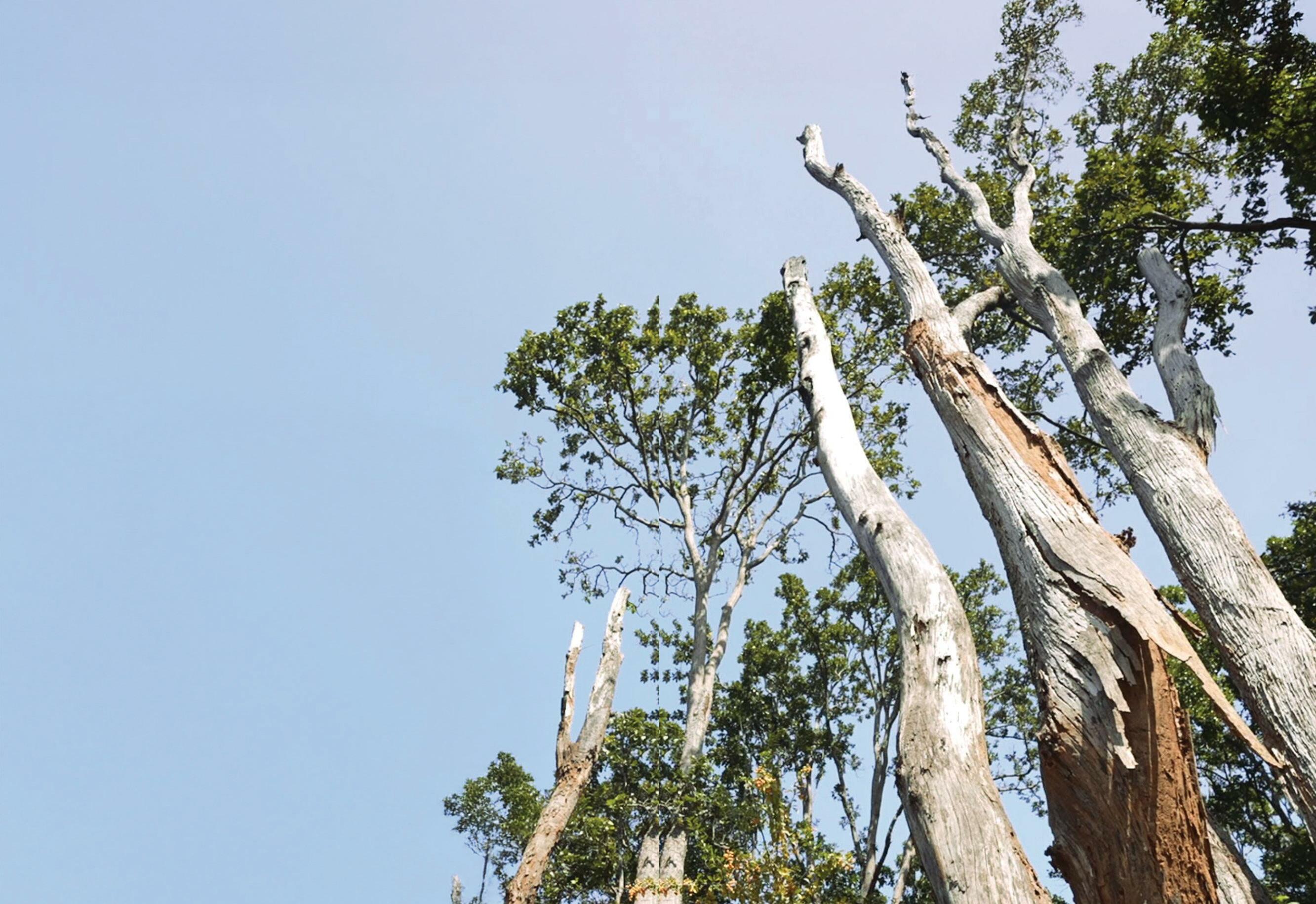
The country last witnessed a sal borer epidemic in 1996-2001 in undivided Madhya Pradesh, when, some 3.5 million sal trees—extremely valuable economically and ecologically—had to be felled to control the pest's spread. Sal borer numbers have again been on the rise for the past couple of years due to above average monsoons and post-seasonal rains. Initial surveys by forest department indicate widespread damage to sal trees, reports BHAGIRATH from Anuppur and Dindori districts of Madhya Pradesh and Gariaband district of Chhattisgarh.
A FEW minutes walk into the forest near Sontirath village is enough to make one notice the quiet provided by the dense sal (Shorea robusta) tree growth. There is a sudden sense of self awareness as one starts to notice the faintest of forest sounds. “It will not be this peaceful for long. Come monsoon and the forest will be full of sal borers flying around,” says Sukaal. “The pest is in the larva stage right now. The adult insect will emerge from the tree in June-July, with the onset of rains,” he adds.
Sukaal is among the 35-odd labourers deployed by the forest department in Madhya Pradesh’s Dindori district to identify sal trees that have become infested by the sal heartwood borer (Hoplocerambyx spinicornis) insect in the forest near Sontirath village. His job entails scalping the bark of the infected trees to leave a square mark on the trunk. “I do not like this work. But we need to identify the infected trees so that they can be felled to control the spread of sal borer,” Sukaal says.

هذه القصة من طبعة February 16, 2026 من Down To Earth.
اشترك في Magzter GOLD للوصول إلى آلاف القصص المتميزة المنسقة، وأكثر من 9000 مجلة وصحيفة.
هل أنت مشترك بالفعل؟ تسجيل الدخول
المزيد من القصص من Down To Earth

Down To Earth
THINK TWICE BEFORE FELLING SAL TREES
Many trees considered to be affected by sal borer in the 1990s are still alive today

1 mins
February 16, 2026

Down To Earth
EDGE OF SURVIVAL
Caste divides deny marginalised communities land, resources and essential aid, leaving them more vulnerable to climate disasters
6 mins
February 16, 2026

Down To Earth
A WISH LIST?
Union Budget for 2026-27 conveys the impression of a roll-call of intentions and ambitious proposals, with little detail on their formulation
6 mins
February 16, 2026
Down To Earth
Break down the gender wall
THE RULING National Democratic Alliance (NDA) government has been heavily invested in the goal to make India a developed economy by 2047.
2 mins
February 16, 2026

Down To Earth
MENSTRUAL HEALTH, NOW A FUNDAMENTAL RIGHT
In a landmark judgement, the Supreme Court has recognised menstrual health and hygiene as a fundamental right under Article 21 of the Constitution of India, which guarantees the right to life and dignity.
8 mins
February 16, 2026

Down To Earth
Of devolution and new disasters
The 16th Finance Commission pushes for changes in view of new fiscal and climatic conditions
11 mins
February 16, 2026
Down To Earth
Rising risks of plastics
NEGATIVE IMPACTS on human health due to emissions linked to the plastic lifecycle could double by 2040, according to a study published in The Lancet Planetary Health in January.
1 min
February 16, 2026

Down To Earth
GAP BETWEEN EPIDEMICS NARROWING
A watershed-based and landscape-level approach is needed to address forest degradation
2 mins
February 16, 2026
Down To Earth
WAITING TO STRIKE
Sal heartwood borer is considered the biggest threat to forestry in India, especially to the sal tree, where it lives and breeds.
11 mins
February 16, 2026

Down To Earth
A SPRING DELIGHT
Mustard flowers are not meant only for the eyes. Invite them to your plate once in a while
3 mins
February 16, 2026
Listen
Translate
Change font size