Try GOLD - Free
WHOSE INDEPENDENCE?
The Atlantic
|November 2025
The question of what Jefferson meant by "all men" has defined American law and politics for too long.
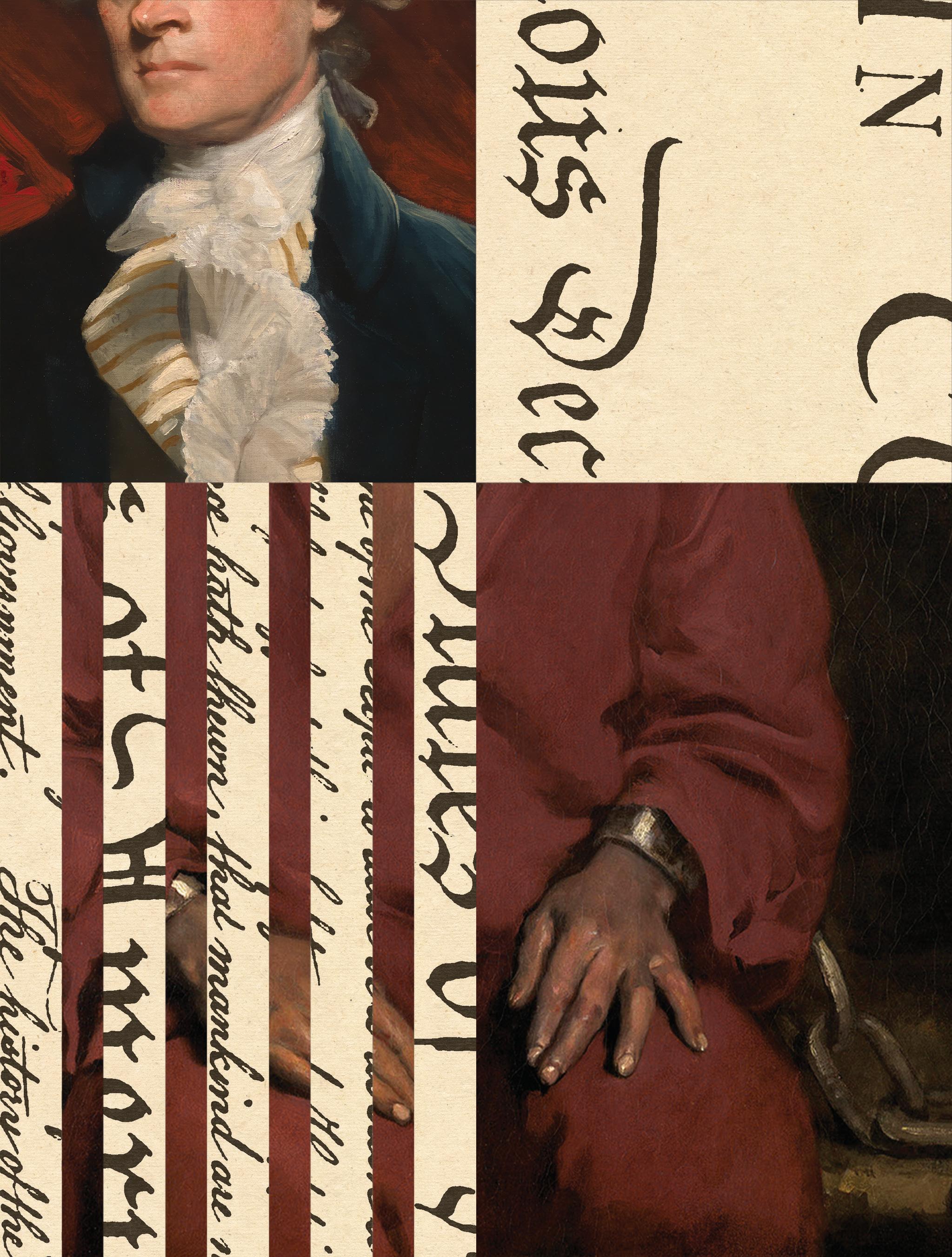
When Thomas Jefferson was chosen to draft the Declaration of Independence, he had an exceedingly difficult task ahead of him. The 33-year-old planter, who had left law practice just before Britain's imperial crisis began in earnest, needed to do nothing short of lay the groundwork for a new nation. He had to explain in both philosophical and legal terms the Second Continental Congress' decision to break away from Great Britain, provide a list of grievances against the Crown that justified complete separation as a remedy, and plant the seeds of diplomacy for the fledgling country. His job was to place the newly formed United States of America among “the powers of the earth.”
In the course of writing a document capacious enough to do all of that, Jefferson formulated the Declaration's second paragraph, with language that has become its most quotable passage: “We hold these truths to be self-evident, that all men are created equal, that they are endowed by their Creator with certain unalienable Rights, that among these are Life, Liberty and the pursuit of Happiness.” Those words, now held as perhaps the world's most important statement of universal human rights, were so powerful that they are often described as the “American creed.”
But those words also created a glaring contradiction. Of the estimated 2.5 million people living in the American colonies, about 500,000 were enslaved people of African descent, the majority of whom lived in the southern colonies. About 200,000 lived in the largest colony, Jefferson's Virginia. At the time Jefferson wrote that part of the Declaration, he owned nearly 200 people at his home plantation, Monticello, and other sites. While working on the document in Philadelphia, he shared rooms with his enslaved valet, Robert Hemmings, the 14-year-old half brother of his wife, Martha.
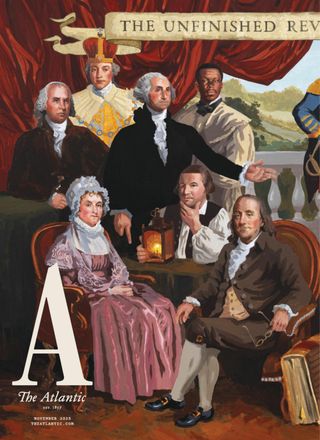

This story is from the November 2025 edition of The Atlantic.
Subscribe to Magzter GOLD to access thousands of curated premium stories, and 10,000+ magazines and newspapers.
Already a subscriber? Sign In
MORE STORIES FROM The Atlantic
The Atlantic
You Had to Be There
An emerging field of history asks if we can ever really understand how our forebears experienced love, anger, fear, and sorrow.

23 mins
January 2026

The Atlantic
By the Horns
The week before the biggest bullfight of her career, in Cádiz, Spain, this past July, 24-year-old Miriam Cabas posted a carefully produced video on Instagram.
1 mins
January 2026

The Atlantic
The New German War Machine
After World War II, Germany embraced pacifism as a form of atonement. Now the country is arming itself again.
18 mins
January 2026
The Atlantic
The Eloquence
The prime minister was watching a disaster movie when we found him.
4 mins
January 2026

The Atlantic
What's for Dinner, Mom?
The women who want to change the way America eats
12 mins
January 2026

The Atlantic
How Terror Works
A 1947 German novel explores the sometimes corrosive, sometimes energizing nature of fear.
8 mins
January 2026

The Atlantic
Yesterday's Idea of a Modern Man
Sam Shepard, a self-made cowboy, was also a poet of masculine angst.
7 mins
January 2026

The Atlantic
ACCOMMODATION NATION
America's colleges have an extra-time-on-tests problem.
11 mins
January 2026

The Atlantic
Respect the Drummer
A new history of rock, told through its overlooked heroes
5 mins
January 2026

The Atlantic
THE MOST POWERFUL MAN IN SCIENCE
WHY IS ROBERT F. KENNEDY JR. SO CONVINCED HE'S RIGHT?
42 mins
January 2026
Listen
Translate
Change font size