試す 金 - 無料
WHOSE INDEPENDENCE?
The Atlantic
|November 2025
The question of what Jefferson meant by "all men" has defined American law and politics for too long.
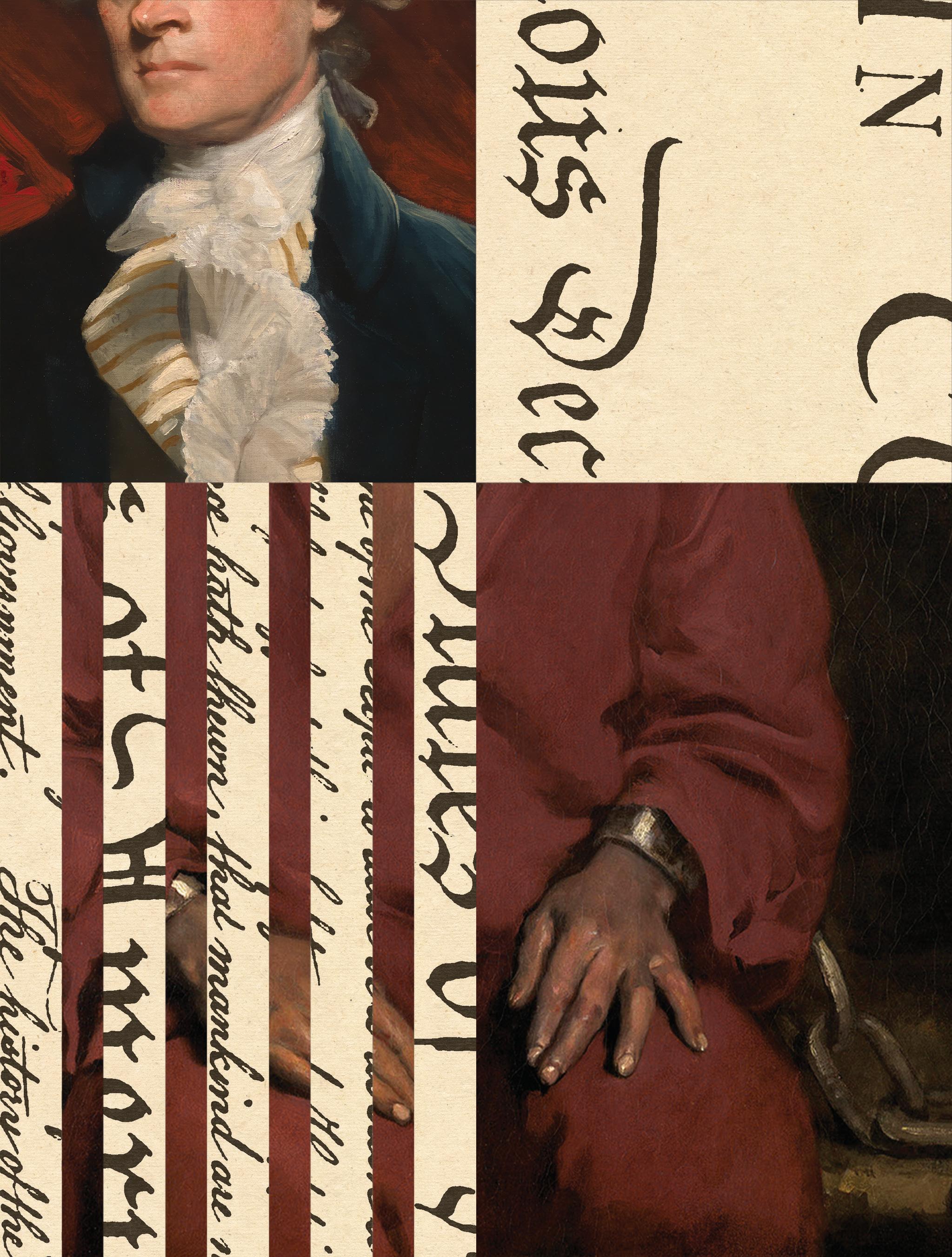
When Thomas Jefferson was chosen to draft the Declaration of Independence, he had an exceedingly difficult task ahead of him. The 33-year-old planter, who had left law practice just before Britain's imperial crisis began in earnest, needed to do nothing short of lay the groundwork for a new nation. He had to explain in both philosophical and legal terms the Second Continental Congress' decision to break away from Great Britain, provide a list of grievances against the Crown that justified complete separation as a remedy, and plant the seeds of diplomacy for the fledgling country. His job was to place the newly formed United States of America among “the powers of the earth.”
In the course of writing a document capacious enough to do all of that, Jefferson formulated the Declaration's second paragraph, with language that has become its most quotable passage: “We hold these truths to be self-evident, that all men are created equal, that they are endowed by their Creator with certain unalienable Rights, that among these are Life, Liberty and the pursuit of Happiness.” Those words, now held as perhaps the world's most important statement of universal human rights, were so powerful that they are often described as the “American creed.”
But those words also created a glaring contradiction. Of the estimated 2.5 million people living in the American colonies, about 500,000 were enslaved people of African descent, the majority of whom lived in the southern colonies. About 200,000 lived in the largest colony, Jefferson's Virginia. At the time Jefferson wrote that part of the Declaration, he owned nearly 200 people at his home plantation, Monticello, and other sites. While working on the document in Philadelphia, he shared rooms with his enslaved valet, Robert Hemmings, the 14-year-old half brother of his wife, Martha.
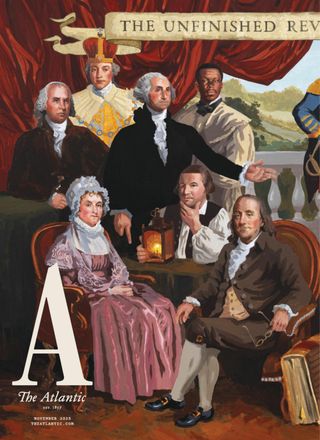

このストーリーは、The Atlantic の November 2025 版からのものです。
Magzter GOLD を購読すると、厳選された何千ものプレミアム記事や、10,000 以上の雑誌や新聞にアクセスできます。
すでに購読者ですか? サインイン
The Atlantic からのその他のストーリー
The Atlantic
Deadlier Than Gettysburg
How the cruelty of the Confederacy's prison camps gave rise to the rules of war

10 mins
March 2026

The Atlantic
THE MAN WHO BROKE PHYSICS
One of the pleasures of watching Ilia Malinin, apart from his indifference to gravity, is to witness him becoming.
16 mins
March 2026

The Atlantic
How Toni Morrison Saw History
In her novels, she located the missing story of Black America.
12 mins
March 2026

The Atlantic
The Madness of Lord Tennyson
The Victorian poet was startlingly modern.
5 mins
March 2026

The Atlantic
THE PLOT AGAINST THE HUMANITIES
What is the Andrew W. Mellon Foundation doing to higher education?
22 mins
March 2026

The Atlantic
Why Do Democrats Hate Winning?
Ken Martin has one of those resting dread faces, as if he's bracing for someone to dump a bucket of rocks on his head.
37 mins
March 2026

The Atlantic
ROD DREHER'S DEMONS
HE DERIDES THE ENLIGHTENMENT, SECULARISM, AND THE MODERN WORLD. CONSERVATIVES-INCLUDING THE VICE PRESIDENT-ARE JOINING HIM ON A MARCH BACK TO THE MIDDLE AGES.
20 mins
March 2026

The Atlantic
Every Nation for Itself
President Trump wants to return to the 19th century's international order. He will leave America less prosperous—and the whole world less secure.
19 mins
March 2026

The Atlantic
The Secrets of Indigenous Art
Major exhibits are upending the way people understand Native American and Aboriginal artists.
14 mins
March 2026

The Atlantic
The Novel as Extended Op-Ed
If anyone could write good fiction about immigration, it would probably be Lionel Shriver. Instead, her latest book goes off the rails.
10 mins
March 2026
Listen
Translate
Change font size