कोशिश गोल्ड - मुक्त
WHOSE INDEPENDENCE?
The Atlantic
|November 2025
The question of what Jefferson meant by "all men" has defined American law and politics for too long.
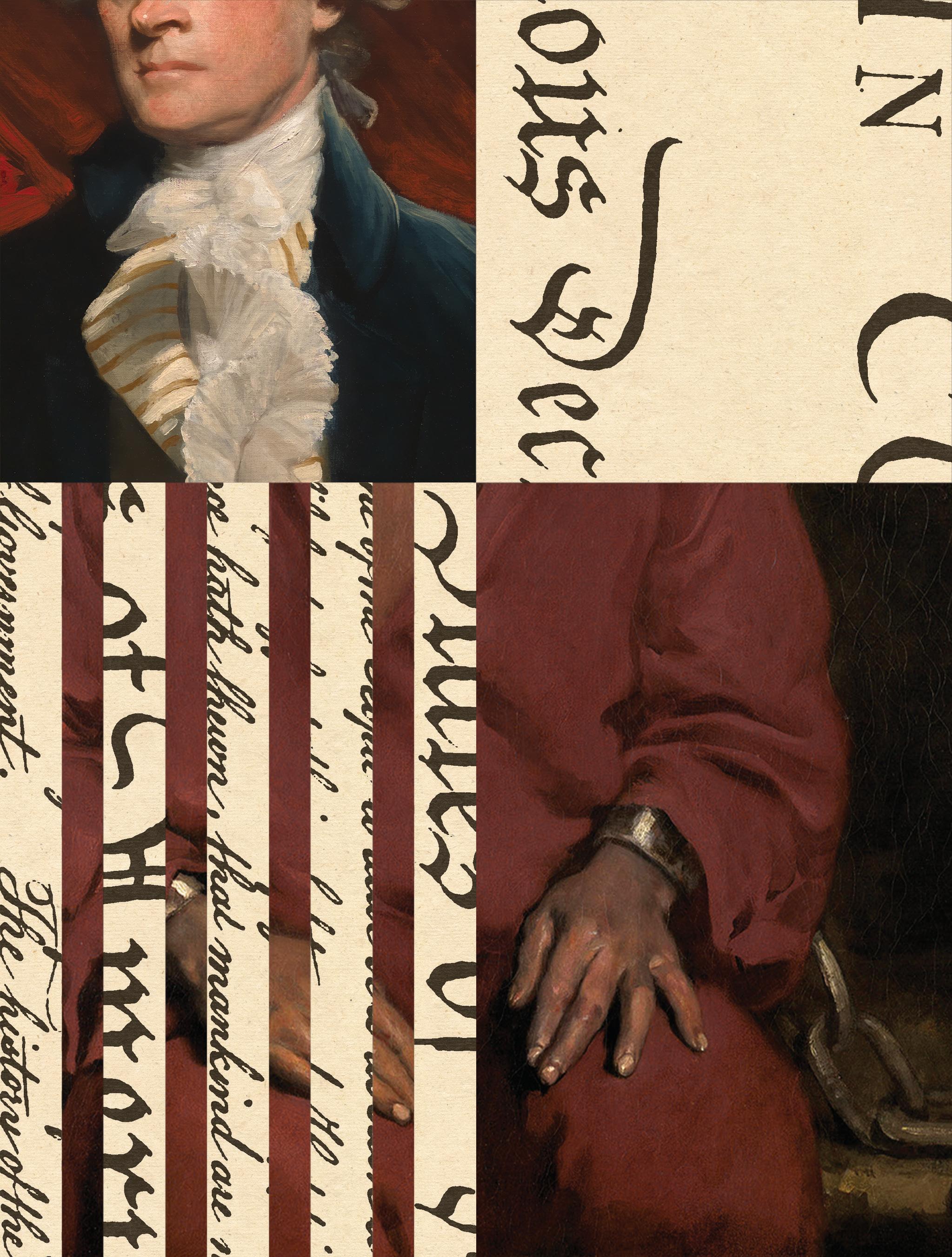
When Thomas Jefferson was chosen to draft the Declaration of Independence, he had an exceedingly difficult task ahead of him. The 33-year-old planter, who had left law practice just before Britain's imperial crisis began in earnest, needed to do nothing short of lay the groundwork for a new nation. He had to explain in both philosophical and legal terms the Second Continental Congress' decision to break away from Great Britain, provide a list of grievances against the Crown that justified complete separation as a remedy, and plant the seeds of diplomacy for the fledgling country. His job was to place the newly formed United States of America among “the powers of the earth.”
In the course of writing a document capacious enough to do all of that, Jefferson formulated the Declaration's second paragraph, with language that has become its most quotable passage: “We hold these truths to be self-evident, that all men are created equal, that they are endowed by their Creator with certain unalienable Rights, that among these are Life, Liberty and the pursuit of Happiness.” Those words, now held as perhaps the world's most important statement of universal human rights, were so powerful that they are often described as the “American creed.”
But those words also created a glaring contradiction. Of the estimated 2.5 million people living in the American colonies, about 500,000 were enslaved people of African descent, the majority of whom lived in the southern colonies. About 200,000 lived in the largest colony, Jefferson's Virginia. At the time Jefferson wrote that part of the Declaration, he owned nearly 200 people at his home plantation, Monticello, and other sites. While working on the document in Philadelphia, he shared rooms with his enslaved valet, Robert Hemmings, the 14-year-old half brother of his wife, Martha.
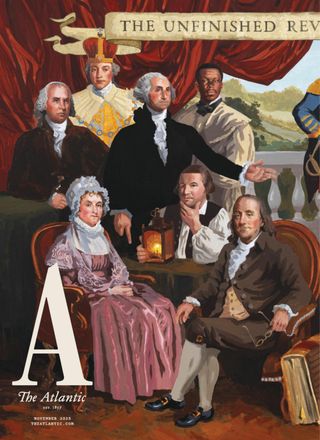

यह कहानी The Atlantic के November 2025 संस्करण से ली गई है।
हजारों चुनिंदा प्रीमियम कहानियों और 10,000 से अधिक पत्रिकाओं और समाचार पत्रों तक पहुंचने के लिए मैगज़्टर गोल्ड की सदस्यता लें।
क्या आप पहले से ही ग्राहक हैं? साइन इन करें
The Atlantic से और कहानियाँ

The Atlantic
STRUCK
What getting hit by lightning does to the body and mind

15 mins
April 2026

The Atlantic
LEAVING THE UNITED STATES BEHIND
The Cruz family spent years building a life in New York. Then the risks of staying became too great.
16 mins
April 2026

The Atlantic
MY SELF-DRIVING CAR CRASH
The Tesla was driving perfectly—until it wasn't.
8 mins
April 2026

The Atlantic
The Last Days of Franco
Montserrat Roig's classic novel captures Barcelona on the cusp of unimaginable change.
7 mins
April 2026

The Atlantic
INSATIABLE
Indoor rain, windows to nowhere, and reanimated nuclear reactors- how the race to power AI is remaking the physical world
16 mins
April 2026

The Atlantic
THE WOMEN OF AVENGER FIELD
THEY BRAVELY SERVED AS PILOTS IN WORLD WAR II. THEN AMERICA FORGOT THEM.
15 mins
April 2026

The Atlantic
The Unbearable Lightness of Signalgate
Nearly a year after a national-security scandal erupted on my iPhone, no one in the Trump administration has faced serious consequences.
14 mins
April 2026

The Atlantic
Robyn Is Still Dancing On Her Own
The queen of poptimism takes up motherhood and midlife desire.
5 mins
April 2026
The Atlantic
The College-Educated Working Class
Can a generation of graduates frustrated by their economic prospects change American labor politics?
13 mins
April 2026

The Atlantic
THAT 1930s FEELING
How dark fringes reached the center of the Republican Party
10 mins
April 2026
Listen
Translate
Change font size