
News

TIME Magazine
Defending French Open champion Iga Swiatek plays for more than titles
WHEN IGA SWIATEK, THE WORLD'S TOPranked women's tennis player, travels to tournaments around the globe, her bag is filled with the usual accoutrements of superstars in her sport: racket, wardrobe, Legos. OK, Swiatek is likely the only three-time major winner toting around tiny plastic bricks. During the pandemic, Swiatek began toying with Legos; she finds the process of building the Disney World castle, or a Porsche, or the International Space Station relaxing.
4 min |
May 08 - 15, 2023 (Double Issue)

TIME Magazine
What's next for misoprostol, the other abortion pill?
THE ABORTION PILL MIFEPRISTONE HAS been on uncertain legal ground since a Texas judge ruled on April 7 that the U.S. Food and Drug Administration (FDA)'s approval more than two decades ago should be suspended. After the Department of Justice appealed the decision and requested that the Supreme Court step in, the high court decided that mifepristone should remain available while courts continue to decide its legal fate.
2 min |
May 08 - 15, 2023 (Double Issue)
TIME Magazine
CLEARING THE FIELD
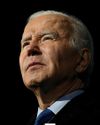
Why a President most voters say shouldn't run faces no real party challenge
3 min |
May 08 - 15, 2023 (Double Issue)

TIME Magazine
The Burnout Reset
I HAVE BEEN IN DANCE THERapy for all of 90 seconds when I embarrass myself. The group is doing a follow-the-leader exercise, with one person picking a dance move that everyone else must mimic. When my name is called, I panic and launch into an extremely uncool move that could be generously described as disco-inspired, my cheeks flaming as a group of strangers mirror it back at me. I'd traveled to the University of Colorado's School of Medicine to take this humiliating stab at vulnerability in the name of science (and my own sanity). The Colorado Resiliency Arts Lab (CORAL), an ongoing research project at the school, aims to help people who are burned out from their jobs build resilience and improve their mental well-being. For three months, participants meet weekly for 90-minute sessions that weave together therapy, community, and art to provide an outlet for the stressors of working in health care. But this week, the group includes one participant who doesn't work in health care: me, a health journalist with a personal interest in whether CORAL's program really works. After writing about the pandemic for three years, I had started seeing in myself some of the warning signs of burnout, as compiled by Christina Maslach, who has researched burnout for four decades: emotional and mental exhaustion, feeling negative or cynical about work, and believing your work doesn't matter or your efforts aren't enough. Tick, tick, and tick. Toward the end of 2022, I experienced significant writer's block for the first time. The \"quiet quitting\" trend-doing the bare minimum at work-spoke to me more than it should have. And as the world forgot about COVID-19, I sometimes wondered if there was any point in continuing to cover it. I genuinely love my job, so I wanted to fix those issues before they got worse. But when I asked Dr. Google \"how to cure burnout,\" I couldn't find much. That's because it's not totally up to me, Maslach says. Fixing burnout is truly possible only when employers eliminate the conditions that produce it in the first place and pare down workloads, support and listen to employees, and give people control over their work and time, Maslach told me. \"It's not that coping is not important,\" she says. But if we see it as the solution, we're blaming workers and \"not actually changing the stressors themselves.\" But what if the stressors don't change, no matter how much we want them to? In an ideal world, sure, every boss would want to eliminate burnout. But businesses are driven by profits, employees are often told to do more with less, and too many people scrape by on minimum wage and no benefits. Leaving workers responsible for their own burnout may not be the answer, but in many cases, waiting for work to change feels like an equally hopeless path. Is there anything I-and the 42% of office workers who said they felt burned out in a late-2022 survey could do to make an imperfect situation better? I TURNED to the scientific literature for answers. Plenty of researchers have looked for ways that individuals can ease their burnout, but many don't seem to work. A 2022 research review analyzed 30 previous studies on burnout interventions for doctors. Many of the programs-free food, subsidized gym memberships, weekly meetings with a psychologist-didn't yield significant results. Nearly all of those that did involved a group element, like wellness classes or mentorship programs. That makes sense, even though it's harder to DIY; other research also suggests social support can improve mental health and protect against burnout. But some individual interventions make a difference. Studies suggest physical activity, a proven mood booster and stress reducer, can decrease burnout. Mindfulness practices such as meditation and yoga have been shown in some, but not all, studies to help, apparently by building resilience and improving emotional regulation. Creativity practices may also chip away at burnout by reigniting passions and facilitating \"flow,\" or being engrossed in a task. So: socializing, exercise, meditation, and arts and crafts. Not exactly groundbreaking stuff. The first three are foundational aspects of good health, recommended by nearly every expert I've ever interviewed. Despite how familiar they felt, I used them as the protocol for my highly unscientific burnout-busting experiment: I'd work out at least three times a week and do yoga at least once a week, meditate daily, and complete a daily creativity exercise. (I chose to doodle my emotions.) Since my experiment coincided with TIME's return-to-office plans mandating my presence in the office three days a week-I figured I'd get my workplace social-interaction fix whether I liked it or not. As a longtime gymgoer, I also found my exercise quota manageable. The idea of meditating and doodling, however, filled me with dread. The most in touch I've ever been with my artsy side was when I started painting by numbers during the desperate boredom of lockdown. And you know how mindfulness experts often say there's no wrong way to meditate? They've never been inside my anxious brain as it ping-pongs from what to make for dinner to whether I forgot to feed the cat to an awkward thing I said six years ago. But-at least at the beginning I was committed. Socializing at work was by far the easiest part. I found it energizing and soul-nourishing to see co-workers face-to-face, even if we mostly chatted about bad Keurig coffee and reality television. I also felt virtuous about taking leisurely lunch breaks with colleagues. However, adding in a long commute made every other element of my plan harder. Exercising four times a week became a scheduling headache. Meditating and drawing fell even lower down my priority list. Sometimes I listened to a guided meditation during my subway ride home, which was futile. And more than on one occasion, I actually said the words \"Ugh, I still have to doodle,\" out loud to my fiancé at the end of the day. Exercise, at least, reliably lifted my mood and eased my stress when I managed to squeeze it in. But meditating often felt more boring than centering, and I frequently stared down at a blank page in my notebook, wondering what the heck my emotions looked like. I tried I really did. But doodling and deep breathing didn't cancel out the drains of deadline pressures, rude emails, and constant bad news. If anything, my regimen made it clear that adding to my to-do list made my stress worse. My experiment had failed. Which brought me to the dance circle at the University of Colorado. THE BURNOUT STUDY there had the extreme misfortune of trying to launch in March 2020, just as the U.S. was shutting down. Dr. Marc Moss, a critical-care physician and CORAL's principal investigator, had intended to study burnout reduction among intensive-care providers. But by the time COVID-19 was controlled enough in Colorado to get the program up and running in September 2020, \"the whole world was stressed out,\" Moss says. He and his colleagues decided to open the first few study sessions to any patient-facing health care workers, then broadened the eligibility criteria over time. Now in its sixth round, CORAL welcomes anyone in the Denver area who works in the health care field, from researchers and lab technicians to food-service workers and case managers. When people sign up for CORAL, they're assigned to a group focusing on visual arts, writing, dance, or music. For 12 weeks, facilitators use creative exercises to help people express their identity and values, channel negative emotions, build resilience, and develop self-care routines. To build community, participants are also encouraged to share experiences from their lives and jobs and take part in a group project, such as contributing a work of art to an album or performing a dance. \"We're building resilience more than curing burnout,\" says Katherine Reed, an art therapist who runs CORAL's visual-arts group. But the data suggest one leads to the other: for almost 150 health care providers who joined the study from September 2020 to July 2021, the approach led to small but significant decreases in anxiety, depression, and burnout, according to a 2022 study published in the American Journal of Medicine. If the framework proves effective for people in a wider swath of health care jobs, Moss says CORAL's approach could feasibly be adopted by burned-out workers in any industry. That's what made me want to try the program. Burnout has been studied extensively among health care workers, but few researchers have looked at interventions for the general public. During my visit in March, I dropped in on the music, writing, and dance groups. (I missed visual art because of a flight delay, because apparently the universe wanted my baseline state to be as stressed as possible.) For three days, I used all of my senses to describe how humor looks, sounds, feels, smells, and tastes; wrote about my emotions as if they were characters in a short story; and practiced vulnerability by dancing in front of strangers. I listened as members of the study talked about frustrating moments in their days, applauding along with everyone else when people described emotional breakthroughs with their bosses or co-workers. Even as an aggressively uncrafty, professionally skeptical person, I felt calm and happy during my time with CORAL-a combination, probably, of getting away from my daily routine, paying attention to my emotions, and trying something new. I was encouraged. But when I asked Moss and his team if the CORAL curriculum could be distilled into something I, or any individual, could do on my own, I was met with a resounding no. The program's magic, its facilitators said, is in bringing people together to feel the solidarity and community so often lacking in modern life. People can draw or dance or write or sing on their own, but it likely won't have the same transformative effect without a human connection. That's what Dr. Colin West, who researches physician well-being at the Mayo Clinic, found in 2021, when he published a study on what happened when physicians met up for group discussions over meals. Their burnout symptoms improved, but it wasn't necessarily the food that made the difference it was support. \"We have so many shared experiences and so many stressors that are in common, and yet physicians will often feel like, Well, I can't talk to anybody about this,\" West says. Bringing people together to share their experiences can help. West believes there are other reasons the program worked: it was easy for people to join, since they had to eat anyway, and the hospital made meals free for study participants. \"The individual needs to contribute something, and the organization needs to contribute something,\" West says. That twosided approach helps people feel supported and valued by their organization, which can go a long way toward easing some of the bitterness and cynicism that accompany burnout. Since my solo study didn't work, and I couldn't take off 12 weeks to join CORAL for real, I felt resigned to the relief I'd gained from exercise and my in-person days at the office. But over time, something changed at work. My editor-tipped off to my burnout when I pitched the story you're reading encouraged me to take a step back from the COVID-19 news cycle and pursue other topics. As I settled into my lessCOVID-centric routine, it felt easier to get excited about pitching ideas and writing stories, and to show up each day feeling more engaged and energized. In a way, my experiment proved that burnout expert Maslach was right all along: the self-care tactics I used on my own were less effective than workplace adjustments. But after visiting CORAL, I believe the solution to burnout isn't just to sit back and hope employers make the right changes. Moss, the research lead for CORAL, thinks about it like this: a hospital could make administrative tweaks to lighten doctors' workloads, but it can't protect them from the death and sadness they see every day. \"We see things that are not normal, and we see a lot of tragedy,\" Moss says. \"I can't work in an intensive-care unit and not have that happen.\" The stressors baked into other industries might be different or less intense, but they're present in some form, no matter the job. Maybe it's obnoxious customers, or exhausting overnight shifts, or bureaucratic red tape; there's always something. When done right, interventions like the ones used in CORAL can provide communal outlets for the stressors that won't ever go away. I'm hoping happier health news lands on my desk soon. But in the meantime, I'm pursuing better ways to manage stress and searching for people willing to join me. So long, solo doodling. I'm thinking of joining a book club instead or maybe a dance class.
8 min |
May 08 - 15, 2023 (Double Issue)

TIME Magazine
CAN IMRAN KHAN MAKE A COMEBACK?
Pakistan's most popular politician is under attack-and vying for power once more
10 min |
May 08 - 15, 2023 (Double Issue)

TIME Magazine
Powerful stories of frontline communities' climate solutions can change the world
WHEN YOU'RE TRYING TO PERSUADE PEOPLE TO DO something important, you can present statistics, policy statements, graphs, and spreadsheets. But without a story that paints a picture of what's at stake, touches the heartstrings, and sparks the imagination to envision possibilities, it's hard to move people to take action. One formula for accelerating transformational change is to amplify the right message from the right messenger at the right moment in time.
7 min |
May 08 - 15, 2023 (Double Issue)

TIME Magazine
ARSENAL of DEMOCRACY
The race to arm Ukraine
10+ min |
May 08 - 15, 2023 (Double Issue)

TIME Magazine
A bleakly funny but tedious Freudian trip
HOW MUCH DO YOU REALLY WANT TO KNOW about horrormeister Ari Aster's preoccupations and anxieties? Consider that seriously before subjecting yourself to Beau Is Afraid, a bleak black comedy that's very occasionally hilarious, though mostly just tedious. Joaquin Phoenix stars as bundle of neuroses Beau Wassermann, who's born into this world in the movie's opening scene, escorted by his mother's muffled screams and staticky, ominous-sounding thundercracks.
3 min |
May 08 - 15, 2023 (Double Issue)

TIME Magazine
Pat Candy Allan Betty
NOBODY WAS SUPPOSED TO GET hurt.
5 min |
May 08 - 15, 2023 (Double Issue)

TIME Magazine
WHAT LIES BENEATH
Grappling with how to approach great works of art by bad men in the book Monsters: A Fan's Dilemma
6 min |
May 08 - 15, 2023 (Double Issue)
TIME Magazine
Should I take a pill to prevent Long COVID?
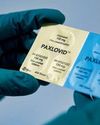
RECENT PRELIMINARY RESEARCH HAS found that certain medications may reduce the chance of developing Long COVID if taken shortly after catching COVID-19.
2 min |
April 10 - 17, 2023 (Double Issue)

TIME Magazine
'Final' climate report
Unsettling unknowns
2 min |
April 10 - 17, 2023 (Double Issue)
TIME Magazine
The history of Presidents who (almost) got indicted
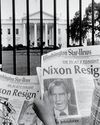
DONALD TRUMP COULD MAKE HISTORY ONCE again—this time as the first former U.S. President ever to be criminally indicted. If it happens, it’s apt to be by the Manhattan grand jury probing his alleged hush-money payment to former porn star Stormy Daniels before the 2016 election. Daniels, real name Stephanie Clifford, says she and Trump had an affair; Trump denies this.
2 min |
April 10 - 17, 2023 (Double Issue)

TIME Magazine
THE POINT OF COLLEGE
Soon after the 2008-9 financial crash tanked the economy, Americans' unflagging faith in higher education started to falter. By 2011, more than half of college graduates were unor underemployed. The economy rebounded and the conversation faded, only to be revived again by the epic fallout from the pandemic. This time, the college degree's comeuppance has been more profound.
3 min |
April 10 - 17, 2023 (Double Issue)

TIME Magazine
Health Matters
CLIMATE EXPERTS HAVE LONG warned about the many ways a warming planet can negatively affect human health. Now that global temperatures are predicted to increase by 1.5°C by the 2030s, that risk is becoming increasingly real.
2 min |
April 10 - 17, 2023 (Double Issue)
TIME Magazine
Working through grief after losing my father
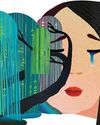
AFTER MY FATHER DIES, I BECOME, FOR A time, someone I do not recognize. Entire weeks are all but lost to me, scooped out of my once airtight memory. Our rental term ends two months after the funeral, and when we move into another house, I hardly remember packing or unpacking.
6 min |
April 10 - 17, 2023 (Double Issue)

TIME Magazine
Ali Wong and Steven Yeun face off in a BEEF for the ages
IMPLICIT IN EVERY VIRAL ROAD-RAGE video is the same question: What is wrong with these people? BEEF, a wild black comedy from first-time creator Lee Sung Jin, delves deep into the sources and fallout of two L.A. motorists’ fury.
1 min |
April 10 - 17, 2023 (Double Issue)

TIME Magazine
The case for betting on Tom Wambsgans' Succession
MIDWAY THROUGH THE THIRD SEASON of Succession, Tom Wambsgans tells his underling and cousin by marriage, Greg Hirsch, a colorful anecdote from an empire in decline. “Sporus was a young slave boy—he was Nero’s favorite,” Tom (Matthew Macfadyen) explains.
2 min |
April 10 - 17, 2023 (Double Issue)

TIME Magazine
10 QUESTIONS
For this issue's profile of Bad Bunny, the global superstar spoke to TIME (mostly) in Spanish and inspired our first Spanish-language back-page interview
2 min |
April 10 - 17, 2023 (Double Issue)

TIME Magazine
An artist creates, amid distraction and because of it
MAKING ANYTHING OF VALUE—A work of art, a poem, a solid piece of furniture—demands a deep descent into the self, to the point that it’s easy to neglect the needs of others in your orbit.
3 min |
April 10 - 17, 2023 (Double Issue)
TIME Magazine
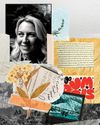
CHERYL STRAYED IS HERE FOR YOU
The Tiny Beautiful Things author revisits her advice column in a television series
6 min |
April 10 - 17, 2023 (Double Issue)
TIME Magazine
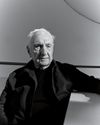
THE DARING OF GEHRY
Revisiting the museum that started it all, the 94-year-old architect reflects on his methods, his influence, and his ambitious new projects
7 min |
April 10 - 17, 2023 (Double Issue)

TIME Magazine
SAVING THE SEINE
Inside the radical effort to clean up the world's most romantic river
8 min |
April 10 - 17, 2023 (Double Issue)

TIME Magazine
Crimes and Punishment
AS THE WAR DRAGS ON AND EVIDENCE OF RUSSIAN ATROCITIES MOUNTS, UKRAINE SEEKS JUSTICE
7 min |
April 10 - 17, 2023 (Double Issue)

TIME Magazine
GREAT EXPECTATIONS
How Bad Bunny bent global pop culture to his will-by refusing to compromise on anything
10+ min |
April 10 - 17, 2023 (Double Issue)
TIME Magazine
The Superpowers of Powder
This specialist powder business is a strong example of niche business success in Japan.
1 min |
April 24 - May 01, 2023 (Double Issue)
TIME Magazine
The Business of Good Health
A company with over 100 years of history relishes the healthcare challenge.
1 min |
April 24 - May 01, 2023 (Double Issue)
TIME Magazine
Manufacturing Game Changers and Life Savers
Takatori Corporation's proud history producing machinery for industries such as semiconductors and healthcare has made it a key player across Japan's economy.
1 min |
April 24 - May 01, 2023 (Double Issue)

TIME Magazine
TIME 100 The most influential people in the world - ICONS
PEDRO PASCAL, SALMAN RUSHDIE, KING CHARLES III, BRITTNEY GRINER, SHAH RUKH KHAN + MORE
10+ min |
April 24 - May 01, 2023 (Double Issue)

TIME Magazine
TIME 100 The most influential people in the world - INNOVATORS
SEAN SHERMAN, KYLIAN MBAPPÉ, NATASHA LYONNE, WANJIRA MATHAI, JERROD CARMICHAEL + MORE
10+ min |