
Go Unlimited with Magzter GOLD
Get unlimited access to 10,000+ magazines, newspapers and Premium stories for just
Try GOLD - Free
Trump's first trade war caused U.S. firms to flee China. Now comes round 2.
Fortune US
|February - March 2025
DDURING HIS FIRST TERM as president, Donald Trump shook up global trade by imposing new tariffs on China, the world's epicenter for manufacturing. Companies importing Chinese-made goods into the U.S. suddenly found themselves having to pay extra duties—sometimes 30% more—if they continued using that country as a supplier.
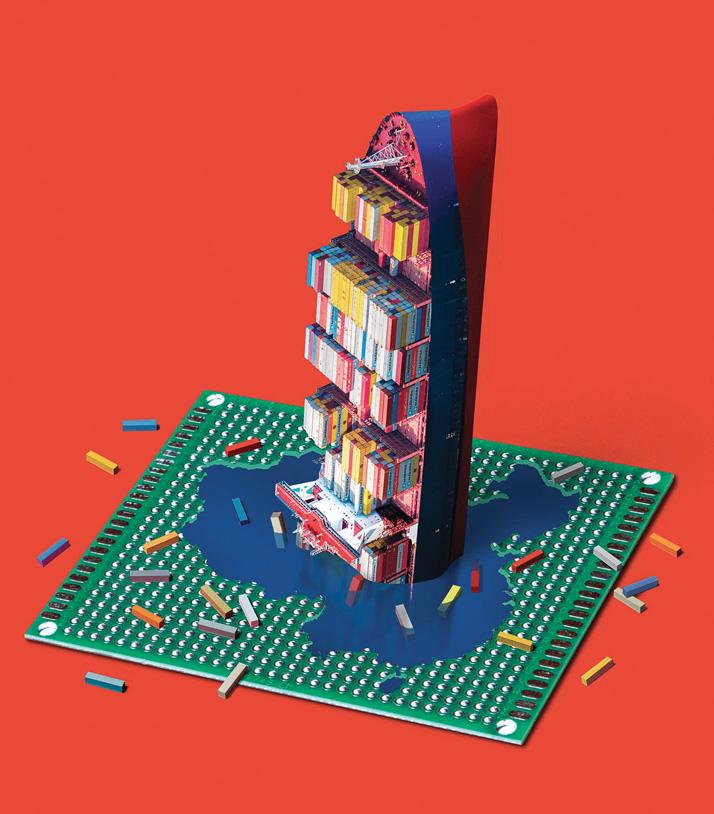
The response by U.S. businesses was swift: Many relocated at least some of their production from China to countries like Vietnam, India, and Mexico, which weren't in Trump's economic crosshairs.
Now, with Trump's second term underway, the tariffs plan is again on the table. But this time, he's promised an expanded version that, if implemented, would create even more corporate upheaval and turn some previously winning countries in his trade war into big losers.
“Trump Two is not Trump One,” warns Deborah Elms, head of trade policy at the Hinrich Foundation, a Singapore-based think tank that advocates for sustainable global trade. “I’m not convinced that everyone recognizes the extent of the danger. It’s going to catch a number of folks in the region really off guard.”
Trump’s specific road map for reshuffling global trade will emerge in the months and years ahead—or perhaps there will never be a map, leaving business leaders in the dark on a critical issue impacting their all-important planning. What is clear from his previous dance with tariffs is this: Even after nearly a decade of tensions with China, U.S. companies still haven’t been able to find a replacement for Chinese manufacturing.
In reality, Trump's tariffs-largely unchanged under President Joe Biden-accelerated a transition from China that was already underway. Companies had already started to move lower-value manufacturing, like textiles, to other countries as labor there became more expensive. “A lot of this diversification was the Chinese factories themselves, picking up their equipment and moving the whole thing to Vietnam and Cambodia,” says Joe Ngai, chairman for the Greater China region at consulting firm McKinsey.
Beijing's harsh COVID-era lockdowns, which closed factories nationwide and snarled the country's well-oiled supply chain, added even more urgency to the shift. U.S. companies realized that they didn't want to depend too much on a single country.

This story is from the February - March 2025 edition of Fortune US.
Subscribe to Magzter GOLD to access thousands of curated premium stories, and 10,000+ magazines and newspapers.
Already a subscriber? Sign In
MORE STORIES FROM Fortune US
Fortune US
COMPANIES ARE INUNDATING CUSTOMERS WITH SURVEYS-AND GETTING WORSE RESULTS
ONE WEEK LAST AUTUMN, I hit my customer feedback limit. I had seen my doctor and done some online shopping.

5 mins
February - March 2026

Fortune US
IT'S TIME TO TAKE TETHER SERIOUSLY
THE LEADER IN CRYPTO STABLECOINS HAS $15 BILLION IN THE BANK, U.S. EXPANSION PLANS—AND A CEO WITH A DARK VISION OF THE FUTURE.
15 mins
February - March 2026

Fortune US
THE BERKSHIRE HATHAWAY OF HOTELS: HOW A NUMBERS GUY MADE HYATT A LUXURY GIANT BY MATT HEIMER
WITH ITS V-SHAPED BASE and sloping windows that cantilever outward over the Chicago River, the 54-story skyscraper that houses Hyatt Hotels' headquarters is a “statement” building that awes tourists and architecture buffs alike.
4 mins
February - March 2026

Fortune US
GOOGLE'S AI PIONEER AND HIS DRUG-DESIGN MOONSHOT
DEEPMIND COFOUNDER DEMIS HASSABIS HAS ALREADY WON A NOBEL PRIZE AND A KNIGHTHOOD FOR HIS INSIGHTS INTO HUMAN BIOLOGY. HIS AI STARTUP ISOMORPHIC LABS COULD DELIVER EVEN BIGGER BREAKTHROUGHS.
10 mins
February - March 2026
Fortune US
INSIDE TODAY'S AI DATA CENTERS
THE DATA CENTER is getting a makeover. The nondescript industrial buildings once hummed away largely behind the scenes, powering the various facets of our online lives.
2 mins
February - March 2026

Fortune US
HOW NETFLIX SWALLOWED HOLLYWOOD
IT'S A STORY SO GOOD it could have been a screenplay. In 2000, Reed Hastings and Marc Randolph sat down across from John Antioco, then CEO of video rental giant Blockbuster, and pitched him on acquiring their still unprofitable DVD-by-mail startup, Netflix, which at the time had around 300,000 subscribers.
5 mins
February - March 2026

Fortune US
THE AI DATA CENTER BOOM PITS RURAL AMERICA AGAINST SILICON VALLEY BILLIONS
FACING A PROPOSAL FOR A MASSIVE FACILITY IN THE ARIZONA DESERT, LOCALS FIND THEMSELVES IN A BATTLE THEY NEVER WANTED-OVER ENERGY, WATER, LAND, AND WHO GETS TO DECIDE HOW THE AI ERA TAKES SHAPE.
12 mins
February - March 2026
Fortune US
INVEST LEARNING TO LOVE BONDS
MANY INVESTORS regard bonds as the frumpier cousins to stocks. Their prices rarely pop or plummet. They usually deliver a lower return, and—aside from a glamorous cameo in the 1980s thriller Die Hard— they are not part of popular culture in the same way as, say, GameStop or Tesla shares. They are, though, a critical part of any well-managed portfolio, and with the stock market looking particularly frothy, this may be more true than ever.
3 mins
February - March 2026

Fortune US
Where Senior Care Comes First
What began as one family's health crisis has grown into Alignment Healthcare, a company serving hundreds of thousands of seniors with innovative solutions.
1 mins
February - March 2026

Fortune US
HOW VICTORIA'S SECRET GOT ITS SEXY BACK
DETERMINED NOT TO REPEAT THE BRAND'S PAST MISTAKES, CEO HILLARY SUPER IS SHEDDING THE BODY-SHAMING AND THE PERFORMATIVE BOX-CHECKING—BUT NOT THE WINGS, GLAMOUR, AND GLITTER.
11 mins
February - March 2026
Listen
Translate
Change font size