
Go Unlimited with Magzter GOLD
Get unlimited access to 10,000+ magazines, newspapers and Premium stories for just
THE TREE OF Life and Fertility
Heartfulness eMagazine
|May 2022
DR. V. RAMAKANTHA shares some insights into the science, history and mythology of the Banyan tree, also known as the Bengal Fig or Indian Fig. The Banyan is one of those mythical trees that has had an important place in the life and history of the people of India since ancient times. It is also home to many species of birds, animals, and epiphytic plants.

Description
The Banyan or Bargad tree, Ficus benghalensis L., is an evergreen with a deeply fluted trunk and horizontal branches that grow to huge proportions. Aptly called Bahu Paada in Sanskrit, meaning a plant with many feet, the Banyan has aerial roots, which grow down and penetrate the soil, supporting the massive weight of its spreading branches. With its canopy of thick, dark-green leaves year-round, the Banyan occupies more and more space every passing year. As flowering and fruiting take place across seasons, it offers food for many species, making it an ideal home for birds and small animals. This colossal ornamental plant is the National Tree of India.
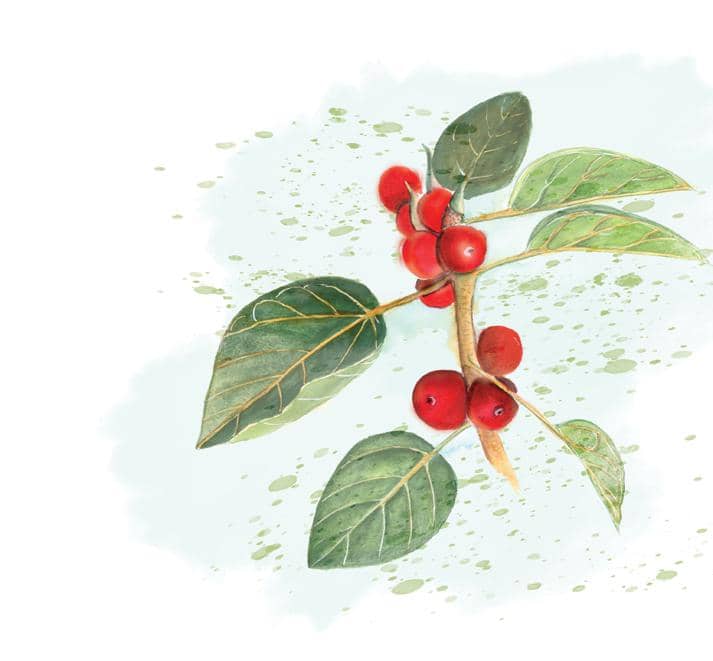
In this world of evanescence, the Banyan has become a symbol of stability, constancy, and permanency, and represents immortality.
The Banyan in Mythology and History
The Banyan is known in Hindu mythology as the tree for fulfilling wishes (Kalpavriksha), and the tree of life and fertility. With its unique ability to spread in an ever-widening circle with the help of its aerial roots, the tree achieves a long lifespan. In this world of evanescence, it has become a symbol of stability, constancy, and permanency, and represents immortality.
The Vedic fire ritual known as Yagna, is a process of burning plants and herbal medicines to purify the environment, and the twigs of the Banyan tree are invariably used. The sacredness of the tree also comes from the ancient stories that it was the residing place of Lord Kubera, the god of wealth, and Lord Krishna used to rest on Banyan leaves.


This story is from the May 2022 edition of Heartfulness eMagazine.
Subscribe to Magzter GOLD to access thousands of curated premium stories, and 10,000+ magazines and newspapers.
Already a subscriber? Sign In
MORE STORIES FROM Heartfulness eMagazine

Heartfulness eMagazine
A Touch of Heaven
Irish singer and teacher, EILISH BUTLER, combines the mystical chant of Saint Hildegard von Bingen (1098-1176) with the evolutionary path of Uncovering the Voice, satisfying her passion for mystical spirituality and music.

2 mins
November 2025

Heartfulness eMagazine
FROM INNER STILLNESS TO OUTER AGENCY:
How Heartfulness Builds an Internal Locus of Control and Workplace Success
3 mins
November 2025

Heartfulness eMagazine
Virtual Intelligence
Author and cultural commentator CHARLES EISENSTEIN extends last month's argument about virtual substitutes hollowing out reality-this time to Al's imitation of intimacy-and points to what only embodied relationships can restore.
10 mins
November 2025

Heartfulness eMagazine
Grace Is the Creative Spark
Do you sometimes feel that life is blessed and things are unfolding effortlessly, without force or struggle? Some people say it is because of “grace” or “God’s grace.
5 mins
November 2025

Heartfulness eMagazine
Zuri's Guiding Light
A luminous fable from LIAA KUMAR on self-trust, belonging, and inner guidance.
3 mins
November 2025

Heartfulness eMagazine
I AM
In a quiet meditation on desire, stillness, and the witnessing Self, JARNA KHIMANI traces the shift from seeking to being.
3 mins
November 2025

Heartfulness eMagazine
Courage: From Relief to Presence
JASON NUTTING on why relief is temporary-and how courage, rooted in the heart, endures.
3 mins
November 2025

Heartfulness eMagazine
Embracing The Value Within
DR. ROXANNE M. ST. CLAIR on seeing the value in you—and in others—and making it a daily practice.
4 mins
November 2025
Heartfulness eMagazine
Gratitude's Gift
A Creston woman recently recounted her experience in a checkout line.
2 mins
November 2025

Heartfulness eMagazine
HAPPINESS and Gut Health
Q: How does gut health influence mental well-being, and can practices like meditation actively support a healthier digestive system? The gut is often called the second brain because it has over 500 million neurons that constantly talk to the brain through the vagus nerve.
2 mins
November 2025
Translate
Change font size