
Magzter GOLD ile Sınırsız Olun
Sadece 9.000'den fazla dergi, gazete ve Premium hikayeye sınırsız erişim elde edin
Denemek ALTIN - Özgür
FASHION FORWARD
Scientific American
|July/August 2025
A rising swell of sustainable apparel practices makes getting dressed fun again
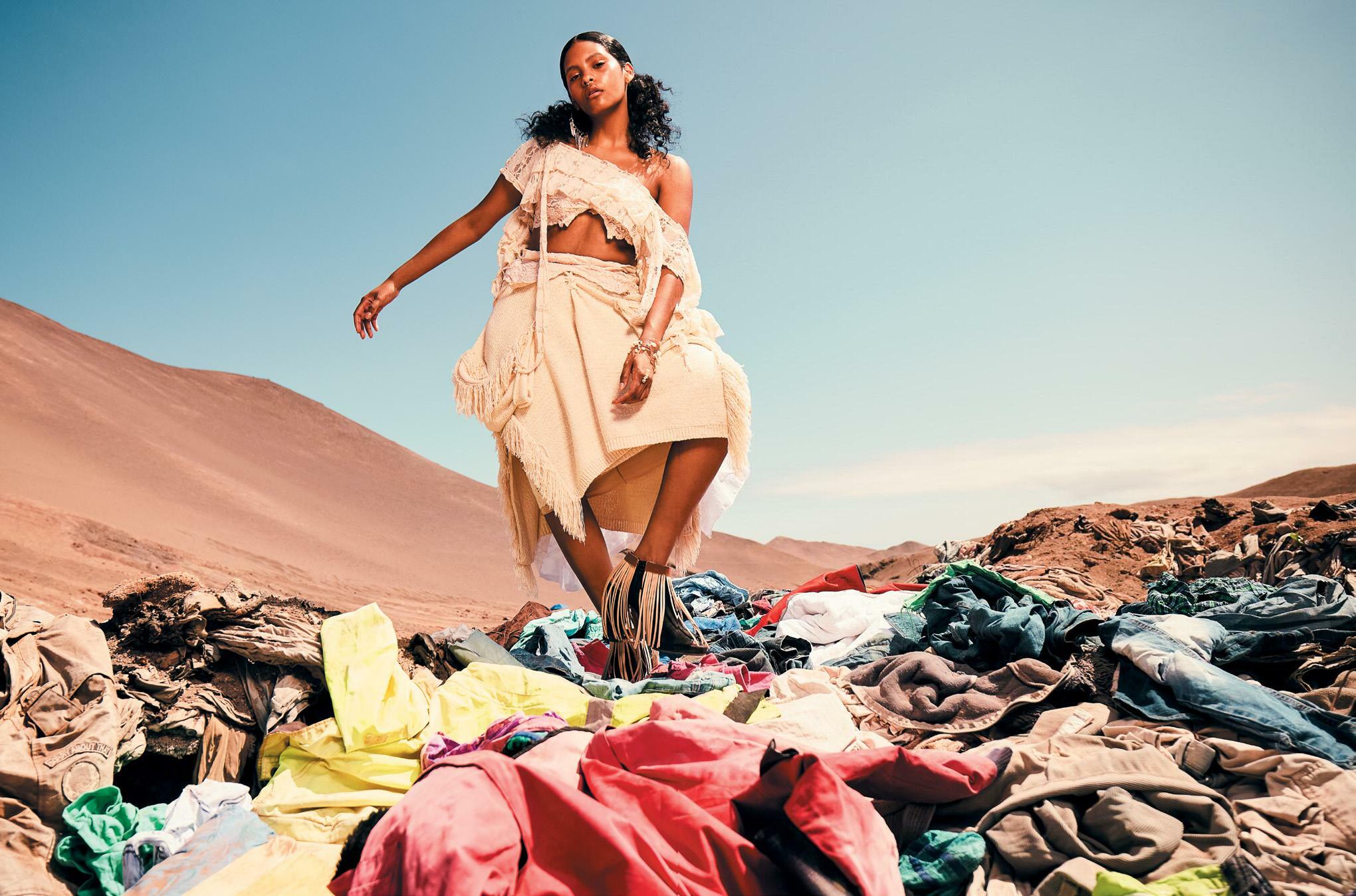
In Chile's Atacama Desert, mountain of more than 59,000 tons of clothing can now be seen from space. This so-called garment graveyard comprises fast-fashion discards inherited from the U.S., Europe and Asia. In 2024 activists, designers and NGOs organized Atacama Fashion Weekwith a fashion show atop the garment graveyardto draw attention to this growing problem.
IN NEW YORK STATE'S HUDSON VALLEY, Lilly Marsh weaves scarves, shawls, and other apparel out of fibers sourced from the Northeast. The items are beautiful and informed by historical techniques—for her Ph.D., Marsh studied contemporary North American hand knitting—but her interest in producing woven goods goes far beyond the final product. In 2017 Marsh co-founded the Hudson Valley Textile Project (HVTP), a natural-textile supply chain that aims to break free from the global fashion industry.
One big problem the HVTP set out to solve involves wool. After sheep are shorn at farms, the wool is greasy and needs to be cleaned, or scoured, before it can be worked with. For years the scouring facility closest to New York was in North Carolina, and it had a 1,000-pound minimum for processing—an amount most small farms can't reach on a yearly basis. Using money from grants and private donations, the HVTP opened Clean Fleece, a local scouring facility that washes small batches of wool and other animal fibers. “It’s enabled a ton of farmers who want to work on a small or midsize scale to get that done,” Marsh says. “That’s made a big difference in our industry.” Now farms across the region are selling socks, hats and mittens on a consistent basis—and at prices that are comparable to those of similar products from major brands.

Bu hikaye Scientific American dergisinin July/August 2025 baskısından alınmıştır.
Binlerce özenle seçilmiş premium hikayeye ve 9.000'den fazla dergi ve gazeteye erişmek için Magzter GOLD'a abone olun.
Zaten abone misiniz? Oturum aç
Scientific American'den DAHA FAZLA HİKAYE

Scientific American
Probiotic Hope and Hype
Despite their popularity, supplements with billions of \"good\" microbes help only a few illnesses, research shows

3 mins
January 2026

Scientific American
Mondays Really Are More Stressful
The start of the workweek can be a biologically measurable stressor, with consequences for long-term health that can stretch into retirement
4 mins
January 2026
Scientific American
Tiny Display
An e-paper breakthrough brings extremely high-resolution color
2 mins
January 2026
Scientific American
Fine-Feathered Snack
A bat's tracker documents a dramatic midair hunt
2 mins
January 2026

Scientific American
OUR ROBOTIC PICTURE
Will mechanical helpers ever be commonplace at home, at work and beyond?
11 mins
January 2026

Scientific American
"Use Your Words" Can Be Good for Kids' Health
Writing or expressing feelings can help adults mentally and physically. Kids are no different
5 mins
January 2026
Scientific American
Distant Diplomacy
Unrelated species “talk” and understand one another to avoid threats
2 mins
January 2026

Scientific American
Behind the Nobel
A 2025 winner reflects on the mysterious T cells that won him the prize
5 mins
January 2026

Scientific American
A Suite of Killers
Heart ailments, kidney diseases and type 2 diabetes actually may be part of just one condition. It's called CKM syndrome
10 mins
January 2026
Scientific American
Static Launch
Tiny worms leap toward their fruit fly hosts with an electric “tractor beam”
3 mins
January 2026
Listen
Translate
Change font size