
Passez à l'illimité avec Magzter GOLD
Obtenez un accès illimité à plus de 9 000 magazines, journaux et articles Premium pour seulement
Essayer OR - Gratuit
FASHION FORWARD
Scientific American
|July/August 2025
A rising swell of sustainable apparel practices makes getting dressed fun again
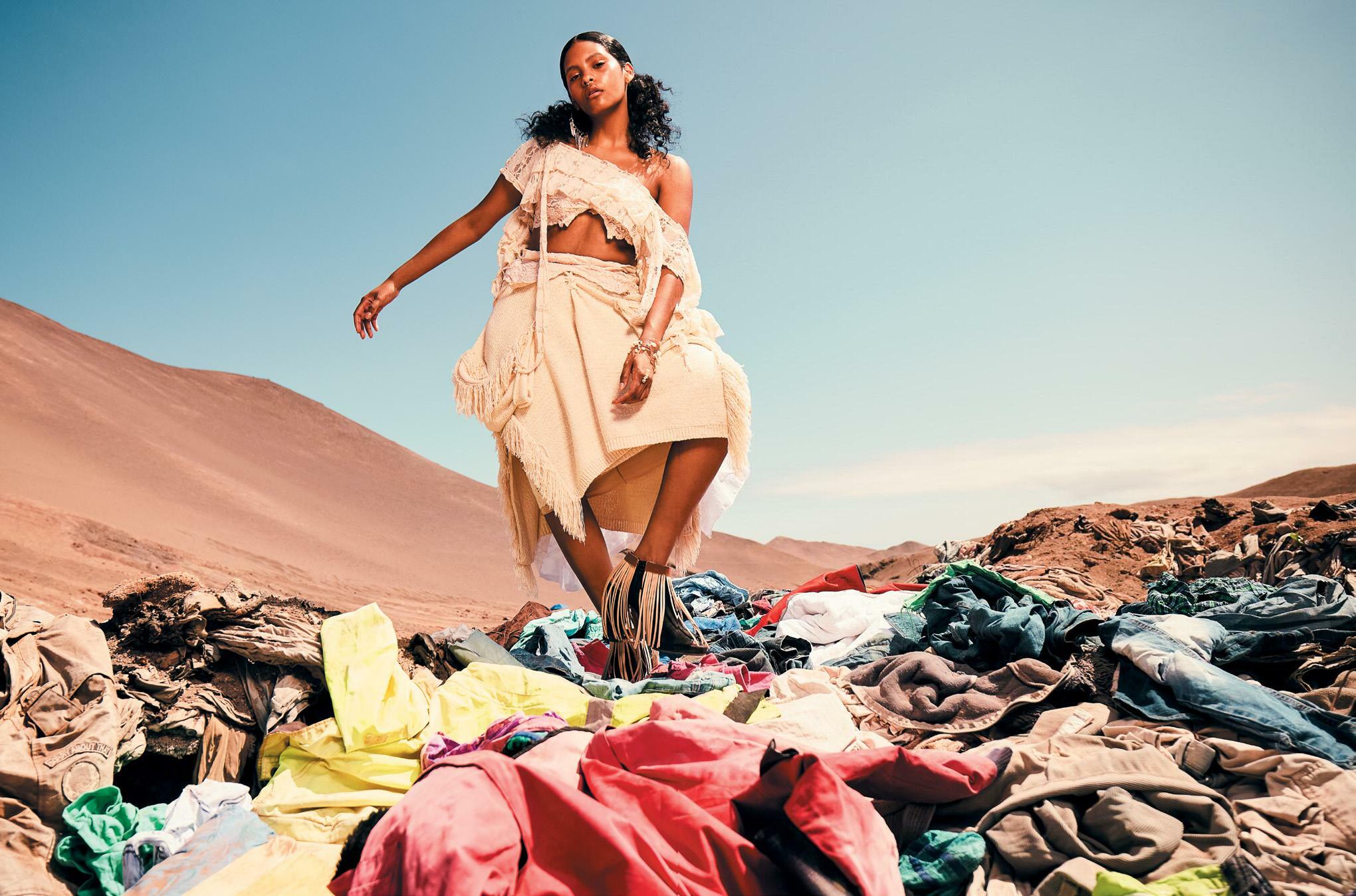
In Chile's Atacama Desert, mountain of more than 59,000 tons of clothing can now be seen from space. This so-called garment graveyard comprises fast-fashion discards inherited from the U.S., Europe and Asia. In 2024 activists, designers and NGOs organized Atacama Fashion Weekwith a fashion show atop the garment graveyardto draw attention to this growing problem.
IN NEW YORK STATE'S HUDSON VALLEY, Lilly Marsh weaves scarves, shawls, and other apparel out of fibers sourced from the Northeast. The items are beautiful and informed by historical techniques—for her Ph.D., Marsh studied contemporary North American hand knitting—but her interest in producing woven goods goes far beyond the final product. In 2017 Marsh co-founded the Hudson Valley Textile Project (HVTP), a natural-textile supply chain that aims to break free from the global fashion industry.
One big problem the HVTP set out to solve involves wool. After sheep are shorn at farms, the wool is greasy and needs to be cleaned, or scoured, before it can be worked with. For years the scouring facility closest to New York was in North Carolina, and it had a 1,000-pound minimum for processing—an amount most small farms can't reach on a yearly basis. Using money from grants and private donations, the HVTP opened Clean Fleece, a local scouring facility that washes small batches of wool and other animal fibers. “It’s enabled a ton of farmers who want to work on a small or midsize scale to get that done,” Marsh says. “That’s made a big difference in our industry.” Now farms across the region are selling socks, hats and mittens on a consistent basis—and at prices that are comparable to those of similar products from major brands.

Cette histoire est tirée de l'édition July/August 2025 de Scientific American.
Abonnez-vous à Magzter GOLD pour accéder à des milliers d'histoires premium sélectionnées et à plus de 9 000 magazines et journaux.
Déjà abonné ? Se connecter
PLUS D'HISTOIRES DE Scientific American

Scientific American
50, 100 & 150 Years
NATURAL FISSION REACTOR

3 mins
July/August 2026

Scientific American
A Youthful Illusion Sharpens Memory
By making people feel as if their face is a younger version of itself, researchers can bring childhood memories into sharper focus
4 mins
July/August 2026

Scientific American
BRAIN DRAIN
Dozens of countries are trying to convince disaffected American scientists to move there permanently—and plenty of young researchers are eager to go
10 mins
July/August 2026

Scientific American
The Youth American Scientists - Xiao Yang
Improving brain-machine interfaces to make them more resilient
1 mins
July/August 2026

Scientific American
The Youth American Scientists - Emily Finn
Studying why people interpret the same thing in different ways
1 mins
July/August 2026

Scientific American
The Youth American Scientists - Jaye Gardiner
Learning how the matrix around cells and tissues impacts cancers
1 mins
July/August 2026

Scientific American
The Youth American Scientists - Mikhail Kolmogorov
Developing software to reveal large genetic changes that lead to cancer
1 mins
July/August 2026

Scientific American
How to Fix Science
The federal funding system for scientific research in the U.S. needs reform
9 mins
July/August 2026
Scientific American
On Our Radar
These young scientists are making waves in their own ways. Keep an eye on them—great things are ahead
2 mins
July/August 2026
Scientific American
Journey to Titan
Inside NASA’s Dragonfly mission to Saturn’s largest moon
5 mins
July/August 2026
Listen
Translate
Change font size