Denemek ALTIN - Özgür
"Use Your Words" Can Be Good for Kids' Health
Scientific American
|January 2026
Writing or expressing feelings can help adults mentally and physically. Kids are no different
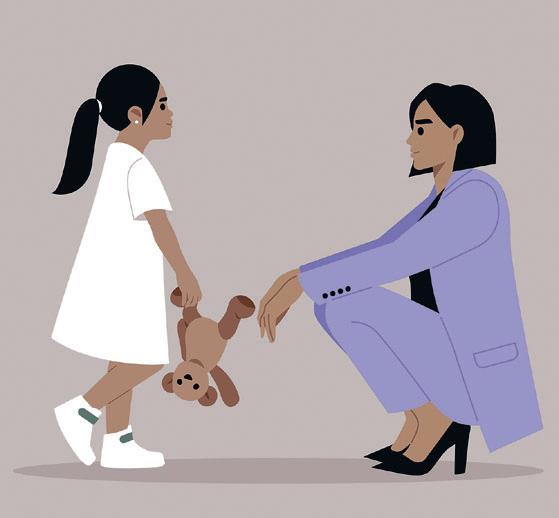
IN A DESPERATE PARENTING MOMENT after dinner, I told my six-year-old, who was mid-meltdown, “Use your words!” He had just started yelling and hitting his eight-year-old sister because she wasn’t sharing a stuffed animal he believed was his. Both kids froze for a second, giving me just enough of a pause to slow my own quickly rising emotions.
Looking back, I realize I never actually explained to my kids why words can help. But putting feelings into words is how we begin to name what’s happening inside us, and that naming can start to change the experience itself. Sometimes, as research shows, the words we choose to describe our lives can shape our mental health for months and years to come.
As a psychologist who has spent the better part of two decades studying stress and resilience in my Health and Human Performance Laboratory at Carnegie Mellon University, I explore how verbalizing our feelings can transform experience.
It can help us manage heated moments and also supports healing from life's hardest situations. Research published over the past 40 years on expressive disclosure—literally, using your words—shows it can lead to significant health improvements, especially for those coping with stressful life events. After writing about a challenging situation, people report fewer doctor visits, reduced pain, stronger immune function, and better outcomes for conditions such as asthma and arthritis.

Bu hikaye Scientific American dergisinin January 2026 baskısından alınmıştır.
Binlerce özenle seçilmiş premium hikayeye ve 9.000'den fazla dergi ve gazeteye erişmek için Magzter GOLD'a abone olun.
Zaten abone misiniz? Oturum aç
Scientific American'den DAHA FAZLA HİKAYE

Scientific American
Probiotic Hope and Hype
Despite their popularity, supplements with billions of \"good\" microbes help only a few illnesses, research shows

3 mins
January 2026
Scientific American
Mondays Really Are More Stressful
The start of the workweek can be a biologically measurable stressor, with consequences for long-term health that can stretch into retirement
4 mins
January 2026
Scientific American
Tiny Display
An e-paper breakthrough brings extremely high-resolution color
2 mins
January 2026
Scientific American
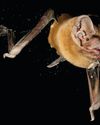
Fine-Feathered Snack
A bat's tracker documents a dramatic midair hunt
2 mins
January 2026

Scientific American
OUR ROBOTIC PICTURE
Will mechanical helpers ever be commonplace at home, at work and beyond?
11 mins
January 2026

Scientific American
"Use Your Words" Can Be Good for Kids' Health
Writing or expressing feelings can help adults mentally and physically. Kids are no different
5 mins
January 2026
Scientific American
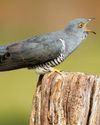
Distant Diplomacy
Unrelated species “talk” and understand one another to avoid threats
2 mins
January 2026

Scientific American
Behind the Nobel
A 2025 winner reflects on the mysterious T cells that won him the prize
5 mins
January 2026

Scientific American
A Suite of Killers
Heart ailments, kidney diseases and type 2 diabetes actually may be part of just one condition. It's called CKM syndrome
10 mins
January 2026
Scientific American
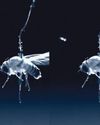
Static Launch
Tiny worms leap toward their fruit fly hosts with an electric “tractor beam”
3 mins
January 2026
Listen
Translate
Change font size