Try GOLD - Free
Hype about Gluten-Free Diets
Scientific American
|September 2025
Other wheat components are more likely to trigger health problems
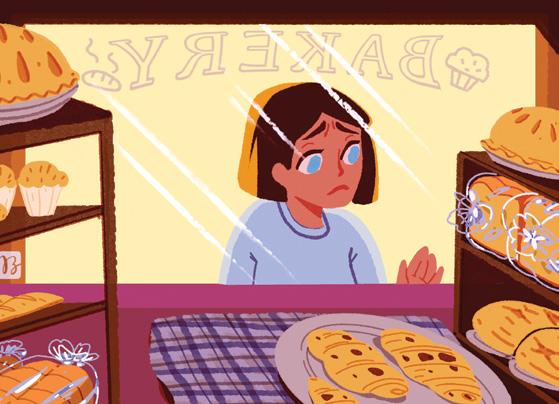
RECENTLY A FRIEND I'll call Anne told me she had cut gluten out of her diet to try to reduce joint pain in her hands. “I feel so much better,” she said. Anne is just one of many people who have self-prescribed such a diet, avoiding wheat because gluten is the primary nourishment protein in the developing plant. Usually people do this after hearing—anecdotally or from social media—that gluten is inflammatory and at the root of a range of physical and mental problems.
Anne’s story gave me pause. I have been known to joke that I am on an all-gluten diet because I enjoy bread and baked goods so much. But she and I are the same age, and I, too, have joint pain in my hands. Might that improve if I gave up gluten?
This is a question of considerable medical importance. For the roughly 1 percent of the population with celiac disease, gluten is clearly the problem. In celiac disease, white blood cells in the immune system regard gluten as a foreign invader, like a bacterium, and start attacking. The pain can be intense.
Celiac, which is linked to immune system genes called HLAs, causes a range of gut-related symptoms, including stomach pain, diarrhea and constipation. The ability to absorb nutrients goes down, leading to weight loss. There can also be damage beyond the gut such as brain fog, joint pain and infertility. No wonder people struggling with the disease have become so worried about gluten.

This story is from the September 2025 edition of Scientific American.
Subscribe to Magzter GOLD to access thousands of curated premium stories, and 10,000+ magazines and newspapers.
Already a subscriber? Sign In
MORE STORIES FROM Scientific American
Scientific American
Let There Be Weapons
The Department of Energy’s new Genesis Mission promises AI-accelerated discovery. Seven of its first 26 challenges focus on nuclear weapons and national security

4 mins
July/August 2026

Scientific American
How to Fix Science
The federal funding system for scientific research in the U.S. needs reform
9 mins
July/August 2026

Scientific American
Robots Can Now Fold Your Laundry
Home-helper tasks are becoming easier for robotic assistants
4 mins
July/August 2026
Scientific American
50, 100 & 150 Years
NATURAL FISSION REACTOR
3 mins
July/August 2026

Scientific American
Anna Ho
Describing the characteristics of short-lived astrophysical events
1 mins
July/August 2026
Scientific American
THE SOLILOQUY OF SCHRÖDINGER'S CAT
A MEDITATION ON LIFE AND THE VON NEUMANN–WIGNER INTERPRETATION OF QUANTUM MECHANICS
1 min
July/August 2026

Scientific American
Mikhail Kolmogorov
Developing software to reveal large genetic changes that lead to cancer
1 mins
July/August 2026

Scientific American
Jaye Gardiner
Learning how the matrix around cells and tissues impacts cancers
1 mins
July/August 2026

Scientific American
Timnit Gebru
On safeguarding independent research in the age of big tech
3 mins
July/August 2026

Scientific American
A Youthful Illusion Sharpens Memory
By making people feel as if their face is a younger version of itself, researchers can bring childhood memories into sharper focus
4 mins
July/August 2026
Listen
Translate
Change font size