
Gå ubegrenset med Magzter GOLD
Få ubegrenset tilgang til over 9000 magasiner, aviser og premiumhistorier for bare
Prøve GULL - Gratis
Hype about Gluten-Free Diets
Scientific American
|September 2025
Other wheat components are more likely to trigger health problems
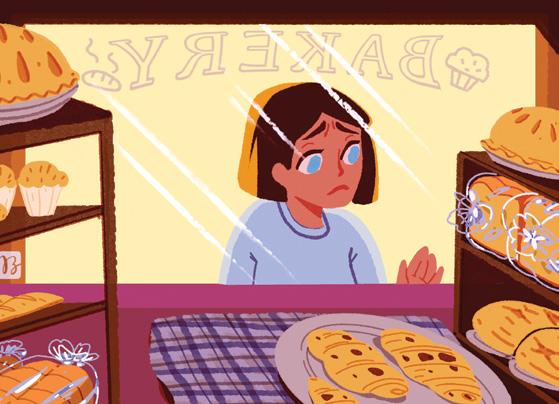
RECENTLY A FRIEND I'll call Anne told me she had cut gluten out of her diet to try to reduce joint pain in her hands. “I feel so much better,” she said. Anne is just one of many people who have self-prescribed such a diet, avoiding wheat because gluten is the primary nourishment protein in the developing plant. Usually people do this after hearing—anecdotally or from social media—that gluten is inflammatory and at the root of a range of physical and mental problems.
Anne’s story gave me pause. I have been known to joke that I am on an all-gluten diet because I enjoy bread and baked goods so much. But she and I are the same age, and I, too, have joint pain in my hands. Might that improve if I gave up gluten?
This is a question of considerable medical importance. For the roughly 1 percent of the population with celiac disease, gluten is clearly the problem. In celiac disease, white blood cells in the immune system regard gluten as a foreign invader, like a bacterium, and start attacking. The pain can be intense.
Celiac, which is linked to immune system genes called HLAs, causes a range of gut-related symptoms, including stomach pain, diarrhea and constipation. The ability to absorb nutrients goes down, leading to weight loss. There can also be damage beyond the gut such as brain fog, joint pain and infertility. No wonder people struggling with the disease have become so worried about gluten.

Denne historien er fra September 2025-utgaven av Scientific American.
Abonner på Magzter GOLD for å få tilgang til tusenvis av kuraterte premiumhistorier og over 9000 magasiner og aviser.
Allerede abonnent? Logg på
FLERE HISTORIER FRA Scientific American

Scientific American
The Quiet Math Problem That Runs the Planet
How Diffie-Hellman key exchange secures everything from your text messages to government secrets

7 mins
May 2026

Scientific American
The Fog of Science
Did an adversary just invent a world-changing weapon, or are they making it up? DARPA is building an AI to instantly call their bluff
4 mins
May 2026

Scientific American
The Hubble Space Telescope Is Still Awesome
Hubble is going strong despite its decades in space and next-generation successors
4 mins
May 2026

Scientific American
Meet America's Native Bees
Scientists estimate there are about 4,000 species of native bees in the U.S.
5 mins
May 2026

Scientific American
The Chemistry of Desire
Inside the secretive laboratories where scientists build novel molecules to make luxury fragrance feel like pure emotion
5 mins
May 2026

Scientific American
Scanning the Stone
As ore gets harder to find, the mining industry is turning to subatomic-particle sensors to push deep underground
8 mins
May 2026

Scientific American
YOUR HEART IN FLAMES
Inflammation may be the true cause of cardiovascular diseaseand there's a drug to treat it
13 mins
May 2026

Scientific American
Ancient Lexicon
Stone Age art may reveal a 40,000-year-old precursor to writing
2 mins
May 2026

Scientific American
Thermal Breakthrough
A new super heat conductor challenges fundamental physics
2 mins
May 2026

Scientific American
How to Vacation in Space
Planned orbital hotels promise luxury, but can they deliver?
4 mins
May 2026
Listen
Translate
Change font size