Try GOLD - Free
Forever Hotel
Outlook
|July 11, 2025
This novel is a flawed, luminous, maximalist love letter to Kolkata’s layered soul
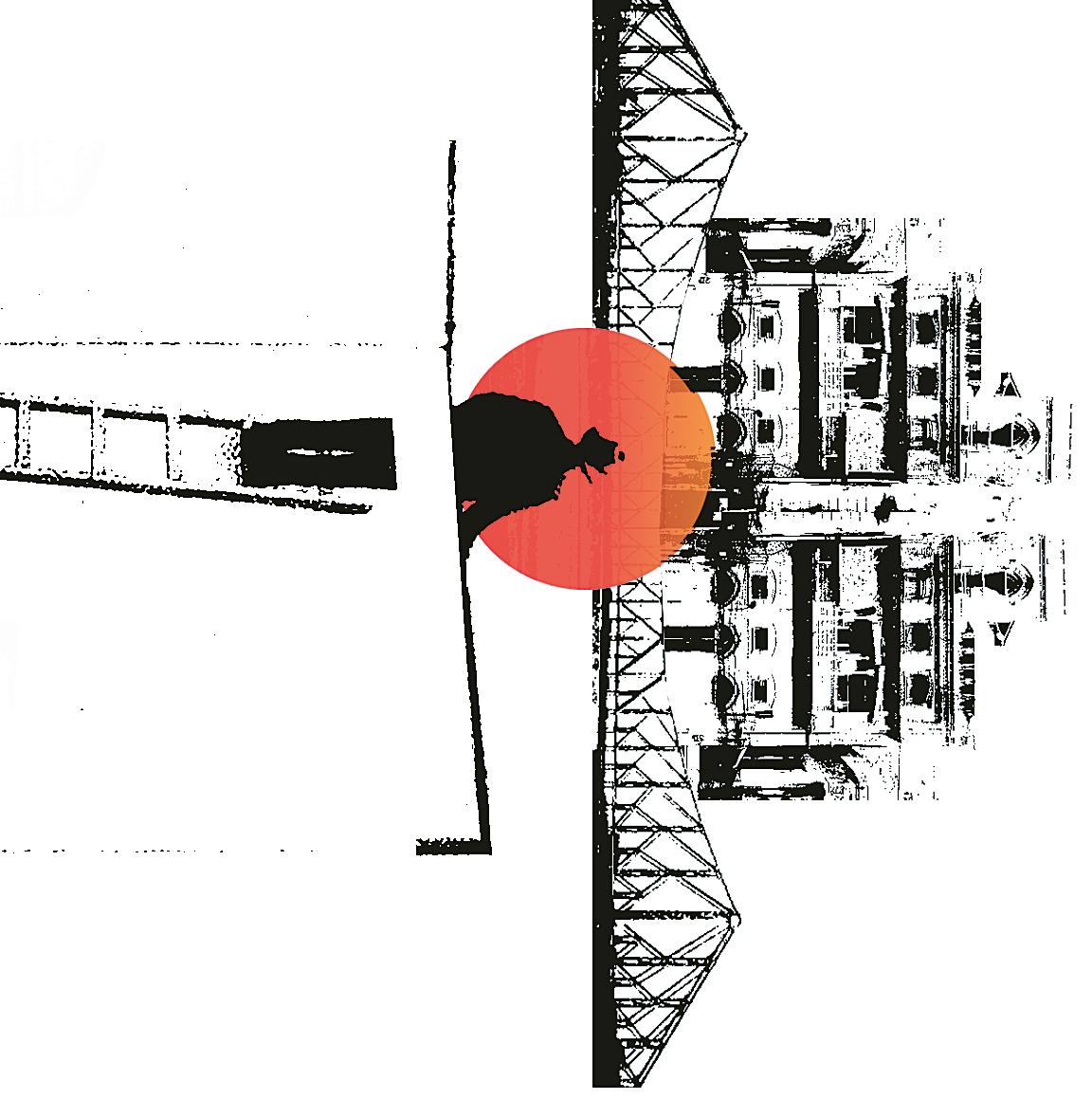
SOME novels try to tell a story. Others try to build a city. Great Eastern Hotel, Ruchir Joshi’s second novel and most ambitious work to date, is unapologetically the latter—a 900-page fugue on memory, ruin, revolution, and the unending labour of understanding a metropolis that resists coherence. What Joshi attempts here is not just a story of Kolkata, but a reconstruction of its soul. As readers, we do not walk through this novel so much as haunt it—room by room, riot by riot, brushstroke by breadcrumb.
If Sacred Games was Bombay’s maximalist mirror and The Shadow Lines the map of Kolkata’s memory, then Great Eastern Hotel is Kolkata’s mosaic. It’s a book where chronology buckles under the weight of history and art, where the dead refuse to stay silent, and where the eponymous hotel—the former ‘Jewel of the East’—stands as both edifice and echo, repository and riddle.
At the heart of this grandly discursive novel is Saki, also known as Robi Nagasaki Jones-Majumdar, an architectural scholar and reluctant narrator tasked with cataloging the works—and life—of a man he can neither wholly admire nor fully escape: Kedar Nath Lahiri. Kedar is the novel’s haunted keystone. A rakish zamindar’s son turned painter, Kedar is colonial modernity incarnate—a multilingual, sensual, politically indifferent yet culturally voracious urbane man. A lover of women, music, and drink, he floats above the political tremors of his age like a flaneur with a sketchbook. His paintings—described but not exalted—are less masterpieces than symptoms. In fact, the most profound act of artistry Kedar commits may be his destruction of them. Kedar, Joshi insists, is not the artist; the city is.


This story is from the July 11, 2025 edition of Outlook.
Subscribe to Magzter GOLD to access thousands of curated premium stories, and 10,000+ magazines and newspapers.
Already a subscriber? Sign In
MORE STORIES FROM Outlook

Outlook
'Why GDP Growth Doesn't Always Translate Into Votes'
The recent election results have once again shown that economic growth alone does not guarantee electoral victory.

3 mins
June 06, 2026

Outlook
Lights, Camera, Othering
The establishment of Israel has been accompanied by a national cinema devoted to negating and erasing the Palestinian Other
5 mins
June 06, 2026

Outlook
Goodbye to All That
Booker-winning British author Julian Barnes' Departure(s) is a unique hybrid work: playful, philosophical, whimsical
4 mins
June 06, 2026

Outlook
Collapse of Trust
As the NEET-UG 2026 paper leak forced the cancellation of India’s biggest medical entrance exam, more than 22 lakh aspirants find themselves trapped in uncertainty
11 mins
June 06, 2026

Outlook
NO LONGER A TWELFTH MAN
Bihar cricket, which has languished in the shadows for long, is all set to improve its strike rate, thanks to Vaibhav Sooryavanshi, the new Bihari kid on the block
5 mins
June 06, 2026

Outlook
BLAZE OF GLORY
The challenges of being a celebrity cricketer at a young age can be tough to handle
5 mins
June 06, 2026

Outlook
THE SWASHBUCKLERS
A new generation of fearless stars is emerging and finding its feet at the very top of an extremely competitive cricketing environment
5 mins
June 06, 2026

Outlook
THE TEEN TORNAD
At the age of 15, Vaibhav Sooryavanshi is already a cricketing legend
10 mins
June 06, 2026

Outlook
A Journey to Remember
The prerecorded message crackled over the din in the compartment: ‘Welcome to the Shatabdi Express.
4 mins
June 06, 2026

Outlook
Crossing Borders
Ruth Martin is the translator of German-Iranian author Shida Bazyar’s novel The Nights are Quiet in Tehran (originally written in German), which has been shortlisted for the 2026 International Booker Prize.
4 mins
June 06, 2026
Listen
Translate
Change font size