Prøve GULL - Gratis
Forever Hotel
Outlook
|July 11, 2025
This novel is a flawed, luminous, maximalist love letter to Kolkata’s layered soul
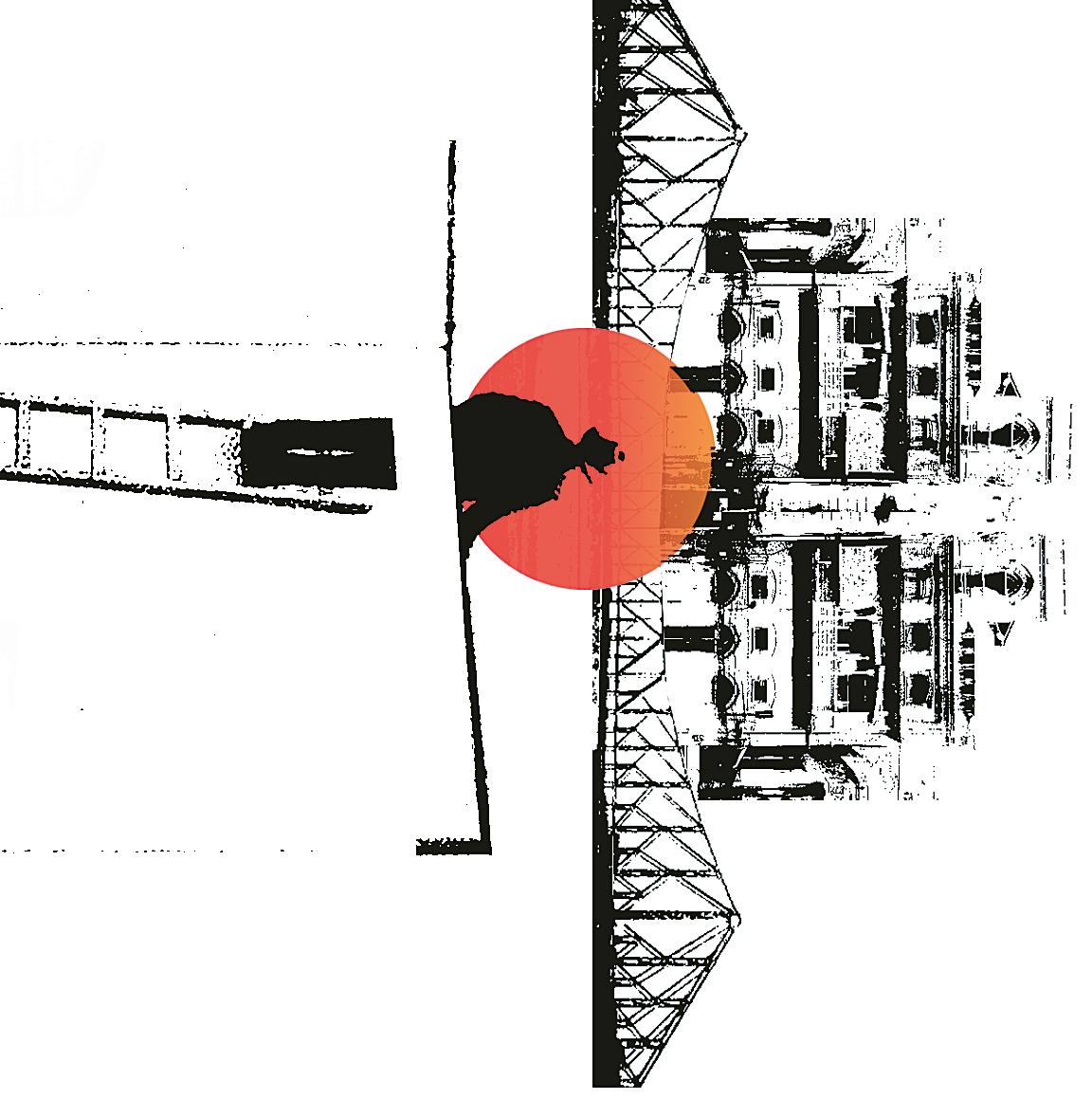
SOME novels try to tell a story. Others try to build a city. Great Eastern Hotel, Ruchir Joshi’s second novel and most ambitious work to date, is unapologetically the latter—a 900-page fugue on memory, ruin, revolution, and the unending labour of understanding a metropolis that resists coherence. What Joshi attempts here is not just a story of Kolkata, but a reconstruction of its soul. As readers, we do not walk through this novel so much as haunt it—room by room, riot by riot, brushstroke by breadcrumb.
If Sacred Games was Bombay’s maximalist mirror and The Shadow Lines the map of Kolkata’s memory, then Great Eastern Hotel is Kolkata’s mosaic. It’s a book where chronology buckles under the weight of history and art, where the dead refuse to stay silent, and where the eponymous hotel—the former ‘Jewel of the East’—stands as both edifice and echo, repository and riddle.
At the heart of this grandly discursive novel is Saki, also known as Robi Nagasaki Jones-Majumdar, an architectural scholar and reluctant narrator tasked with cataloging the works—and life—of a man he can neither wholly admire nor fully escape: Kedar Nath Lahiri. Kedar is the novel’s haunted keystone. A rakish zamindar’s son turned painter, Kedar is colonial modernity incarnate—a multilingual, sensual, politically indifferent yet culturally voracious urbane man. A lover of women, music, and drink, he floats above the political tremors of his age like a flaneur with a sketchbook. His paintings—described but not exalted—are less masterpieces than symptoms. In fact, the most profound act of artistry Kedar commits may be his destruction of them. Kedar, Joshi insists, is not the artist; the city is.


Denne historien er fra July 11, 2025-utgaven av Outlook.
Abonner på Magzter GOLD for å få tilgang til tusenvis av kuraterte premiumhistorier og over 9000 magasiner og aviser.
Allerede abonnent? Logg på
FLERE HISTORIER FRA Outlook
Outlook
Goapocalypse
THE mortal remains of an arterial road skims my home on its way to downtown Anjuna, once a quiet beach village 'discovered' by the hippies, explored by backpackers, only to be jackbooted by mass tourism and finally consumed by real estate sharks.

2 mins
January 21, 2026

Outlook
A Country Penned by Writers
TO enter the country of writers, one does not need any visa or passport; one can cross the borders anywhere at any time to land themselves in the country of writers.
8 mins
January 21, 2026
Outlook
Visualising Fictional Landscapes
The moment is suspended in the silence before the first mark is made.
1 mins
January 21, 2026
Outlook
Only the Upper, No Lower Caste in MALGUDI
EVERY English teacher would recognise the pleasures, the guilt and the conflict that is the world of teaching literature in a university.
5 mins
January 21, 2026
Outlook
The Labour of Historical Fiction
I don’t know if I can pinpoint when the idea to write fiction took root in my mind, but five years into working as an oral historian of the 1947 Partition, the landscape of what would become my first novel had grown too insistent to ignore.
6 mins
January 21, 2026
Outlook
Conjuring a Landscape
A novel rarely begins with a plot.
6 mins
January 21, 2026

Outlook
The City that Remembered Us...
IN the After-Nation, the greatest crime was remembering.
1 min
January 21, 2026
Outlook
Imagined Spaces
I was talking with the Kudiyattam artist Kapila Venu recently about the magic of eyes.
5 mins
January 21, 2026
Outlook
Known and Unknown
IN an era where the gaze upon landscape has commodified into picture postcards with pristine beauty—rolling hills, serene rivers, untouched forests—the true essence of the earth demands a radical shift.
2 mins
January 21, 2026

Outlook
A Dot in Soot
A splinter in the mouth. Like a dream. A forgotten dream.
2 mins
January 21, 2026
Listen
Translate
Change font size