
Gå ubegrenset med Magzter GOLD
Få ubegrenset tilgang til over 9000 magasiner, aviser og premiumhistorier for bare
Cracking a 125-Year-Old Math Problem
Scientific American
|September 2025
A breakthrough in Hilbert's sixth problem is a major step in grounding physics in math

WHEN THE GREATEST MATHEMATICIAN alive unveils a vision for the next century of research, the math world takes note. That's exactly what happened in 1900 at the International Congress of Mathematicians at Sorbonne University in Paris. Legendary mathematician David Hilbert presented 10 unsolved problems as ambitious guideposts for the 20th century. He later expanded his list to include 23 problems, and their influence on mathematical thought over the past 125 years cannot be overstated.
Hilbert's sixth problem was one of the loftiest. He called for “axiomatizing” physics, or determining the bare minimum of mathematical assumptions behind all its theories. Broadly construed, it's not clear whether mathematical physicists could ever be sure they had fully met this challenge. Hilbert mentioned some specific subgoals, however, and researchers have since refined his vision into concrete steps toward its solution.
In March mathematicians Yu Deng of the University of Chicago and Zaher Hani and Xiao Ma, both at the University of Michigan, posted a paper to the preprint server arXiv.org in which they claim to have achieved one of these goals. If their work withstands scrutiny, it will mark a major stride toward grounding physics in math and may open the door to analogous breakthroughs in other areas of physics.

Denne historien er fra September 2025-utgaven av Scientific American.
Abonner på Magzter GOLD for å få tilgang til tusenvis av kuraterte premiumhistorier og over 9000 magasiner og aviser.
Allerede abonnent? Logg på
FLERE HISTORIER FRA Scientific American

Scientific American
Probiotic Hope and Hype
Despite their popularity, supplements with billions of \"good\" microbes help only a few illnesses, research shows

3 mins
January 2026

Scientific American
Mondays Really Are More Stressful
The start of the workweek can be a biologically measurable stressor, with consequences for long-term health that can stretch into retirement
4 mins
January 2026
Scientific American
Tiny Display
An e-paper breakthrough brings extremely high-resolution color
2 mins
January 2026
Scientific American
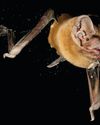
Fine-Feathered Snack
A bat's tracker documents a dramatic midair hunt
2 mins
January 2026
Scientific American
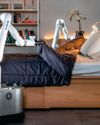
OUR ROBOTIC PICTURE
Will mechanical helpers ever be commonplace at home, at work and beyond?
11 mins
January 2026

Scientific American
"Use Your Words" Can Be Good for Kids' Health
Writing or expressing feelings can help adults mentally and physically. Kids are no different
5 mins
January 2026
Scientific American
Distant Diplomacy
Unrelated species “talk” and understand one another to avoid threats
2 mins
January 2026
Scientific American
Behind the Nobel
A 2025 winner reflects on the mysterious T cells that won him the prize
5 mins
January 2026

Scientific American
A Suite of Killers
Heart ailments, kidney diseases and type 2 diabetes actually may be part of just one condition. It's called CKM syndrome
10 mins
January 2026
Scientific American
Static Launch
Tiny worms leap toward their fruit fly hosts with an electric “tractor beam”
3 mins
January 2026
Listen
Translate
Change font size