
Gå ubegrenset med Magzter GOLD
Få ubegrenset tilgang til over 9000 magasiner, aviser og premiumhistorier for bare
Coping with a LifeAltering Diagnosis
Scientific American
|September 2025
When a child has a major health issue, learning how to manage new routines and expectations can be the key to everyone’s happiness

WHAT AM I SUPPOSED TO DO NOW?" This question was the most common one from parents when I started my training in the quiet and solemn neonatal intensive care unit (NICU) of an otherwise welcoming, brightly lit, cheerful children’s hospital.
Ifelt the pain and loss of these critically ill infants’ parents, who were sometimes slumped and moving slowly in their worry. Their soft voices belied the anxiety about the future bouncing off every wall: How would they care for their child at home without the equipment and support of the hospital? How would they build the routines to help their child thrive under unimaginably hard circumstances?
More than 20 years later, at a different children’s hospital, I saw some of the same worries in parents of teenagers with chronic pain. Even though these parents were a decade or more into their caregiving routines, many were still not sure about what to do or how to care for their children as they approached adulthood. Without exception, they wanted their teens to strive for an independent adulthood, but they had trouble providing even small opportunities for independence out of fear of disruption to their child’s medical care plan. Just like the NICU parents from my training days, these families were struggling to be the best possible care providers and parents.
Raising a child with a chronic health condition changes the routines that shape everyday life. Meals, bathing and dressing might be different than planned; bedtime and playtime also shift. Parents still need to be patient, warm, responsive and encouraging; that doesn’t change. Being able to give praise and to provide structure and consistency remains important but might prove harder to prioritize. These caregiving demands can be extreme, and research tells us that parents can find it difficult to meet their own needs and the needs of their children, often sacrificing their own health care and well-being.
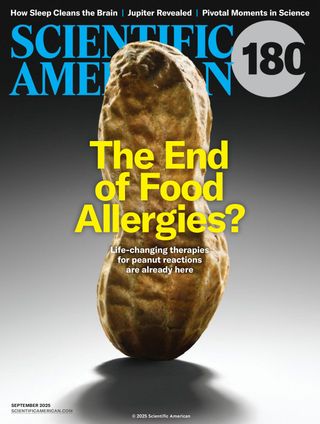

Denne historien er fra September 2025-utgaven av Scientific American.
Abonner på Magzter GOLD for å få tilgang til tusenvis av kuraterte premiumhistorier og over 9000 magasiner og aviser.
Allerede abonnent? Logg på
FLERE HISTORIER FRA Scientific American

Scientific American
Probiotic Hope and Hype
Despite their popularity, supplements with billions of \"good\" microbes help only a few illnesses, research shows

3 mins
January 2026

Scientific American
Mondays Really Are More Stressful
The start of the workweek can be a biologically measurable stressor, with consequences for long-term health that can stretch into retirement
4 mins
January 2026
Scientific American
Tiny Display
An e-paper breakthrough brings extremely high-resolution color
2 mins
January 2026

Scientific American
Fine-Feathered Snack
A bat's tracker documents a dramatic midair hunt
2 mins
January 2026

Scientific American
OUR ROBOTIC PICTURE
Will mechanical helpers ever be commonplace at home, at work and beyond?
11 mins
January 2026

Scientific American
"Use Your Words" Can Be Good for Kids' Health
Writing or expressing feelings can help adults mentally and physically. Kids are no different
5 mins
January 2026

Scientific American
Distant Diplomacy
Unrelated species “talk” and understand one another to avoid threats
2 mins
January 2026

Scientific American
Behind the Nobel
A 2025 winner reflects on the mysterious T cells that won him the prize
5 mins
January 2026

Scientific American
A Suite of Killers
Heart ailments, kidney diseases and type 2 diabetes actually may be part of just one condition. It's called CKM syndrome
10 mins
January 2026

Scientific American
Static Launch
Tiny worms leap toward their fruit fly hosts with an electric “tractor beam”
3 mins
January 2026
Listen
Translate
Change font size