
Gå ubegrenset med Magzter GOLD
Få ubegrenset tilgang til over 9000 magasiner, aviser og premiumhistorier for bare
Who invented the southern constellations?
BBC Sky at Night Magazine
|June 2023
Ian Ridpath uncovers how it took 150 years of exploration to fill the skies of the Southern Hemisphere with 26 new constellations.
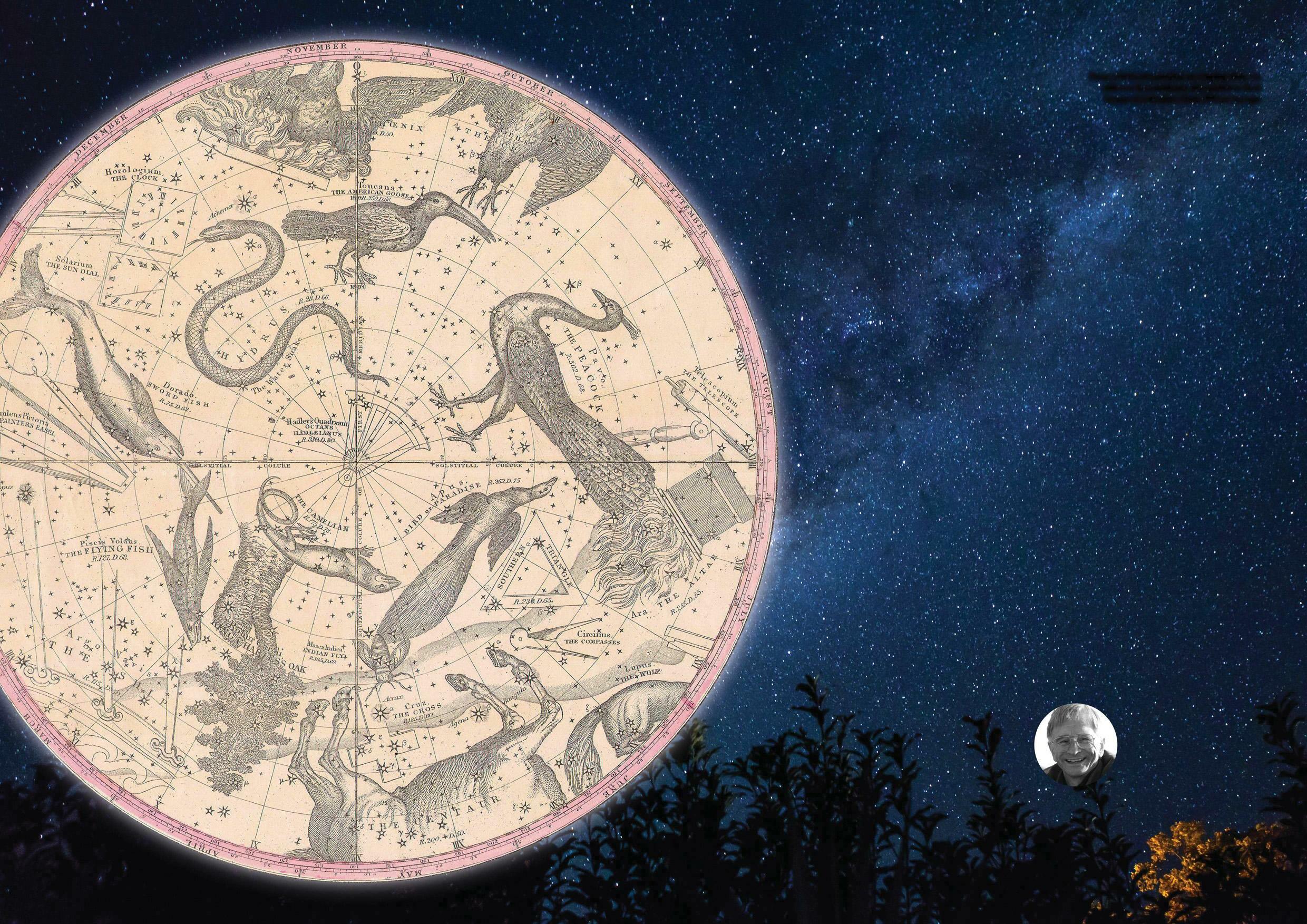
On seeing a chart of the Southern Hemisphere constellations, the Lick Observatory astronomer Heber Doust Curtis is reputed to have declared: "It looks like somebody's attic!".
While it's true that the southern constellations include such technological relics as an air pump, a chemical furnace and a pendulum clock, there are also exotic animals such as a peacock, a bird of paradise and a dorado chasing a flying fish- not to mention the oak tree that was planted by Edmond Halley to commemorate King Charles II, only to be later felled by a Frenchman.
Before the first European seafarers ventured around the tip of Africa to open trade route's to India and the Far East, the sky around the south celestial pole was a blank slate for Western astronomers.
The 48 Greek constellations in Ptolemy's book the Almagest of 150 AD' went only as far south as Centaurus and Argo Navis. Beyond that lay the.. celestial equivalent of terra incognita, beneath the horizon for European observers.
Exploring the southern sky
One man was determined to fill in this blank area of sky: the Dutch cartographer and theologian Petrus Plancius (1552-1622). When the first Dutch trading expedition to the East Indies, the Eerste Schipvaart, set sail in April 1595, Plancius instructed several members of the ships' crews to make positional observations of the southern stars. Foremost among these trusted observers was Pieter Dirkszoon Keyser (c1540-96), chief navigator on the Hollandia, joint largest of the four ships in the fleet.
The Dutch fleet arrived at Madagascar, latitude 23° south, in September 1595 where they remained for several months to resupply and recover from scurvy and malnutrition. It was during this stopover that Keyser made most of his observations, measuring star positions from the crow's nest of his ship, probably using an astrolabe given to him by Plancius.


Denne historien er fra June 2023-utgaven av BBC Sky at Night Magazine.
Abonner på Magzter GOLD for å få tilgang til tusenvis av kuraterte premiumhistorier og over 9000 magasiner og aviser.
Allerede abonnent? Logg på
FLERE HISTORIER FRA BBC Sky at Night Magazine
BBC Sky at Night Magazine
MOONWATCH
January's top lunar feature to observe

2 mins
January 2026
BBC Sky at Night Magazine
Speed up your processing workflow
How to use Photoshop's Actions tool to drastically cut your processing time
3 mins
January 2026
BBC Sky at Night Magazine
Chasing Canada's polar lights
With solar maximum peaking and a new Moon promising dark skies, Jamie Carter travels to Churchill, Manitoba to hunt the Northern Lights - and dodge polar bears – in Canada's far north
7 mins
January 2026
BBC Sky at Night Magazine
Beyond Pluto: The search for the hidden planets
Could one – or even two - undiscovered planets lurk at the edges of our Solar System? Nicky Jenner explores how close we are to finding the elusive 'Planet 9'
6 mins
January 2026
BBC Sky at Night Magazine
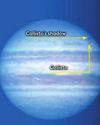
Jupiter moon events
Jupiter is a magnificent planet to observe.
2 mins
January 2026

BBC Sky at Night Magazine
What samples from space have taught us
Alastair Gunn explains what scientists have learnt in the 20 years since the first unmanned mission brought materials back from alien worlds
3 mins
January 2026
BBC Sky at Night Magazine
The Milky Way as you've never seen it before
This is the largest low-frequency radio colour image of our Galaxy ever assembled
1 min
January 2026
BBC Sky at Night Magazine
Merger of ‘impossibly' massive black holes explained
Scientists discover how enormous, fast-spinning black holes can exist after all
1 mins
January 2026
BBC Sky at Night Magazine
Lunar occultation of the Pleiades
BEST TIME TO SEE: 27 January from 20:30 UT
1 min
January 2026
BBC Sky at Night Magazine
The Universe's expansion may be slowing down
New study suggests current theories of dark energy could be wrong
1 mins
January 2026
Translate
Change font size