
Gå ubegrenset med Magzter GOLD
Få ubegrenset tilgang til over 9000 magasiner, aviser og premiumhistorier for bare
Ripples in time
BBC Sky at Night Magazine
|October 2025
A decade of gravitational wave detections In 2015, a new field of astronomy opened with the very first observation made beyond the electromagnetic spectrum. Elizabeth Todd looks at the milestone and what it meant
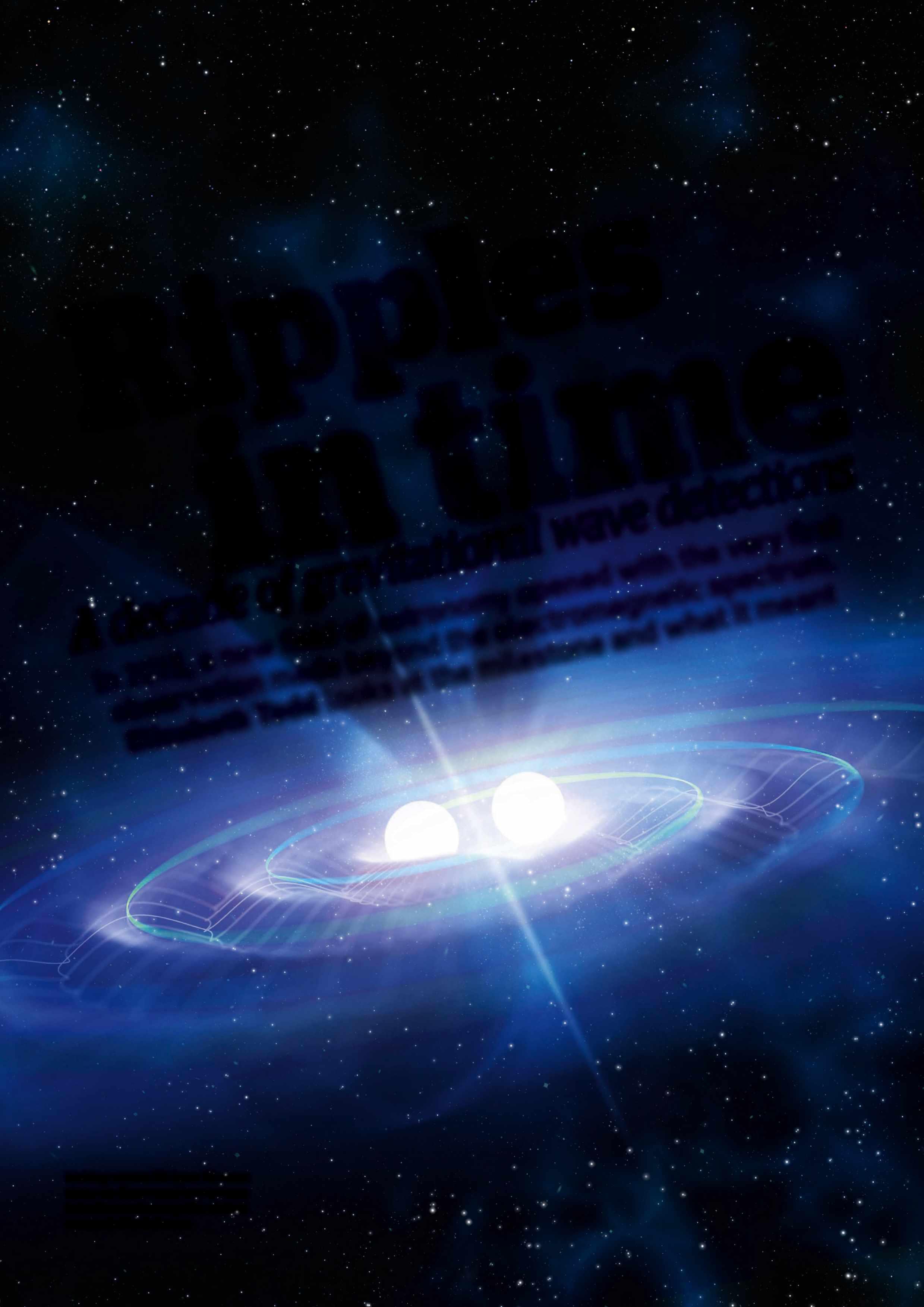
Ten years ago, on 14 September 2015, a new window on the Universe was opened, giving us a novel way of studying exotic, high-energy objects such as black holes and neutron stars: the first direct detection of a gravitational wave was made by LIGO (the Laser Interferometer GravitationalWave Observatory). Now that a decade has passed, let's take a look at some of the events leading up to the groundbreaking detection of these ripples in spacetime and the exciting discoveries made since.
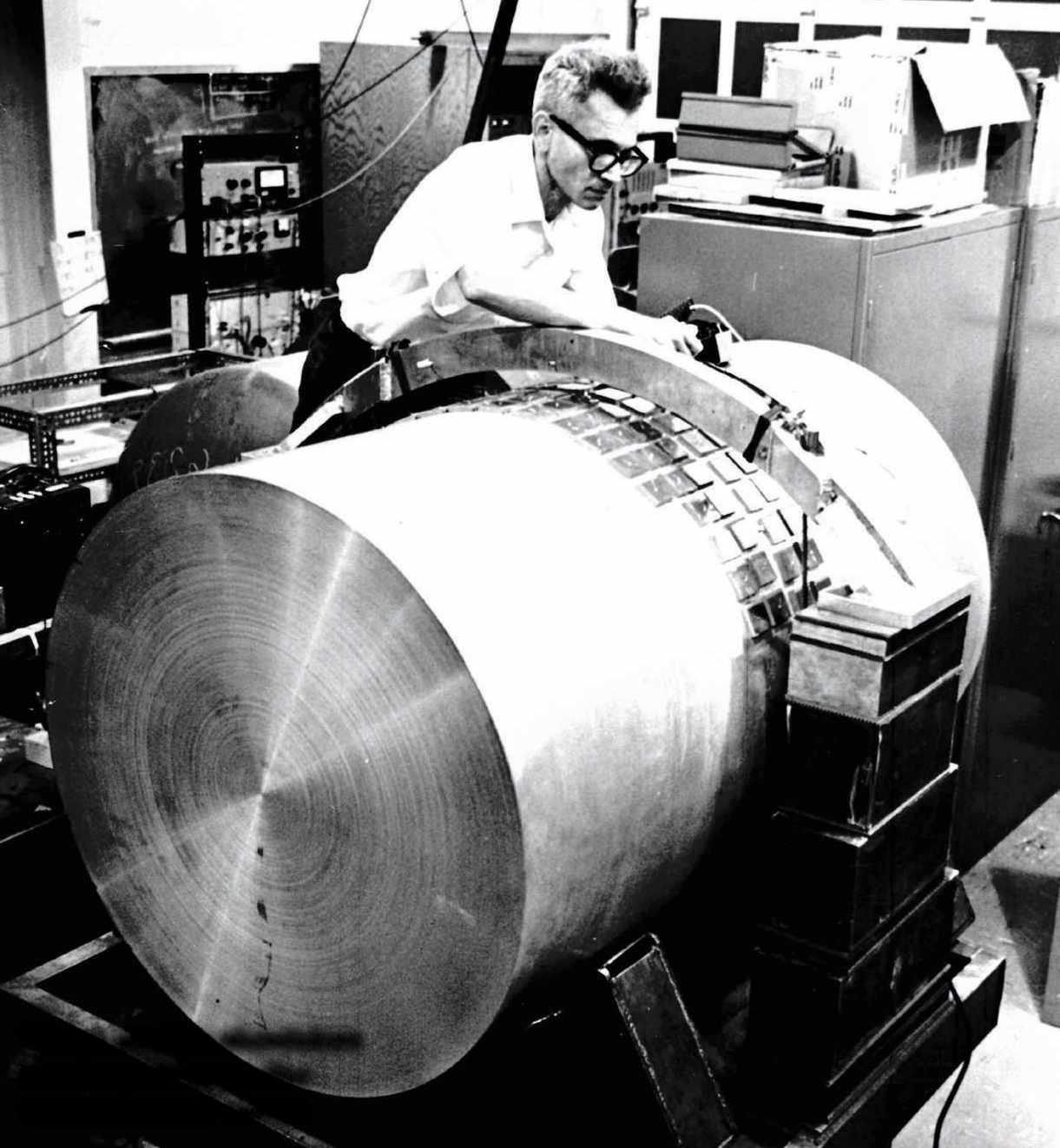 But where did the idea of looking for gravitational waves come from? Einstein himself suggested it, but he thought we would never detect them. This was taken as a challenge by many scientists, who set out to detect these 'undetectable' waves. In the 1960s, Joseph Weber began building resonant bar detectors, aluminium cylinders that would vibrate if a gravitational wave was to pass through. While the detectors were not shown to make detections, Weber's legacy lives on. Following his lead, having detectors at geographically separate locations helps to determine whether a signal is from a gravitational wave or a more local source such as an earthquake.
The first indirect evidence of the existence of gravitational waves was published by physicist Russell Hulse and astrophysicist Joseph Taylor Jr, who discovered the first binary pulsar system PSR B1913+16 in 1974. They knew, from Einstein's theory, that if the system was emitting gravitational waves, it would be losing energy and the stars would spiral into each other, their orbital period decreasing as the distance between them shrank. Now, with 50 years of data, the measurements agree with Einstein's predictions to within 1 per cent.
Perfecting the science

Denne historien er fra October 2025-utgaven av BBC Sky at Night Magazine.
Abonner på Magzter GOLD for å få tilgang til tusenvis av kuraterte premiumhistorier og over 9000 magasiner og aviser.
Allerede abonnent? Logg på
FLERE HISTORIER FRA BBC Sky at Night Magazine
BBC Sky at Night Magazine
MOONWATCH
January's top lunar feature to observe

2 mins
January 2026
BBC Sky at Night Magazine
Speed up your processing workflow
How to use Photoshop's Actions tool to drastically cut your processing time
3 mins
January 2026
BBC Sky at Night Magazine
Chasing Canada's polar lights
With solar maximum peaking and a new Moon promising dark skies, Jamie Carter travels to Churchill, Manitoba to hunt the Northern Lights - and dodge polar bears – in Canada's far north
7 mins
January 2026
BBC Sky at Night Magazine
Beyond Pluto: The search for the hidden planets
Could one – or even two - undiscovered planets lurk at the edges of our Solar System? Nicky Jenner explores how close we are to finding the elusive 'Planet 9'
6 mins
January 2026
BBC Sky at Night Magazine
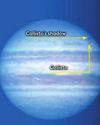
Jupiter moon events
Jupiter is a magnificent planet to observe.
2 mins
January 2026
BBC Sky at Night Magazine
What samples from space have taught us
Alastair Gunn explains what scientists have learnt in the 20 years since the first unmanned mission brought materials back from alien worlds
3 mins
January 2026
BBC Sky at Night Magazine
The Milky Way as you've never seen it before
This is the largest low-frequency radio colour image of our Galaxy ever assembled
1 min
January 2026
BBC Sky at Night Magazine
Merger of ‘impossibly' massive black holes explained
Scientists discover how enormous, fast-spinning black holes can exist after all
1 mins
January 2026
BBC Sky at Night Magazine
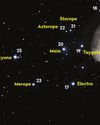
Lunar occultation of the Pleiades
BEST TIME TO SEE: 27 January from 20:30 UT
1 min
January 2026
BBC Sky at Night Magazine
The Universe's expansion may be slowing down
New study suggests current theories of dark energy could be wrong
1 mins
January 2026
Listen
Translate
Change font size