Versuchen GOLD - Frei
Ripples in time
BBC Sky at Night Magazine
|October 2025
A decade of gravitational wave detections In 2015, a new field of astronomy opened with the very first observation made beyond the electromagnetic spectrum. Elizabeth Todd looks at the milestone and what it meant
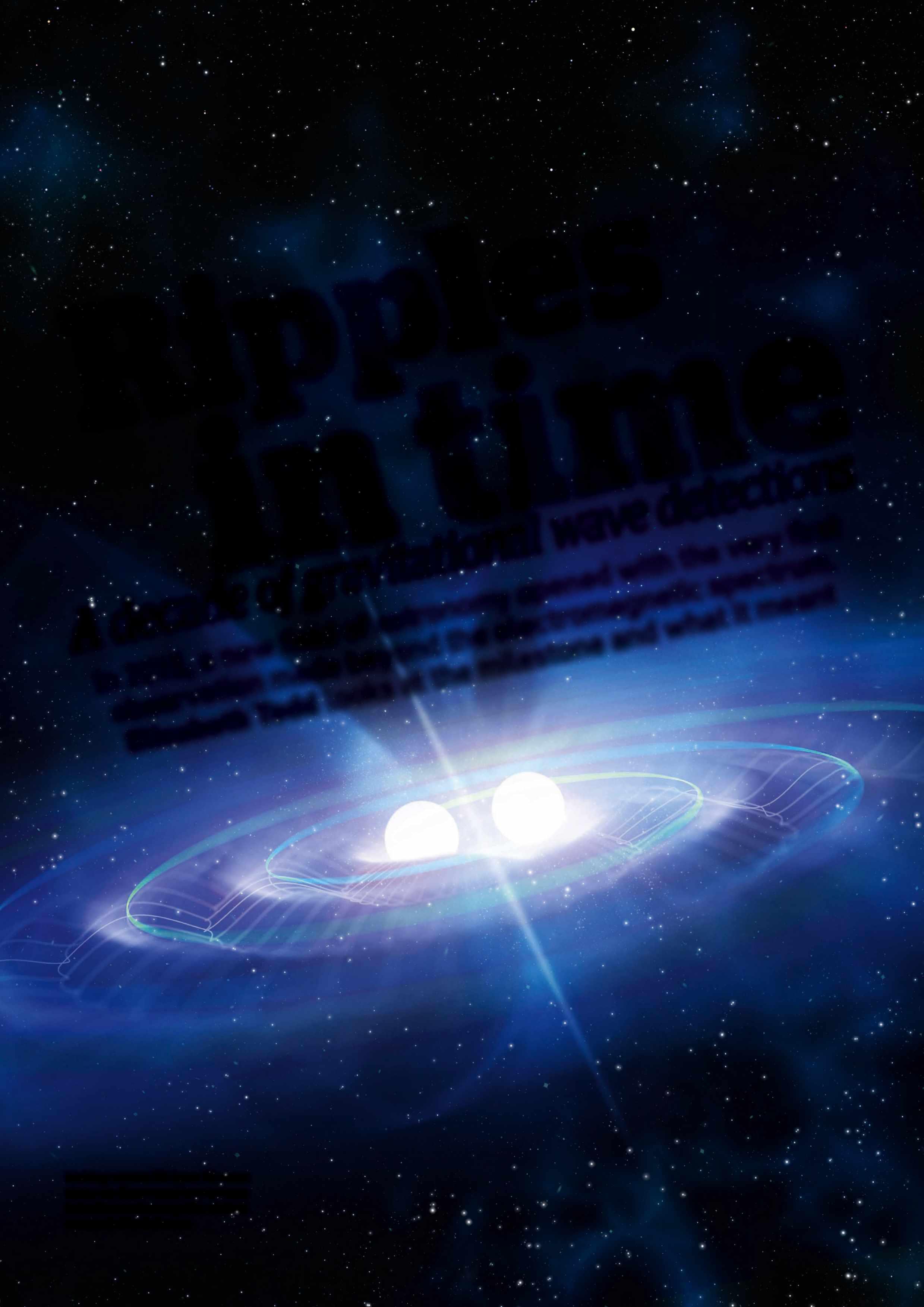
Ten years ago, on 14 September 2015, a new window on the Universe was opened, giving us a novel way of studying exotic, high-energy objects such as black holes and neutron stars: the first direct detection of a gravitational wave was made by LIGO (the Laser Interferometer GravitationalWave Observatory). Now that a decade has passed, let's take a look at some of the events leading up to the groundbreaking detection of these ripples in spacetime and the exciting discoveries made since.
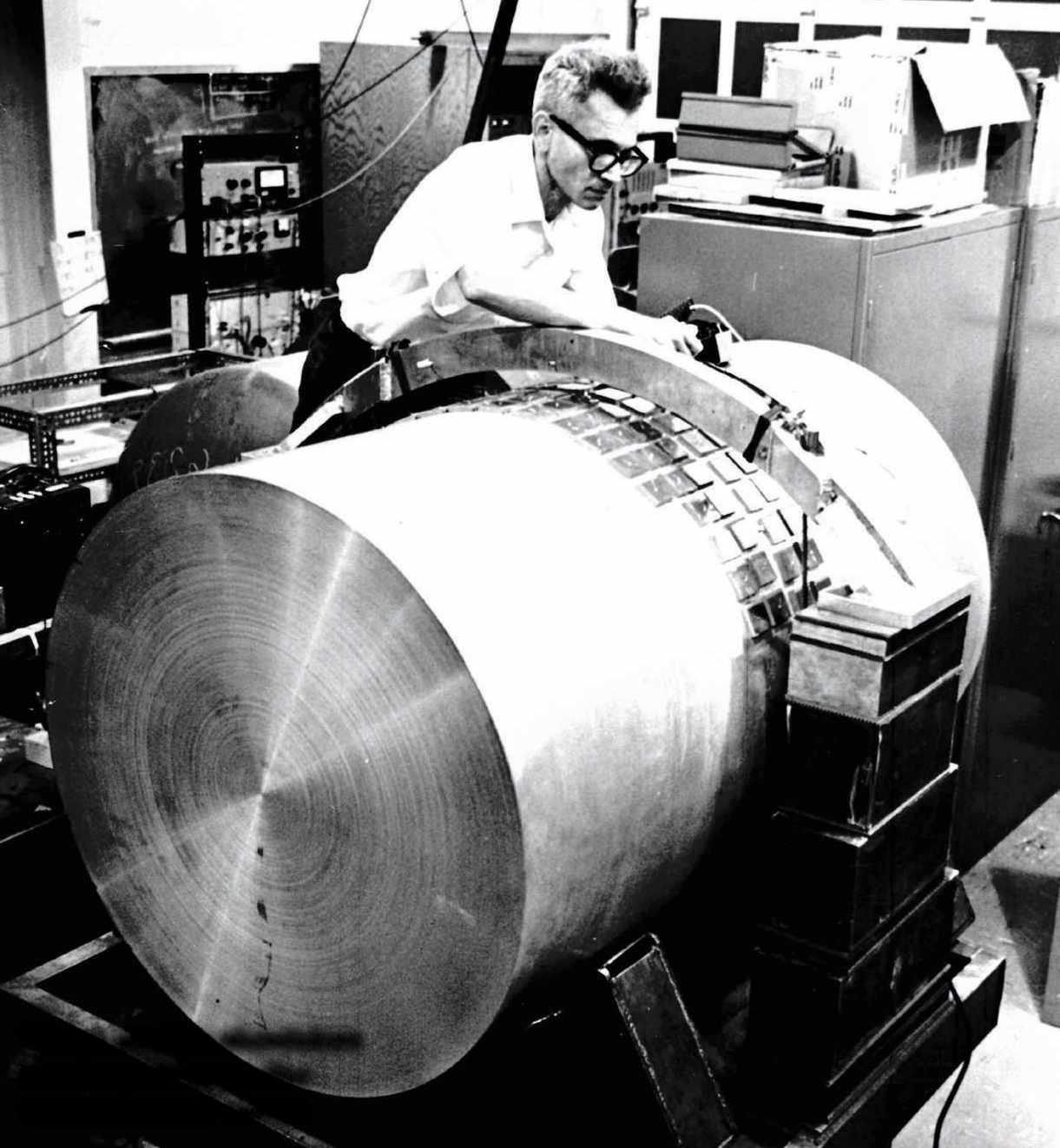 But where did the idea of looking for gravitational waves come from? Einstein himself suggested it, but he thought we would never detect them. This was taken as a challenge by many scientists, who set out to detect these 'undetectable' waves. In the 1960s, Joseph Weber began building resonant bar detectors, aluminium cylinders that would vibrate if a gravitational wave was to pass through. While the detectors were not shown to make detections, Weber's legacy lives on. Following his lead, having detectors at geographically separate locations helps to determine whether a signal is from a gravitational wave or a more local source such as an earthquake.
The first indirect evidence of the existence of gravitational waves was published by physicist Russell Hulse and astrophysicist Joseph Taylor Jr, who discovered the first binary pulsar system PSR B1913+16 in 1974. They knew, from Einstein's theory, that if the system was emitting gravitational waves, it would be losing energy and the stars would spiral into each other, their orbital period decreasing as the distance between them shrank. Now, with 50 years of data, the measurements agree with Einstein's predictions to within 1 per cent.
Perfecting the science

Diese Geschichte stammt aus der October 2025-Ausgabe von BBC Sky at Night Magazine.
Abonnieren Sie Magzter GOLD, um auf Tausende kuratierter Premium-Geschichten und über 9.000 Zeitschriften und Zeitungen zuzugreifen.
Sie sind bereits Abonnent? Anmelden
WEITERE GESCHICHTEN VON BBC Sky at Night Magazine
BBC Sky at Night Magazine
The Giant Leap: Why Space is the Next Frontier in the Evolution of Life
“Earth is the cradle of humanity, but one cannot live in the cradle forever,” wrote Konstantin Tsiolkovsky in 1911.

1 mins
February 2026
BBC Sky at Night Magazine
Tele Vue Nagler Type-7 series eyepieces
These premium optics were inspired by Apollo - and deliver a giant leap to your views
4 mins
February 2026
BBC Sky at Night Magazine
Once Upon a Time in Space
While the Space Race of the Cold War years was ultimately a geopolitical contest between the USA and the Soviet Union, the rivalry sparked rapid innovation and inspired multiple generations to look skyward.
1 mins
February 2026
BBC Sky at Night Magazine
The Multiverse: When One Universe Isn't Enough
The concept of a 'multiverse' – the idea that our Universe may be just one of many – is widespread in science fiction and a common thread of online discussions.
1 mins
February 2026
BBC Sky at Night Magazine
Q&A WITH A GAMMA RAY SPECIALIST
In 2025, astronomers detected a blast from space that lasted seven hours. Now they're uncovering the strange processes behind the exceptional outburst
3 mins
February 2026
BBC Sky at Night Magazine
Astronomy Photographer of the Year
The world-leading astrophotography competition returns. Could your image take the top prize of £10,000?
2 mins
February 2026
BBC Sky at Night Magazine
MOONWATCH
February's top lunar feature to observe
2 mins
February 2026
BBC Sky at Night Magazine
NOVAStar Scarlet A62Q 62mm f/8.4 quadruplet achromatic refractor
Well-built and capable, this beginner scope punches well above its bargain price
4 mins
February 2026
BBC Sky at Night Magazine
STAR OF THE MONTH
Rasalas, Leo the Lion's metal-rich crown
1 min
February 2026
BBC Sky at Night Magazine
Comet 24P/Schaumasse
Having reached perihelion on 8 January, comet 24P/ Schaumasse is now fading. Starting the month at a small-telescope-friendly mag. +10.5, it dims throughout February to below 12th magnitude.
1 min
February 2026
Listen
Translate
Change font size