
Mit Magzter GOLD unbegrenztes Potenzial nutzen
Erhalten Sie unbegrenzten Zugriff auf über 9.000 Zeitschriften, Zeitungen und Premium-Artikel für nur
Versuchen GOLD - Frei
Tele Vue Nagler Type-7 series eyepieces
BBC Sky at Night Magazine
|February 2026
These premium optics were inspired by Apollo - and deliver a giant leap to your views
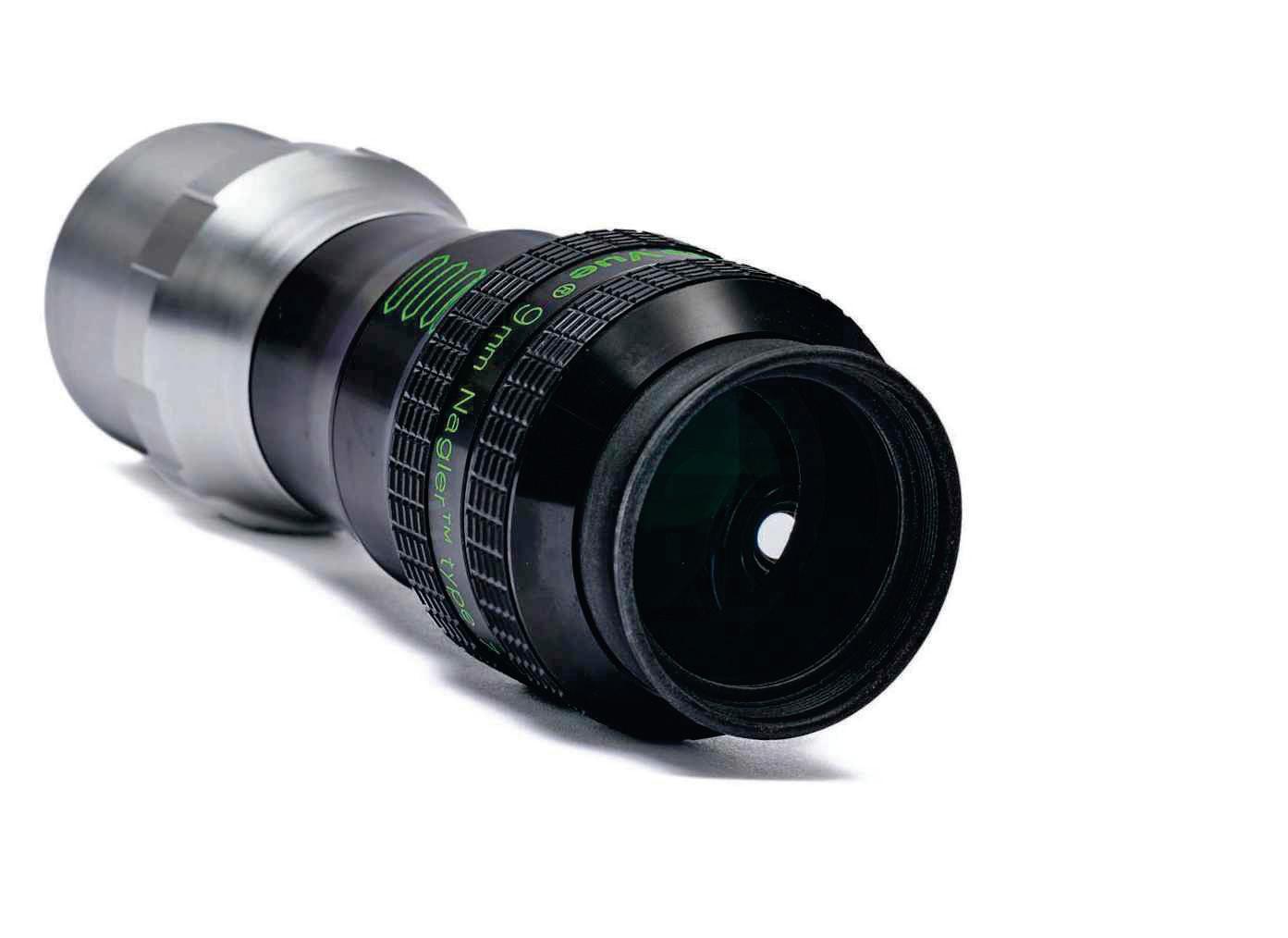
These four Nagler Type-7 eyepieces are based on Tele Vue’s much-loved limited-edition Apollo 11 eyepiece created for the 50th anniversary of the Moon landings (indeed, Tele Vue’s founder Al Nagler designed the optical system for the Apollo landing simulator).
They aim to provide full-field sharpness across an expansive 82° field of view. With the promise of comfortable eye relief for spectacle wearers and parfocality across the series, we were excited to try them on some seasonal targets.
We tested all four on two scopes: a William Optics 70mm triplet refractor and an Orion 10-inch Dobsonian. Starting with the refractor, we spent a clear, moonless night observing several open clusters in Auriga. We immediately noticed that each increase in magnification more than doubled the number of resolved stars. Later, the Double Cluster in Perseus looked gorgeous at all magnifications.
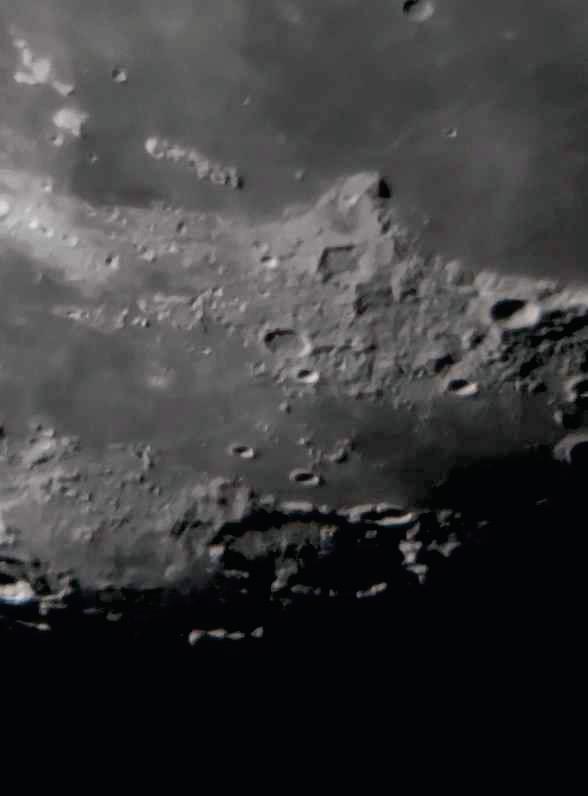
Although we had to slightly adjust the focus between eyepieces, the change required was minor and we enjoyed switching between the different options with minimal fuss. The amount of detail visible on the Moon as we worked through each eyepiece was also impressive and we couldn’t resist taking a few photos. Equally impressive were the views of Saturn: despite the rings being near edge-on, they were clearly visible with all eyepieces on both telescopes, as were the planet’s brighter moons.
 Moving to our 10-inch Dobsonian, we started with the 19mm eyepiece and Orion’s Sword, which just fitted across the field of view if we tilted our head to see the edges. The ‘wings’ of the Orion Nebula, M42, extended across the whole field of view and the Trapezium at the centre was well resolved. With averted vision, it was also possible to see De Mairan’s Nebula, M43. The Ring Nebula, M57, was an impressive sight at all magnifications, as was the globular cluster M13.

Diese Geschichte stammt aus der February 2026-Ausgabe von BBC Sky at Night Magazine.
Abonnieren Sie Magzter GOLD, um auf Tausende kuratierter Premium-Geschichten und über 9.000 Zeitschriften und Zeitungen zuzugreifen.
Sie sind bereits Abonnent? Anmelden
WEITERE GESCHICHTEN VON BBC Sky at Night Magazine
BBC Sky at Night Magazine
The Giant Leap: Why Space is the Next Frontier in the Evolution of Life
“Earth is the cradle of humanity, but one cannot live in the cradle forever,” wrote Konstantin Tsiolkovsky in 1911.

1 mins
February 2026
BBC Sky at Night Magazine
Tele Vue Nagler Type-7 series eyepieces
These premium optics were inspired by Apollo - and deliver a giant leap to your views
4 mins
February 2026
BBC Sky at Night Magazine
Once Upon a Time in Space
While the Space Race of the Cold War years was ultimately a geopolitical contest between the USA and the Soviet Union, the rivalry sparked rapid innovation and inspired multiple generations to look skyward.
1 mins
February 2026
BBC Sky at Night Magazine
The Multiverse: When One Universe Isn't Enough
The concept of a 'multiverse' – the idea that our Universe may be just one of many – is widespread in science fiction and a common thread of online discussions.
1 mins
February 2026
BBC Sky at Night Magazine
Q&A WITH A GAMMA RAY SPECIALIST
In 2025, astronomers detected a blast from space that lasted seven hours. Now they're uncovering the strange processes behind the exceptional outburst
3 mins
February 2026
BBC Sky at Night Magazine
Astronomy Photographer of the Year
The world-leading astrophotography competition returns. Could your image take the top prize of £10,000?
2 mins
February 2026
BBC Sky at Night Magazine
MOONWATCH
February's top lunar feature to observe
2 mins
February 2026
BBC Sky at Night Magazine
NOVAStar Scarlet A62Q 62mm f/8.4 quadruplet achromatic refractor
Well-built and capable, this beginner scope punches well above its bargain price
4 mins
February 2026
BBC Sky at Night Magazine
STAR OF THE MONTH
Rasalas, Leo the Lion's metal-rich crown
1 min
February 2026
BBC Sky at Night Magazine
Comet 24P/Schaumasse
Having reached perihelion on 8 January, comet 24P/ Schaumasse is now fading. Starting the month at a small-telescope-friendly mag. +10.5, it dims throughout February to below 12th magnitude.
1 min
February 2026
Listen
Translate
Change font size