
Gå ubegrenset med Magzter GOLD
Få ubegrenset tilgang til over 9000 magasiner, aviser og premiumhistorier for bare
Prøve GULL - Gratis
SPOTTING THE SUBTLE SIGNS
Jersey's Best
|Summer 2025
Why early attention to pediatric orthopaedic issues matters
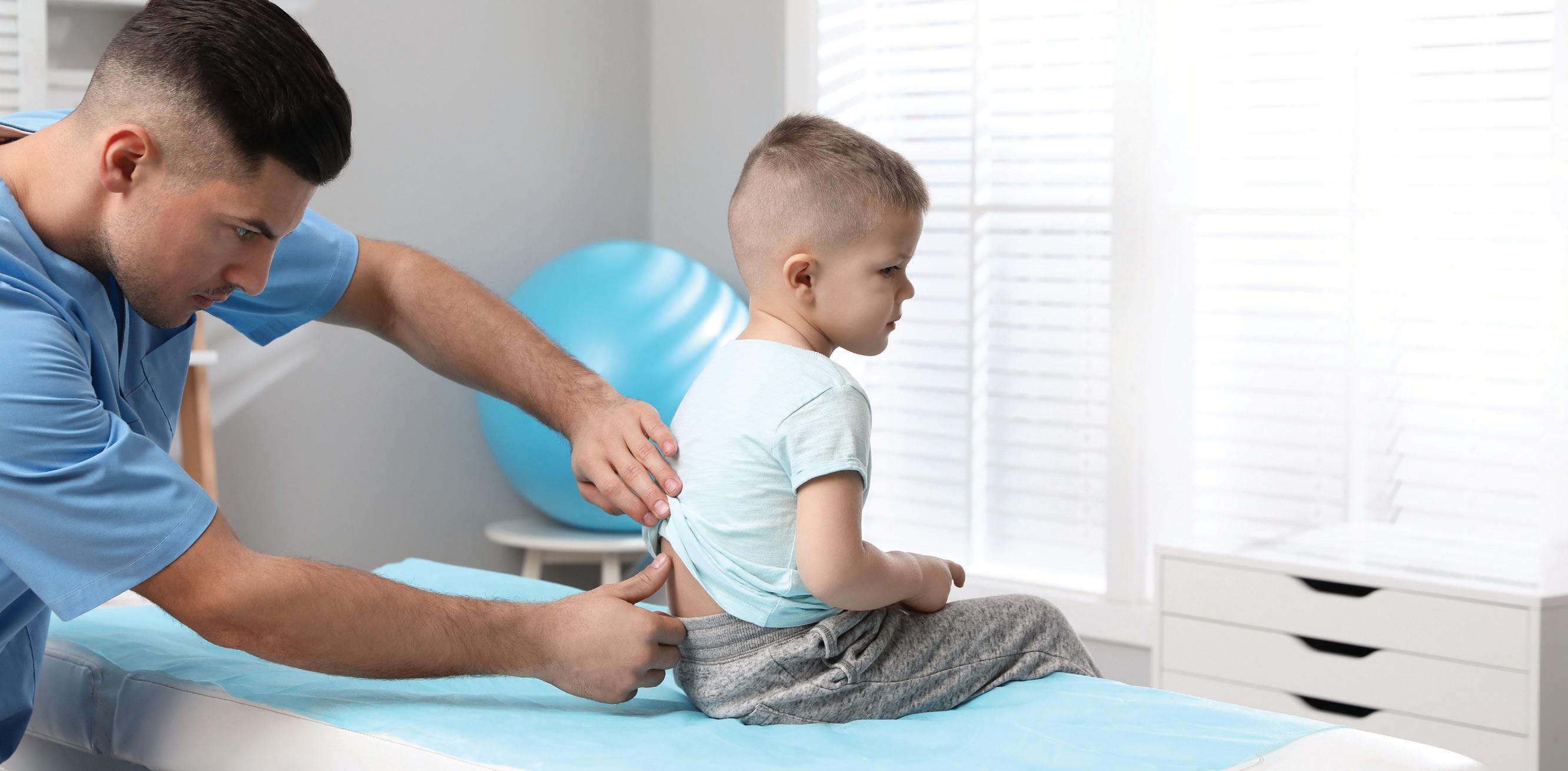
Early identification and treatment of pediatric orthopaedic issues can make a dramatic difference in outcomes. Cerebral palsy can affect muscle control and movement in varying degrees — from mild difficulty walking to a complete inability to move or speak. When it comes to children's health, some problems are easy to spot — a runny nose, a scraped knee. But orthopaedic issues often fly under the radar, silently affecting a child's development long before a parent notices anything is wrong.
Take scoliosis, for example. It typically causes no pain and may not be visible at first glance, yet it affects approximately 2% to 3% of the U.S. population, according to the National Scoliosis Foundation. Mild cerebral palsy might not become apparent until a child shows differences in limb use, and hip dysplasia can exist without limiting a child's activity — until it becomes a bigger problem later in life.
There are a variety of potential orthopaedic issues seen in children, but the most common include clubfoot, hip dysplasia, scoliosis, and growth plate injuries,” said Dr. Alexander H. Lopyan, a pediatric orthopaedic surgeon with the Children’s Health Network at RWJBarnabas Health. “Fractures are also frequent because kids are so active. In younger children, we often see flatfoot, bowlegs, or knock-knees — many of which improve over time, though some may need treatment or monitoring to avoid future complications.
The overarching message from pediatric orthopaedic specialists is simple:
WHEN IN DOUBT, CHECK IT OUT.
PEDIATRIC VS. ADULT ORTHOPAEDIC CONCERNS


Denne historien er fra Summer 2025-utgaven av Jersey's Best.
Abonner på Magzter GOLD for å få tilgang til tusenvis av kuraterte premiumhistorier og over 9000 magasiner og aviser.
Allerede abonnent? Logg på
FLERE HISTORIER FRA Jersey's Best
Jersey's Best
A Place to Be Creative in Matawan
CHASHAMA PROVIDES AFFORDABLE STUDIO SPACE TO PAINTERS, SCULPTORS AND OTHER ARTISTS

3 mins
Summer 2025

Jersey's Best
CITADELS OF COMPLETE CARE
CASTLE CONNOLLY'S 2025 TOP HOSPITALS IN NEW JERSEY HELPS DELIVER TRANSPARENCY, CREDIBILITY, AND PEACE OF MIND
3 mins
Summer 2025

Jersey's Best
A NEWARK ICON STEPS BOLDLY INTO THE FUTURE
With new exhibits, landmark restorations and a dynamic expansion, The Newark Museum of Art remains a cultural force
4 mins
Summer 2025

Jersey's Best
HEALING in MOTION
How the best in orthopaedics are keeping N.J. on its feet
5 mins
Summer 2025

Jersey's Best
HOME RUN Adventure
N.J. MOM AND SON VISIT ALL 30 MLB BALLPARK
4 mins
Summer 2025
Jersey's Best
48 hours in BRADLEY BEACH
People who know Bradley Beach love this small town by the sea.
4 mins
Summer 2025

Jersey's Best
OCEAN'S FIGHTERS
SEA TURTLES GET A SECOND CHANCE THANKS TO LOCAL HEROES
2 mins
Summer 2025
Jersey's Best
AFFORDABLE EATS: THIS N.J.POLISH DELI IS A TRUE HIDDEN GEM
AFFORDABLE EATS:
2 mins
Summer 2025

Jersey's Best
HOW A HI-TIDE RECORDINGS SURF MUSIC POWERHOUSE
SURFACED IN THE HEART OF FREEHOLD
4 mins
Summer 2025

Jersey's Best
backyard bliss
Tips for a dream outdoor oasis
3 mins
Summer 2025
Listen
Translate
Change font size