
Go Unlimited with Magzter GOLD
Get unlimited access to 10,000+ magazines, newspapers and Premium stories for just
Try GOLD - Free
SPOTTING THE SUBTLE SIGNS
Jersey's Best
|Summer 2025
Why early attention to pediatric orthopaedic issues matters
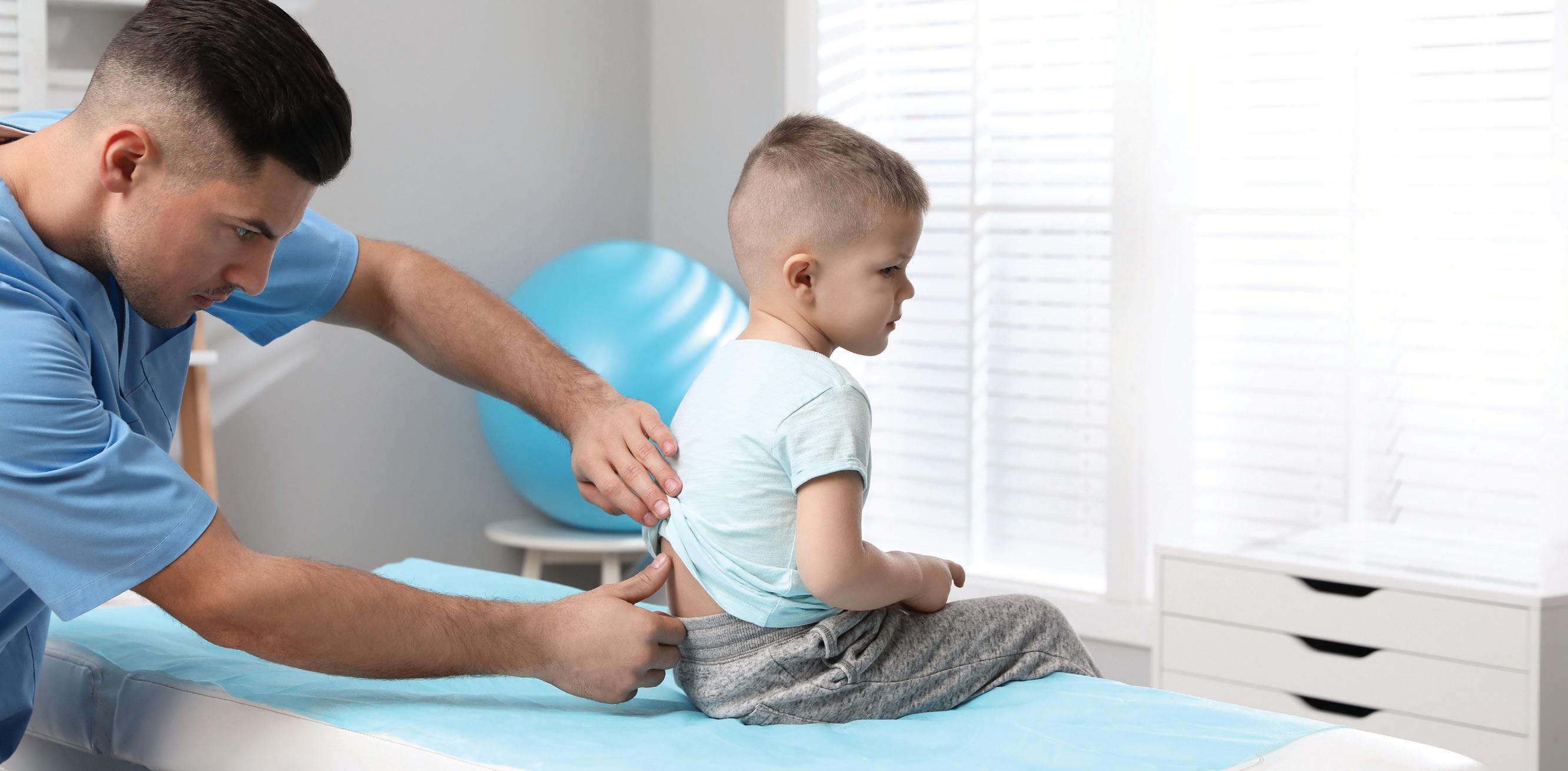
Early identification and treatment of pediatric orthopaedic issues can make a dramatic difference in outcomes. Cerebral palsy can affect muscle control and movement in varying degrees — from mild difficulty walking to a complete inability to move or speak. When it comes to children's health, some problems are easy to spot — a runny nose, a scraped knee. But orthopaedic issues often fly under the radar, silently affecting a child's development long before a parent notices anything is wrong.
Take scoliosis, for example. It typically causes no pain and may not be visible at first glance, yet it affects approximately 2% to 3% of the U.S. population, according to the National Scoliosis Foundation. Mild cerebral palsy might not become apparent until a child shows differences in limb use, and hip dysplasia can exist without limiting a child's activity — until it becomes a bigger problem later in life.
There are a variety of potential orthopaedic issues seen in children, but the most common include clubfoot, hip dysplasia, scoliosis, and growth plate injuries,” said Dr. Alexander H. Lopyan, a pediatric orthopaedic surgeon with the Children’s Health Network at RWJBarnabas Health. “Fractures are also frequent because kids are so active. In younger children, we often see flatfoot, bowlegs, or knock-knees — many of which improve over time, though some may need treatment or monitoring to avoid future complications.
The overarching message from pediatric orthopaedic specialists is simple:
WHEN IN DOUBT, CHECK IT OUT.
PEDIATRIC VS. ADULT ORTHOPAEDIC CONCERNS


This story is from the Summer 2025 edition of Jersey's Best.
Subscribe to Magzter GOLD to access thousands of curated premium stories, and 10,000+ magazines and newspapers.
Already a subscriber? Sign In
MORE STORIES FROM Jersey's Best
Jersey's Best
A Place to Be Creative in Matawan
CHASHAMA PROVIDES AFFORDABLE STUDIO SPACE TO PAINTERS, SCULPTORS AND OTHER ARTISTS

3 mins
Summer 2025

Jersey's Best
CITADELS OF COMPLETE CARE
CASTLE CONNOLLY'S 2025 TOP HOSPITALS IN NEW JERSEY HELPS DELIVER TRANSPARENCY, CREDIBILITY, AND PEACE OF MIND
3 mins
Summer 2025

Jersey's Best
A NEWARK ICON STEPS BOLDLY INTO THE FUTURE
With new exhibits, landmark restorations and a dynamic expansion, The Newark Museum of Art remains a cultural force
4 mins
Summer 2025

Jersey's Best
HEALING in MOTION
How the best in orthopaedics are keeping N.J. on its feet
5 mins
Summer 2025

Jersey's Best
HOME RUN Adventure
N.J. MOM AND SON VISIT ALL 30 MLB BALLPARK
4 mins
Summer 2025
Jersey's Best
48 hours in BRADLEY BEACH
People who know Bradley Beach love this small town by the sea.
4 mins
Summer 2025

Jersey's Best
OCEAN'S FIGHTERS
SEA TURTLES GET A SECOND CHANCE THANKS TO LOCAL HEROES
2 mins
Summer 2025
Jersey's Best
AFFORDABLE EATS: THIS N.J.POLISH DELI IS A TRUE HIDDEN GEM
AFFORDABLE EATS:
2 mins
Summer 2025

Jersey's Best
HOW A HI-TIDE RECORDINGS SURF MUSIC POWERHOUSE
SURFACED IN THE HEART OF FREEHOLD
4 mins
Summer 2025

Jersey's Best
backyard bliss
Tips for a dream outdoor oasis
3 mins
Summer 2025
Listen
Translate
Change font size