
Magzter GOLDで無制限に
10,000以上の雑誌、新聞、プレミアム記事に無制限にアクセスできます。
Who really invented the telescope?
BBC Sky at Night Magazine
|July 2025
No, it wasn't Galileo. Govert Schilling untangles the tale of astronomy's greatest creation, and recounts what happened next
-
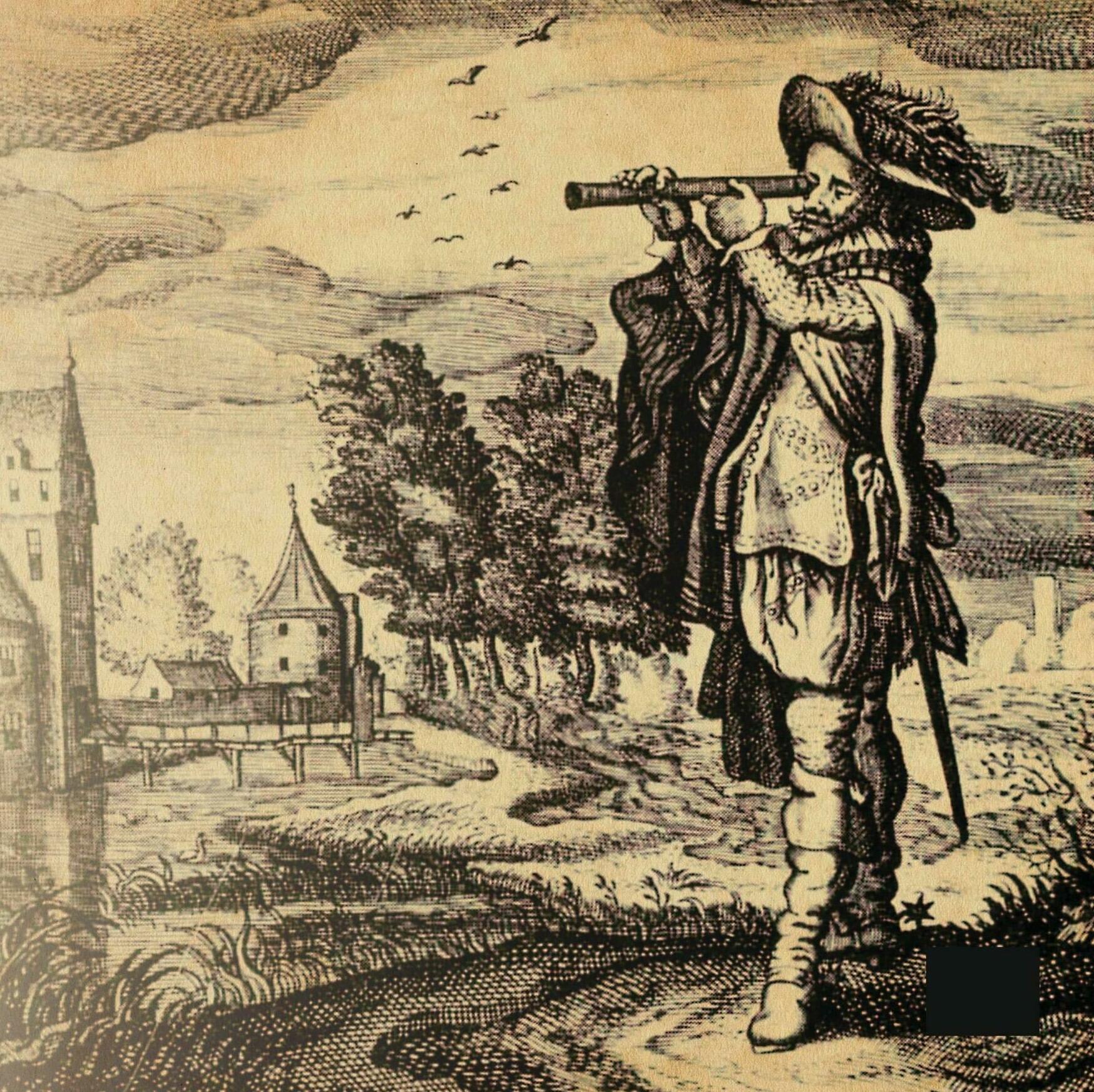
On 29 July 2021, more than four centuries after the invention of the telescope, the man who initiated a revolution in astronomy was finally honoured with a life-sized bronze statue. In the herb garden of the Middelburg Abbey, in the very southwest of the Netherlands, he sits on a bench, holding a small tube to his eye, gazing at the sky.
No, it's not Galileo Galilei, although some popular books still suggest that the Italian astronomer was the one to build the first spyglass. And no, it's not the father of two boys who were playing with lenses and accidentally discovered the magnifying effect of their combination - that's a romantic, but completely apocryphal, 18th-century story.
So, who really invented the telescope?
A better question might be: why wasn't it invented much earlier? After all, lenses - in the form of transparent rock crystals - were already known to the Greeks and Romans. The Arabs (in particular, 11th-century Ibn al-Haytham, better known as Alhazen) studied optics, inspiring English polymath Roger Bacon (1219-1292). Spectacles appeared on the scene at the end of the 13th century. Indeed, some believe that scientific all-rounder Leonardo da Vinci (1452-1519) already discovered the principle of the telescope.
"Seeing things far away"
However, it wasn't before the start of the 17th century that Hans Lipperhey (or Lippershey) (1570-1619), a spectacle maker in Middelburg, build his first device for “seeing things far away as if they were nearby" - a simple cardboard tube with a convex lens at one end and a concave eyepiece at the other, yielding a magnification of about three times.

このストーリーは、BBC Sky at Night Magazine の July 2025 版からのものです。
Magzter GOLD を購読すると、厳選された何千ものプレミアム記事や、10,000 以上の雑誌や新聞にアクセスできます。
すでに購読者ですか? サインイン
BBC Sky at Night Magazine からのその他のストーリー
BBC Sky at Night Magazine
MOONWATCH
January's top lunar feature to observe

2 mins
January 2026
BBC Sky at Night Magazine
Speed up your processing workflow
How to use Photoshop's Actions tool to drastically cut your processing time
3 mins
January 2026
BBC Sky at Night Magazine
Chasing Canada's polar lights
With solar maximum peaking and a new Moon promising dark skies, Jamie Carter travels to Churchill, Manitoba to hunt the Northern Lights - and dodge polar bears – in Canada's far north
7 mins
January 2026
BBC Sky at Night Magazine
Beyond Pluto: The search for the hidden planets
Could one – or even two - undiscovered planets lurk at the edges of our Solar System? Nicky Jenner explores how close we are to finding the elusive 'Planet 9'
6 mins
January 2026
BBC Sky at Night Magazine
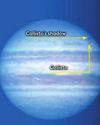
Jupiter moon events
Jupiter is a magnificent planet to observe.
2 mins
January 2026
BBC Sky at Night Magazine
What samples from space have taught us
Alastair Gunn explains what scientists have learnt in the 20 years since the first unmanned mission brought materials back from alien worlds
3 mins
January 2026
BBC Sky at Night Magazine
The Milky Way as you've never seen it before
This is the largest low-frequency radio colour image of our Galaxy ever assembled
1 min
January 2026
BBC Sky at Night Magazine
Merger of ‘impossibly' massive black holes explained
Scientists discover how enormous, fast-spinning black holes can exist after all
1 mins
January 2026
BBC Sky at Night Magazine
Lunar occultation of the Pleiades
BEST TIME TO SEE: 27 January from 20:30 UT
1 min
January 2026
BBC Sky at Night Magazine
The Universe's expansion may be slowing down
New study suggests current theories of dark energy could be wrong
1 mins
January 2026
Listen
Translate
Change font size