Try GOLD - Free
Goldmund Telos 2800
Stereophile
|January 2026
MONOBLOCK POWER AMPLIFIER
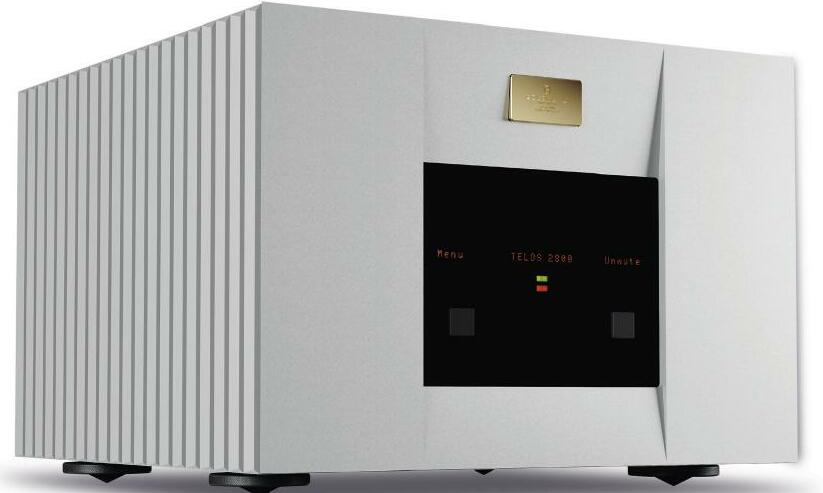
Frederich Nietzsche distinguished between two approaches to culture: The Apollonian, which is characterized by order and rationality, and Dionysian, which is about chaos, intoxication, and vitality.
Apollo was the god of Music, Art, Light, and Knowledge, and to Nietzsche, the Apollonian impulse was the main source of beauty. It is characterized by order, clarity, individuation, and measured restraint. To me, Greek sculpture and the paintings of the Great Masters best represent this impulse. It's not just their classical forms—there's a strength to it, a solidity. Also think of the great Classical composers: Haydn. Mozart. Beethoven to a point.
Dionysus, on the other hand, was the god of wine, religious ecstasy, and ritual madness. The Dionysian view of culture is quite the opposite of the Apollonian view. The impulse is—quite different. In classical music terms, I think of Robert Schumann and his Florestan and Eusebius. And Meister Raro, who tried to bridge the gap decades before Nietzsche.
Nietzsche wrote about this in the context not of music but of theater, in his first book, The Birth of Tragedy, from 1972. Western culture, the youthful Nietzsche argued, had been biased toward the Apollonian impulse since the ancient Greeks, to its detriment. He wasn't aiming for a Dionysian makeover but for a rebalancing. In that pursuit, he made a case for setting aside ethics, order, even consciousness and the sense of self as a way of recovering authenticity and deeper meaning. At the time, Nietzsche was under the spell of Richard Wagner and Wagner's soon-to-be wife, Cosima.
As a college kid, I was fascinated by the Dionysian—as I think many college kids are, though many fewer intellectualize it. In an essay published 14 years after The Birth of Tragedy, Nietzsche wrote that it was “badly written, ponderous, embarrassing, image-mad and image-confused.” Some three years after that, he went insane. Draw your own conclusions.


This story is from the January 2026 edition of Stereophile.
Subscribe to Magzter GOLD to access thousands of curated premium stories, and 10,000+ magazines and newspapers.
Already a subscriber? Sign In
MORE STORIES FROM Stereophile
Stereophile
Magico S2
When I was about 12 years old, my mother and I watched a movie on TV in which a ship closed in on a swimmer.

12 mins
April 2026

Stereophile
LAiV Audio's Harmony GaNM monoblock
The first thing I noticed about the LAiV Audio GaNM monoblock amplifier¹ is its unusual shape and size; it occupies space differently than the other, more basic amplifiers on my rack.
11 mins
April 2026
Stereophile
The Nighthawk soars
When people ask me what I do for a living, I reply that I'm a turntable setter upper.
11 mins
April 2026
Stereophile
Engagement vs sound quality
The more I listen to gear I'm reviewing as well as other people's hi-fis-the more I believe in intangibles. One of these intangibles is the art of system building.
12 mins
April 2026

Stereophile
CH Precision M10
A mono pair of CH Precision M10s ($210,000/pair as reviewed) declares its presence in capital letters.
15 mins
April 2026
Stereophile
The Rolling Stones v3.0
In the Rolling Stones' long history, the Mick Taylor era was a peak, if not the peak. Taylor, who replaced cofounder Brian Jones in the late 1960s, proved a great musical foil for Keith Richards. He was a technical wizard on the guitar; those fluid higher-octaves riffs and runs were the perfect counterpoint to Richards's jabbing and stabbing and growling style. At heart, he was a bluesman, so a great fit for a band named after a Muddy Waters tune. The run of albums from Let It Bleed through It's Only Rock 'n Roll took the Stones' music in new directions and set the standard for tight, fast, and loose arena rock circa the early 1970s.
3 mins
March 2026
Stereophile
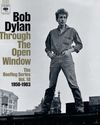
Bob Dylan Through the Open Window
Columbia Legacy has released Vol.18 of the Bob Dylan Bootleg Series. Through the Open Window covers the years 1956–1963. The collection is available as three physical sets: two-CD or four-LP “Highlights” versions that contain 42 tracks, and an eight-CD “Deluxe Edition Box Set” that contains 139 tracks and has a running time of 8 hours, 59 minutes. The “Highlights” package is available streaming at 24/192, but the other 97 tracks are only available in the big box. That big box also includes a 124-page hardback book containing full credits, 100 photos, and liner notes—really a substantial monograph—by Sean Wilentz, professor of American History at Princeton University and author of the book Bob Dylan in America.
7 mins
March 2026
Stereophile
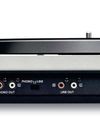
Technics SL-50C
Every first love leaves a strong impression. Hopefully it’s a good one.
15 mins
March 2026
Stereophile
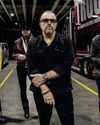
The passing of two Americana greats
Just before Christmas 2025, American music suffered two irreplaceable losses with the passings of Raul Malo (December 8) and Joe Ely (December 15). While a lot of musicians exist on the artistic and commercial fringes, Malo and Ely were foundational artists, gifted creators and performers who refused to be confined by artistic boundaries. Though not without their struggles, each eventually found widespread respect and success. Each leaves behind a significant body of wonderful recordings.
3 mins
March 2026
Stereophile
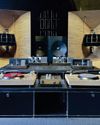
HI-FI as ART
Since founding Ojas in the 1990s and applying the name to his audio components, Devon Turnbull has mined a young audience that the traditional hi-fi industry has struggled to reach.
14 mins
March 2026
Listen
Translate
Change font size