
Mit Magzter GOLD unbegrenztes Potenzial nutzen
Erhalten Sie unbegrenzten Zugriff auf über 9.000 Zeitschriften, Zeitungen und Premium-Artikel für nur
Versuchen GOLD - Frei
Goldmund Telos 2800
Stereophile
|January 2026
MONOBLOCK POWER AMPLIFIER
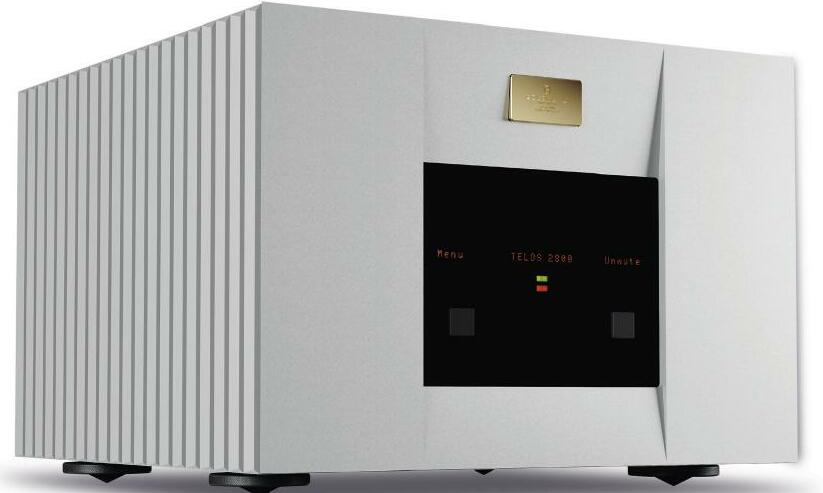
Frederich Nietzsche distinguished between two approaches to culture: The Apollonian, which is characterized by order and rationality, and Dionysian, which is about chaos, intoxication, and vitality.
Apollo was the god of Music, Art, Light, and Knowledge, and to Nietzsche, the Apollonian impulse was the main source of beauty. It is characterized by order, clarity, individuation, and measured restraint. To me, Greek sculpture and the paintings of the Great Masters best represent this impulse. It's not just their classical forms—there's a strength to it, a solidity. Also think of the great Classical composers: Haydn. Mozart. Beethoven to a point.
Dionysus, on the other hand, was the god of wine, religious ecstasy, and ritual madness. The Dionysian view of culture is quite the opposite of the Apollonian view. The impulse is—quite different. In classical music terms, I think of Robert Schumann and his Florestan and Eusebius. And Meister Raro, who tried to bridge the gap decades before Nietzsche.
Nietzsche wrote about this in the context not of music but of theater, in his first book, The Birth of Tragedy, from 1972. Western culture, the youthful Nietzsche argued, had been biased toward the Apollonian impulse since the ancient Greeks, to its detriment. He wasn't aiming for a Dionysian makeover but for a rebalancing. In that pursuit, he made a case for setting aside ethics, order, even consciousness and the sense of self as a way of recovering authenticity and deeper meaning. At the time, Nietzsche was under the spell of Richard Wagner and Wagner's soon-to-be wife, Cosima.
As a college kid, I was fascinated by the Dionysian—as I think many college kids are, though many fewer intellectualize it. In an essay published 14 years after The Birth of Tragedy, Nietzsche wrote that it was “badly written, ponderous, embarrassing, image-mad and image-confused.” Some three years after that, he went insane. Draw your own conclusions.


Diese Geschichte stammt aus der January 2026-Ausgabe von Stereophile.
Abonnieren Sie Magzter GOLD, um auf Tausende kuratierter Premium-Geschichten und über 9.000 Zeitschriften und Zeitungen zuzugreifen.
Sie sind bereits Abonnent? Anmelden
WEITERE GESCHICHTEN VON Stereophile

Stereophile
ICONS AND INNOVATORS AT DEFINITIVE AUDIO
Definitive Audio in Bellevue, Washington, near Seattle—one of the premier dealerships in the Pacific Northwest—continued its 50th anniversary celebration with an event it called “Icons and Innovators.” Highlighted by showings of the new JBL Everest series and Bowers & Wilkins Nautilus and 801 Abbey Road edition loudspeakers, the event drew a full house to the first of two sessions.

10 mins
February 2026

Stereophile
Touched-up Beatles and Ringo in color
Opinions vary, but like everything connected to The Beatles, charged arguments over Giles Martin's ongoing remastering of, and sonic tinkering with, the band’s hallowed recording catalog are unending.
3 mins
February 2026

Stereophile
Traveling through time and space
In the April 2024 issue of this magazine, a piece by Editor Jim Austin appeared in the “As We See It” space. It was titled “On assessing sonic illusions,” and it has haunted me for more than a year. Jim’s thesis was that a music recording is a “synthetic, whole-cloth creation ... a complete fabrication.” He writes: “Very few recordings correspond to an actual performance. Most are studio concoctions with pieced-together instrumental tracks and artificial ambience that document no sonic event that ever occurred.”
4 mins
February 2026

Stereophile
EgglestonWorks Andra 5
Big loudspeakers are where diligent hi-fi reviewers really earn their pay.
16 mins
February 2026
Stereophile
RECORD REVIEWS
Why award Recording of the Month to a project whose vocal soloists, though thoroughly committed, are in some respects less than ideal?
3 mins
February 2026
Stereophile
Doshi Audio Evolution Stereo
Nick Doshi is cautiously reserved when he talks about his amplifiers, preferring to let the products speak for themselves.
14 mins
February 2026

Stereophile
Sticking with it
David and Alma Wilson must be doing something right. They’ve been married for 50 years, and for 36 years, they’ve owned and operated Accent on Music on Main Street in Mount Kisco, New York, about an hour north of New York City. In a recent, lively Zoom conversation with the Wilsons, it became apparent that staying the course is a viable approach, for marriage and for business.
4 mins
February 2026
Stereophile
Period-style listening
Last night, I sat on a bright yellow velveteen sofa eating red beans and rice while listening for three hours to blues and jazz from rare 78rpm records. I walked out feeling gospel-level raised up, with a head full of dreams and cultural memories.
12 mins
February 2026
Stereophile
CH Precision L10
TWO-CHASSIS LINE PREAMPLIFIER
16 mins
February 2026
Stereophile
Rock don't give a shit, you know
Punk rock was never meant to grow old. For their first three studio efforts, The Replacements epitomized the punk ethos. Sorry Ma, Forgot to Take Out the Trash (1981), the EP Stink (1982), and Hootenanny (1983) are loud, bashy fun.
3 mins
February 2026
Listen
Translate
Change font size