
Go Unlimited with Magzter GOLD
Get unlimited access to 10,000+ magazines, newspapers and Premium stories for just
The Dawn of Polar
Scientific American
|October 2025
Fossils hint at when birds began making their mind-blowing journey to the Arctic to breed
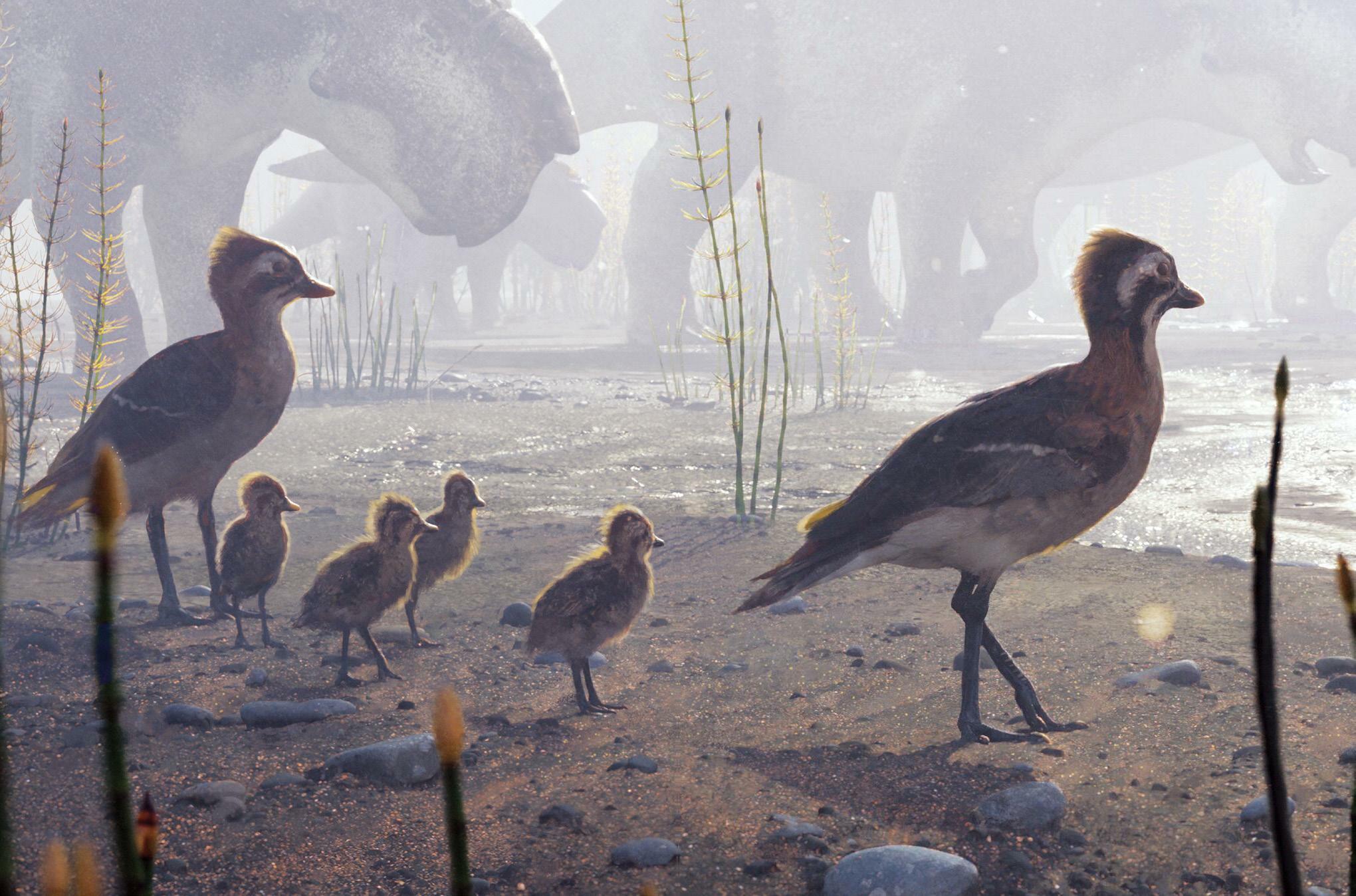
GOLDEN AUTUMN SUNLIGHT GLINTS through the sedges and shrubs of the tundra in northern Alaska.
Winter is approaching, and soon the region will be buried under snow and ice. For the past three months the chatter of the Arctic Tern colony has served as the soundtrack of the summer breeding season. But now, with daylight waning, the terns need to head south. In an instant, the usually noisy birds will fall silent, a behavior known as "dread." Moments later the entire colony will take to the skies to begin its 25,000-mile journey to Antarctica—the longest known migration of any animal on Earth.
The Arctic Tern is not the only bird that spends its breeding season in the Arctic. Billions of birds belonging to nearly 200 species—from small sparrows such as the Smith's Longspur to large waterfowl such as the Greater White-fronted Goose—make their way to the far north every spring to reproduce and then make the return flight south for the winter. It's no easy feat. Migration is costly. Even under ideal conditions, such an epic journey requires huge amounts of energy and exposes the travelers to dangerous weather. The mortality risk is high.
But undertaking these trips allows the birds to take advantage of the seasonal conditions in these environments. The endless summer sun supports lush plant growth, flourishing insect swarms, and plentiful fish populations nourished by zooplankton blooms. With 24 hours of light a day, the birds can more easily catch food such as slippery fish and tiny insects. The round-the-clock daylight also means many of the animals that prey on birds are less likely to sneak up on a nest unnoticed.

This story is from the October 2025 edition of Scientific American.
Subscribe to Magzter GOLD to access thousands of curated premium stories, and 10,000+ magazines and newspapers.
Already a subscriber? Sign In
MORE STORIES FROM Scientific American

Scientific American
Probiotic Hope and Hype
Despite their popularity, supplements with billions of \"good\" microbes help only a few illnesses, research shows

3 mins
January 2026

Scientific American
Mondays Really Are More Stressful
The start of the workweek can be a biologically measurable stressor, with consequences for long-term health that can stretch into retirement
4 mins
January 2026

Scientific American
Tiny Display
An e-paper breakthrough brings extremely high-resolution color
2 mins
January 2026
Scientific American
Fine-Feathered Snack
A bat's tracker documents a dramatic midair hunt
2 mins
January 2026

Scientific American
OUR ROBOTIC PICTURE
Will mechanical helpers ever be commonplace at home, at work and beyond?
11 mins
January 2026

Scientific American
"Use Your Words" Can Be Good for Kids' Health
Writing or expressing feelings can help adults mentally and physically. Kids are no different
5 mins
January 2026
Scientific American
Distant Diplomacy
Unrelated species “talk” and understand one another to avoid threats
2 mins
January 2026

Scientific American
Behind the Nobel
A 2025 winner reflects on the mysterious T cells that won him the prize
5 mins
January 2026

Scientific American
A Suite of Killers
Heart ailments, kidney diseases and type 2 diabetes actually may be part of just one condition. It's called CKM syndrome
10 mins
January 2026
Scientific American
Static Launch
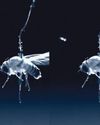
Tiny worms leap toward their fruit fly hosts with an electric “tractor beam”
3 mins
January 2026
Listen
Translate
Change font size