
Gå ubegrenset med Magzter GOLD
Få ubegrenset tilgang til over 9000 magasiner, aviser og premiumhistorier for bare
Prøve GULL - Gratis
The Dawn of Polar
Scientific American
|October 2025
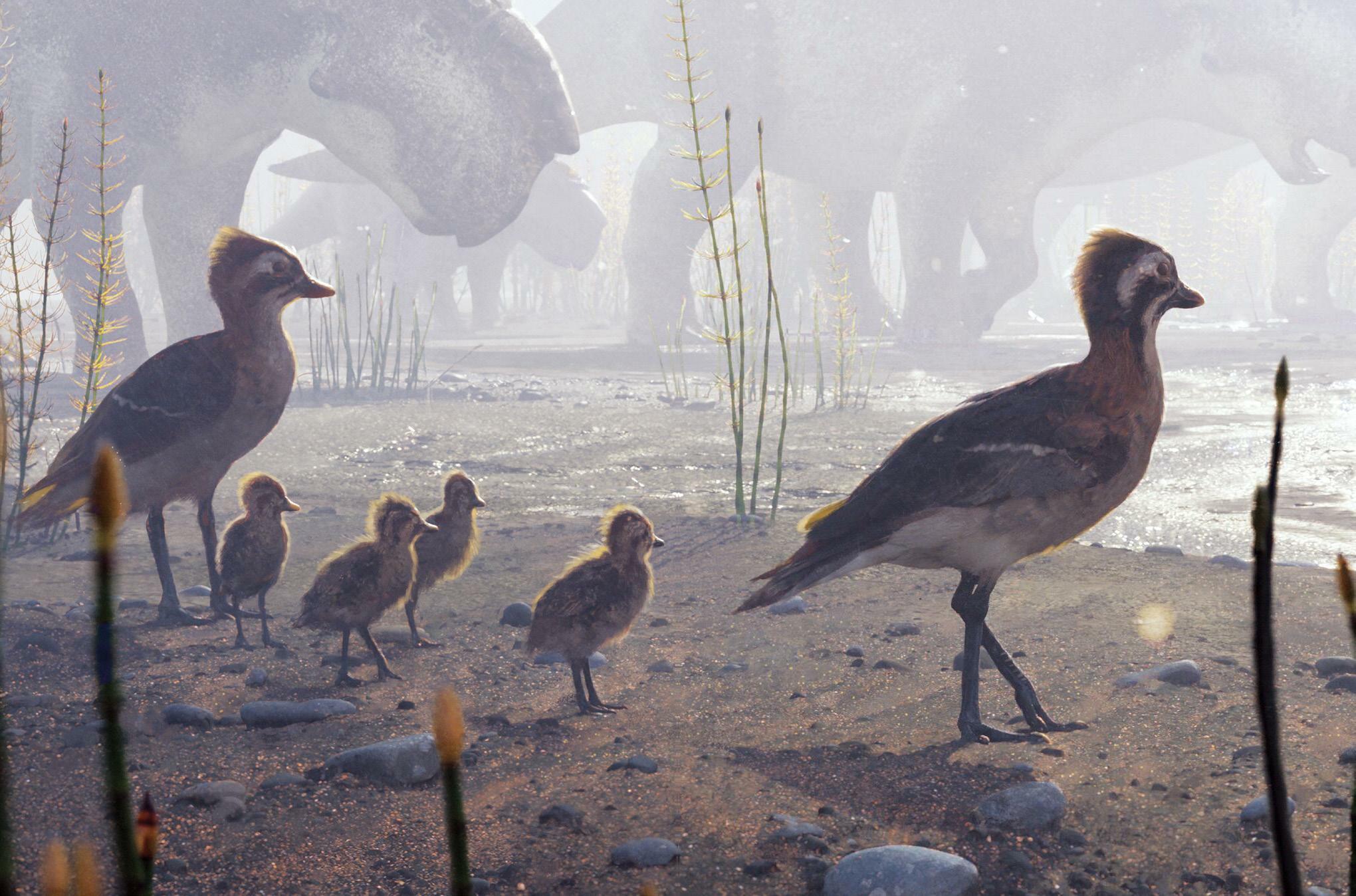
Fossils hint at when birds began making their mind-blowing journey to the Arctic to breed
GOLDEN AUTUMN SUNLIGHT GLINTS through the sedges and shrubs of the tundra in northern Alaska.
Winter is approaching, and soon the region will be buried under snow and ice. For the past three months the chatter of the Arctic Tern colony has served as the soundtrack of the summer breeding season. But now, with daylight waning, the terns need to head south. In an instant, the usually noisy birds will fall silent, a behavior known as "dread." Moments later the entire colony will take to the skies to begin its 25,000-mile journey to Antarctica—the longest known migration of any animal on Earth.
The Arctic Tern is not the only bird that spends its breeding season in the Arctic. Billions of birds belonging to nearly 200 species—from small sparrows such as the Smith's Longspur to large waterfowl such as the Greater White-fronted Goose—make their way to the far north every spring to reproduce and then make the return flight south for the winter. It's no easy feat. Migration is costly. Even under ideal conditions, such an epic journey requires huge amounts of energy and exposes the travelers to dangerous weather. The mortality risk is high.
But undertaking these trips allows the birds to take advantage of the seasonal conditions in these environments. The endless summer sun supports lush plant growth, flourishing insect swarms, and plentiful fish populations nourished by zooplankton blooms. With 24 hours of light a day, the birds can more easily catch food such as slippery fish and tiny insects. The round-the-clock daylight also means many of the animals that prey on birds are less likely to sneak up on a nest unnoticed.

Denne historien er fra October 2025-utgaven av Scientific American.
Abonner på Magzter GOLD for å få tilgang til tusenvis av kuraterte premiumhistorier og over 9000 magasiner og aviser.
Allerede abonnent? Logg på
FLERE HISTORIER FRA Scientific American
Scientific American
Earthquake Life
Yellowstone quakes spark bursts of microbial growth underground

2 mins
March 2026
Scientific American
Sailing the Sun
By designing vertical panels that move in a gale, two Swedish inventors are unlocking a solar future for the windswept north
9 mins
March 2026
Scientific American
Covered in Bees
Ancient bees burrowed deep into discarded mammal jawbones
2 mins
March 2026
Scientific American
Fire Starters
Ancient humans were making fire 350,000 years earlier than thought
3 mins
March 2026

Scientific American
Relativity Revealed
Physicists have observed a bizarre prediction of special relativity for the first time
8 mins
March 2026

Scientific American
Everything You Wanted to Know about Polyamory (but Were Afraid to Ask
The practice is not a faddish excuse to sleep around, research shows. And it has deep roots in American culture
14 mins
March 2026

Scientific American
Let the Rivers Run
An investigation into the rights of nature
4 mins
March 2026

Scientific American
Hidden Proof
\"Effective zero knowledge\" beats long-standing cryptographic impossibilities
2 mins
March 2026

Scientific American
The Universe's Weirdest Optical Illusions
Sometimes the farther away an object is, the bigger it seems to be
4 mins
March 2026

Scientific American
Living in the COPILOT SOCIETY
The promise and peril of artificial intelligence everywhere
2 mins
March 2026
Listen
Translate
Change font size