Try GOLD - Free
AGAINST THE GRAIN
Down To Earth
|March 16, 2025
India's two most valuable timbers-sandalwood and red sanders-have long been bound by restrictive regulations designed to curb illegal trade. Encouraged by the government decades ago with promises of windfall profits, farmers took to commercial cultivation, investing years of patience and effort. Now, as they prepare to harvest, a harsh reality is setting in-the promise of big profits is not quite holding up. HIMANSHU NITNAWARE travels to 19 villages across Karnataka, Andhra Pradesh and Telangana to explore the reasons
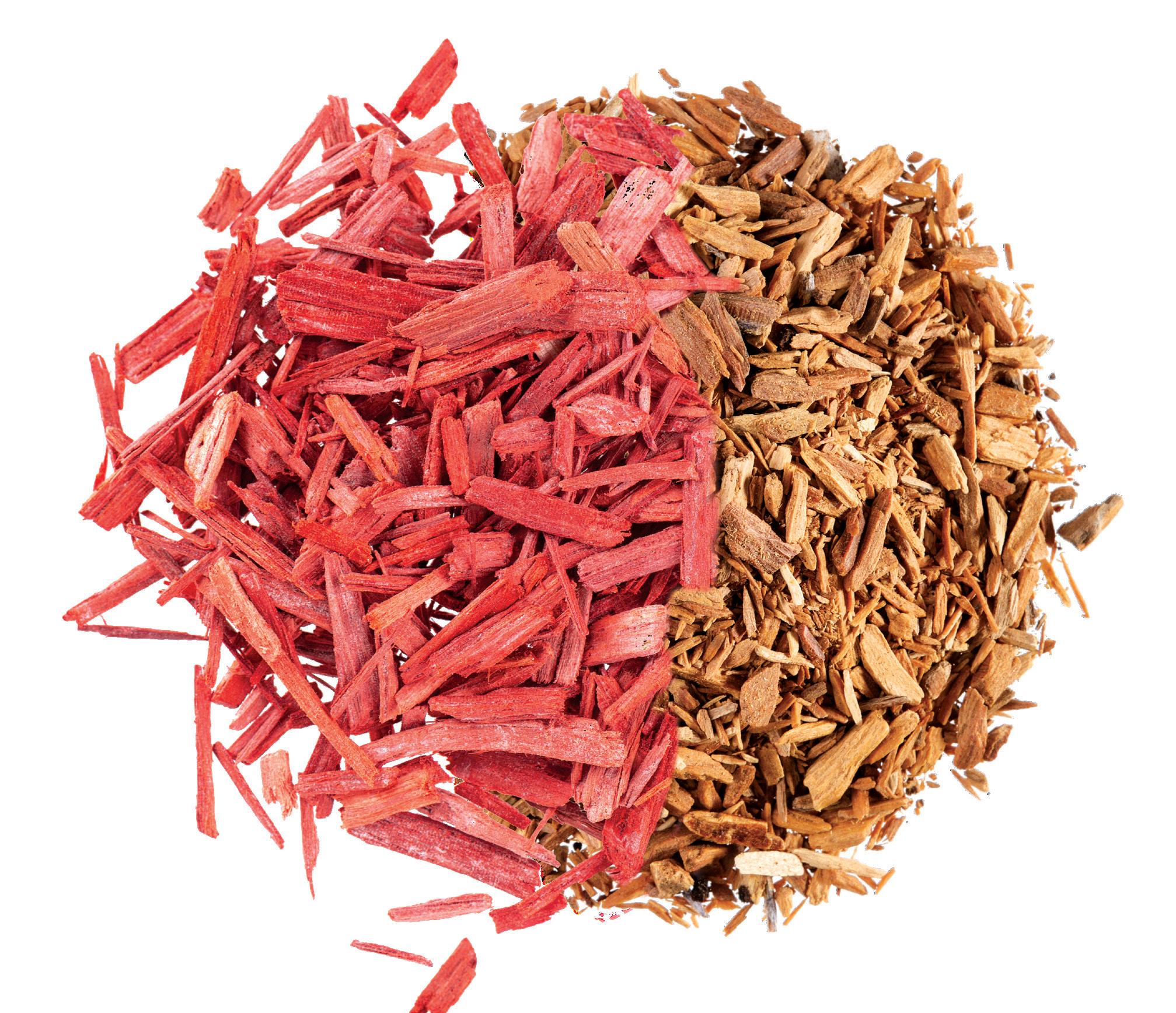
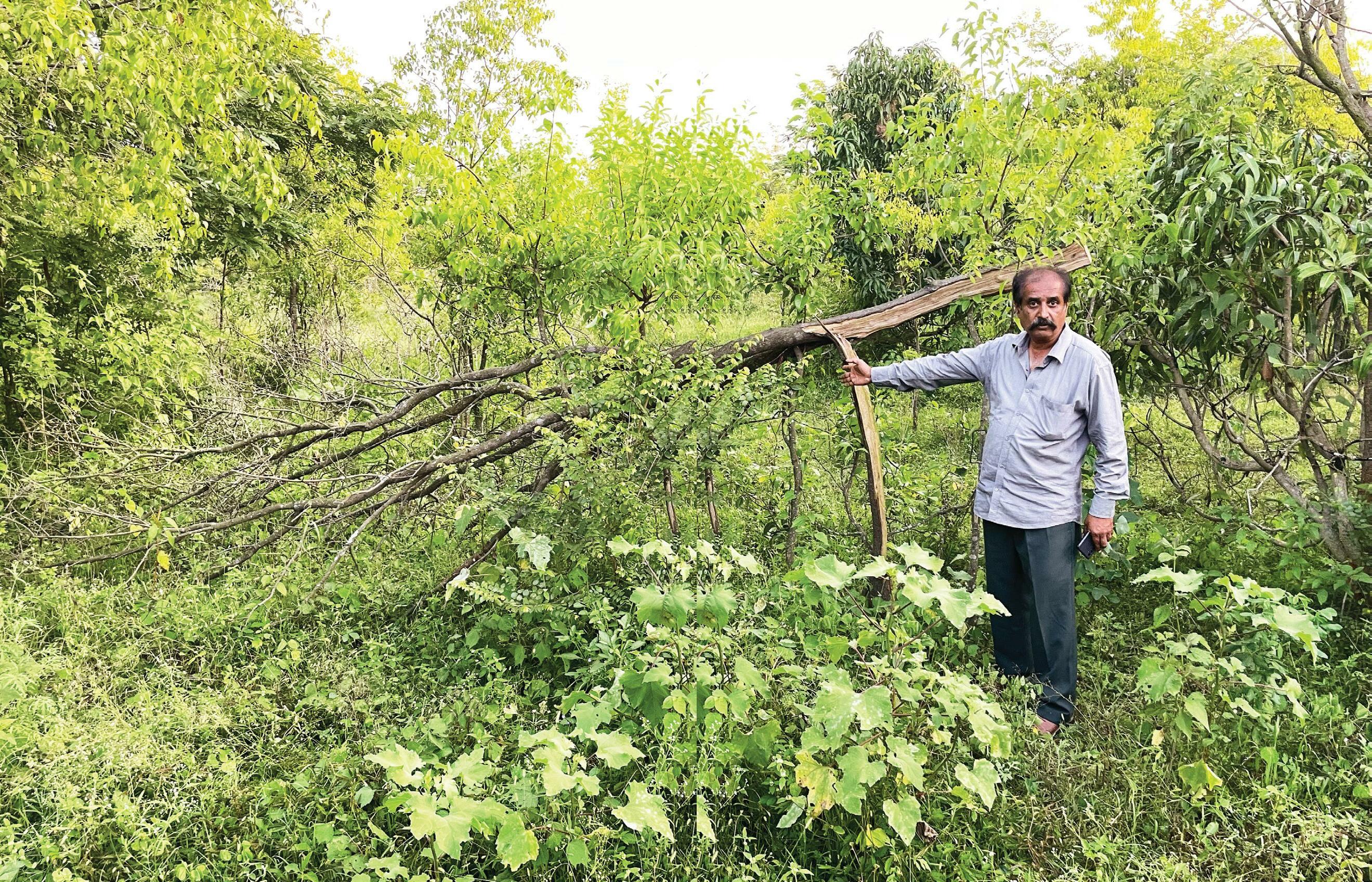
IN 2009, when K Sharanappa planted 1,000 sandalwood saplings across his 2.8-hectare (ha) farm, he was not just growing trees-he was staking his future on a once-forbidden trade. Indian sandalwood (Santalum album), one of the country's most commercially valuable tree species, is worth its weight in gold.
High-quality Indian sandalwood fetches up to ₹78 lakh per tonne (1,000 kg), earning it the nickname "dollar-earning parasite" in international markets. For Sharanappa, a resident of Karnataka's Adapura village in Koppal district, the plan was simple: in 15 years, the trees would mature, earning him a projected ₹4 crore-an amount several hundred times his modest salary as a police officer with the state government. "I timed it with my retirement in 2023. I would be financially secure and my sons would inherit a thriving business," he says.
"But it has now become a burden," he adds.
His voice, once filled with hope, now carries the weight of disillusionment.
Sharanappa is among the first group of sandalwood growers in Karnataka, home to almost 60 per cent of India's natural extent of sandalwood, according to a study published in Discover Applied Sciences in November 2024. He took up cultivation after Karnataka loosened its iron grip on the timber's trade two decades ago. In 1792, the erstwhile Mysore state declared it as the "Royal Tree". Since then, the harvesting and sale of sandalwood remained a government monopoly. Even if a tree grew naturally on private land, the owner had no rights over it-yet was responsible for its protection.


This story is from the March 16, 2025 edition of Down To Earth.
Subscribe to Magzter GOLD to access thousands of curated premium stories, and 10,000+ magazines and newspapers.
Already a subscriber? Sign In
MORE STORIES FROM Down To Earth
Down To Earth
KING OF BIRDS
Revered for centuries, western tragopan now needs protection as its forests shrink, human pressures mount

3 mins
December 16, 2025

Down To Earth
WHISKERS ALL AQUIVER
Climate change threatens creatures that have weathered extreme environments for thousands of years
2 mins
December 16, 2025

Down To Earth
GOLDEN SPIRIT
Survival of the shy primate is closely tied to the health of Western Ghats
3 mins
December 16, 2025

Down To Earth
RINGED EYES IN THE CANOPY
Rapid habitat destruction forces arboreal langur to alter habits
2 mins
December 16, 2025

Down To Earth
HANGING BY THE CLIFF
The Himalaya's rarest wild goat is on the brink of local extinction
2 mins
December 16, 2025

Down To Earth
ANGEL OF THE BEAS
Conservation reserves, citizen science, and habitat protection give the Indus River dolphin a fighting chance in India
2 mins
December 16, 2025

Down To Earth
UNDER MOONLIT SCRUB
Survival of this hidden guardian tells us whether our scrublands still breathe
2 mins
December 16, 2025

Down To Earth
SYMBOL OF SILENT VALLEY
Lion-tailed macaque remains vulnerable despite past victories
2 mins
December 16, 2025

Down To Earth
THE APE IN OUR STORIES
India's only non-human ape species is a cultural icon threatened by forest fragmentation
2 mins
December 16, 2025
Down To Earth
SENTINEL OF THE HIGH COLD DESERT
The bird's evocative call may not continue to roll across the cold desert valley for long
3 mins
December 16, 2025
Listen
Translate
Change font size