
Go Unlimited with Magzter GOLD
Get unlimited access to 10,000+ magazines, newspapers and Premium stories for just
Practical astronomy projects for every level of expertise DIY ASTRONOMY
BBC Sky at Night Magazine
|October 2022
Create a 24-hour polar star trail photo
-
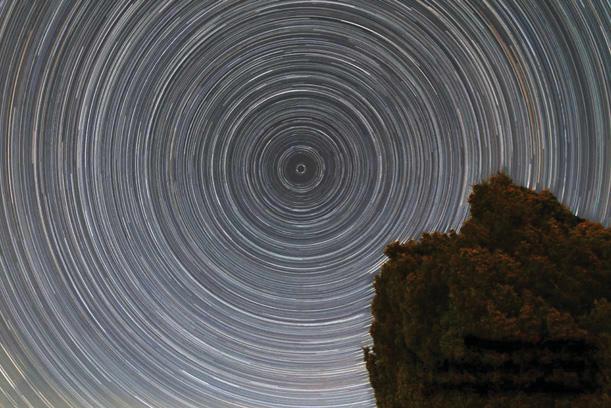
Merge a series of photos to make a spectacular image showing Earth's rotation
Star trails are relatively simple to do yet produce very striking results, especially when centred around the north or south celestial poles. These images capture the movement of Earth as it rotates on its axis, producing star trails that are comprised of fragments of concentric rings. If you are in the polar regions during the winter and have clear, dark skies for 24 hours, the trails will form complete circles, including the pole star Polaris because it is not perfectly aligned with the celestial pole. Most of us will never experience a polar winter, but it is still possible to create a 24-hour star trail photograph by merging together a stack of many images taken with the same setup, from exactly the same spot, on different nights throughout the year.
Although taking a star trail image on a single night is straightforward, replicating it exactly on multiple dates, then merging them together successfully, is the challenge here. First, the camera location must be identical. We placed marks on the ground to ensure the tripod was in exactly the same spot, but attaching the camera to a fixed structure would be even better. Focus must also be the same, otherwise the width of the star trails will differ, and they won't line up perfectly. Circumpolar star trails can be created under moonlight, but doing so will affect the fainter stars, so try to ensure the Moon's brightness - its phase - is consistent between sessions. Also, when you blend your final stacked images, the overlapping regions will be brighter, so only stack what's necessary to complete the full circle.


This story is from the October 2022 edition of BBC Sky at Night Magazine.
Subscribe to Magzter GOLD to access thousands of curated premium stories, and 10,000+ magazines and newspapers.
Already a subscriber? Sign In
MORE STORIES FROM BBC Sky at Night Magazine
BBC Sky at Night Magazine
MOONWATCH
January's top lunar feature to observe

2 mins
January 2026
BBC Sky at Night Magazine
Speed up your processing workflow
How to use Photoshop's Actions tool to drastically cut your processing time
3 mins
January 2026
BBC Sky at Night Magazine
Chasing Canada's polar lights
With solar maximum peaking and a new Moon promising dark skies, Jamie Carter travels to Churchill, Manitoba to hunt the Northern Lights - and dodge polar bears – in Canada's far north
7 mins
January 2026
BBC Sky at Night Magazine
Beyond Pluto: The search for the hidden planets
Could one – or even two - undiscovered planets lurk at the edges of our Solar System? Nicky Jenner explores how close we are to finding the elusive 'Planet 9'
6 mins
January 2026
BBC Sky at Night Magazine
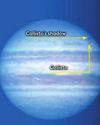
Jupiter moon events
Jupiter is a magnificent planet to observe.
2 mins
January 2026

BBC Sky at Night Magazine
What samples from space have taught us
Alastair Gunn explains what scientists have learnt in the 20 years since the first unmanned mission brought materials back from alien worlds
3 mins
January 2026
BBC Sky at Night Magazine
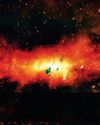
The Milky Way as you've never seen it before
This is the largest low-frequency radio colour image of our Galaxy ever assembled
1 min
January 2026

BBC Sky at Night Magazine
Merger of ‘impossibly' massive black holes explained
Scientists discover how enormous, fast-spinning black holes can exist after all
1 mins
January 2026
BBC Sky at Night Magazine
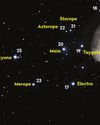
Lunar occultation of the Pleiades
BEST TIME TO SEE: 27 January from 20:30 UT
1 min
January 2026
BBC Sky at Night Magazine
The Universe's expansion may be slowing down
New study suggests current theories of dark energy could be wrong
1 mins
January 2026
Translate
Change font size