
Go Unlimited with Magzter GOLD
Get unlimited access to 10,000+ magazines, newspapers and Premium stories for just
Memories of Hale-Bopp
BBC Sky at Night Magazine
|July 2025
Three decades on, Stuart Atkinson vividly recalls the wonder of witnessing the last Great Comet
-
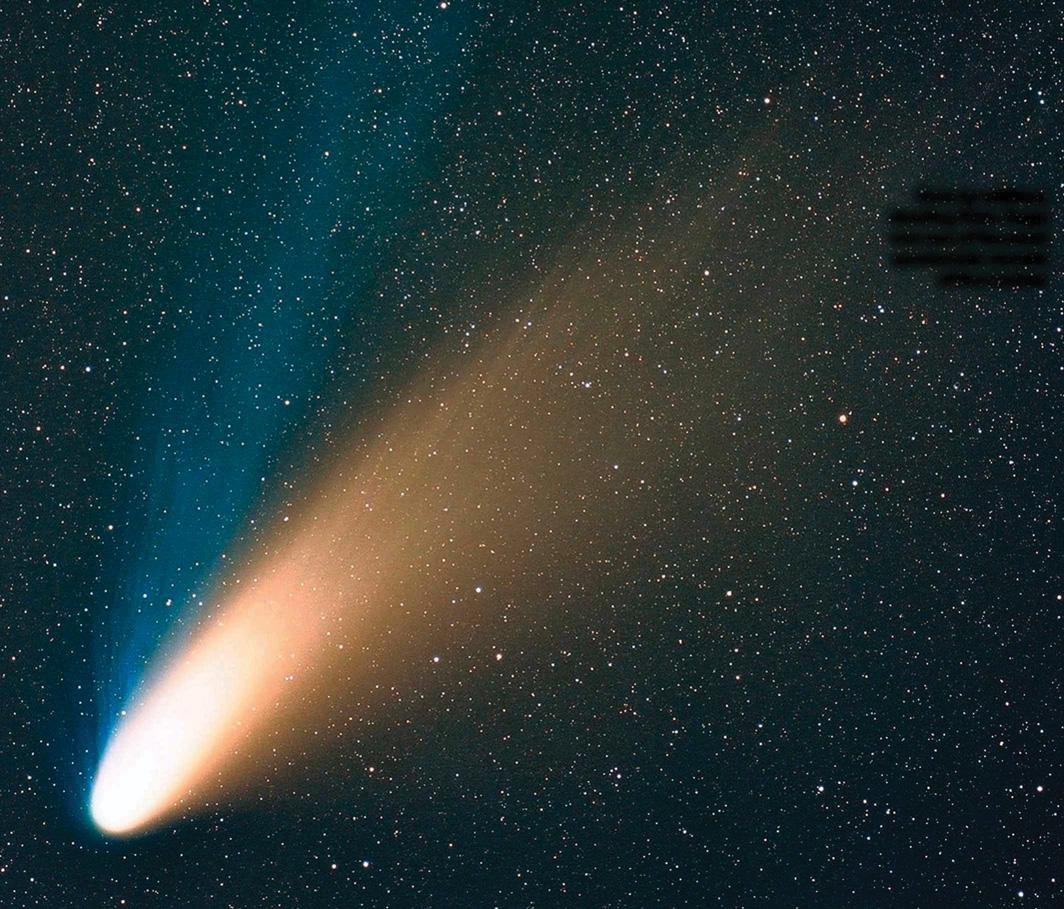
Thirty years ago, on the evening of 23 July 1995, amateur astronomers Alan Hale and Thomas Bopp were both independently looking at the same globular star cluster. Experienced observers who knew the sky well, Hale and Bopp each noticed a faint smudge close to the globular star cluster M70 that they couldn't find on any of their charts - and it was moving. Soon after, the object was confirmed as a new comet, named C/1995 O1 (Hale-Bopp) in honour of its discoverers.
When it was first spotted, comet Hale-Bopp was just a magnitude +10.5 smudge, but once its orbit was calculated, it became apparent the new comet could be something special. The fact that it was already so bright, while still more than seven times further from the Sun than Earth, suggested the comet's nucleus was much larger than the average comet. It had the potential to be a bright, naked-eye comet when it came closer. And so the long wait began...
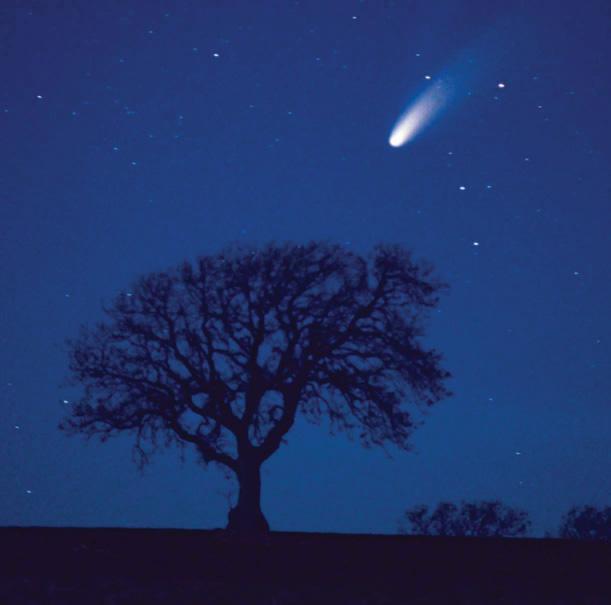
By April 1996, with a year to go until the comet made its closest approach to the Sun, Hale-Bopp had brightened and was now visible in binoculars and small telescopes. As the world celebrated the arrival of 1997, the comet continued to brighten. With no sign of it fizzling out like other promising comets had in the past, observers dared to believe their long wait for a bright naked-eye comet might soon be over.

This story is from the July 2025 edition of BBC Sky at Night Magazine.
Subscribe to Magzter GOLD to access thousands of curated premium stories, and 10,000+ magazines and newspapers.
Already a subscriber? Sign In
MORE STORIES FROM BBC Sky at Night Magazine
BBC Sky at Night Magazine
MOONWATCH
January's top lunar feature to observe

2 mins
January 2026
BBC Sky at Night Magazine
Speed up your processing workflow
How to use Photoshop's Actions tool to drastically cut your processing time
3 mins
January 2026
BBC Sky at Night Magazine
Chasing Canada's polar lights
With solar maximum peaking and a new Moon promising dark skies, Jamie Carter travels to Churchill, Manitoba to hunt the Northern Lights - and dodge polar bears – in Canada's far north
7 mins
January 2026
BBC Sky at Night Magazine
Beyond Pluto: The search for the hidden planets
Could one – or even two - undiscovered planets lurk at the edges of our Solar System? Nicky Jenner explores how close we are to finding the elusive 'Planet 9'
6 mins
January 2026
BBC Sky at Night Magazine
Jupiter moon events
Jupiter is a magnificent planet to observe.
2 mins
January 2026

BBC Sky at Night Magazine
What samples from space have taught us
Alastair Gunn explains what scientists have learnt in the 20 years since the first unmanned mission brought materials back from alien worlds
3 mins
January 2026
BBC Sky at Night Magazine
The Milky Way as you've never seen it before
This is the largest low-frequency radio colour image of our Galaxy ever assembled
1 min
January 2026
BBC Sky at Night Magazine
Merger of ‘impossibly' massive black holes explained
Scientists discover how enormous, fast-spinning black holes can exist after all
1 mins
January 2026
BBC Sky at Night Magazine
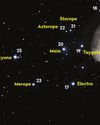
Lunar occultation of the Pleiades
BEST TIME TO SEE: 27 January from 20:30 UT
1 min
January 2026
BBC Sky at Night Magazine
The Universe's expansion may be slowing down
New study suggests current theories of dark energy could be wrong
1 mins
January 2026
Listen
Translate
Change font size