
Go Unlimited with Magzter GOLD
Get unlimited access to 10,000+ magazines, newspapers and Premium stories for just
Master the art of averted vision
BBC Sky at Night Magazine
|April 2023
If you're new to stargazing, a faint object like C/2022 E3 ZTF, the comet that had us all excited earlier this year, isn't the best target for a first look through a telescope - the chances are you won't see a thing.

The eye is a remarkable detector, but to see faint objects like this it helps to understand both its limitations and the tricks you can use to coax the maximum out of its short-exposure capability (unlike a DSLR camera, long exposures aren't an option with the eye).
Of course there are other limiting factors. Light pollution, impatience, a poor night for seeing, and not spending long enough dark-adapting your eyes can all play a part, as can using the wrong magnification and not keeping your telescope's optics clean and well-collimated. But by mastering 'averted vision', you can train your eyes to get the most out of your observing nights and use your retina to greatest effect.
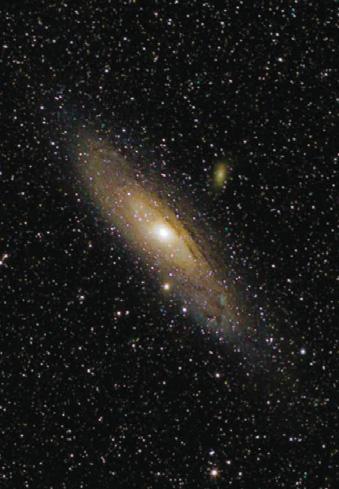
The retina is the thin layer of cells that line the back of the eyeball, where light entering from the pupil is converted into signals for the brain. The eye has two types of detector cells within the retina, called rods and cones. Rods are low-light detectors, whereas cones allow full-colour, high-resolution eyesight. The central one degree of the retina, the fovea, is packed with cones which you are using to read this sentence. Your brain creates the illusion that the whole magazine page is sharp, but in fact you are only seeing a few letters at a time at high resolution and in full colour; your eye muscles are swiftly zipping everywhere and creating the illusion.
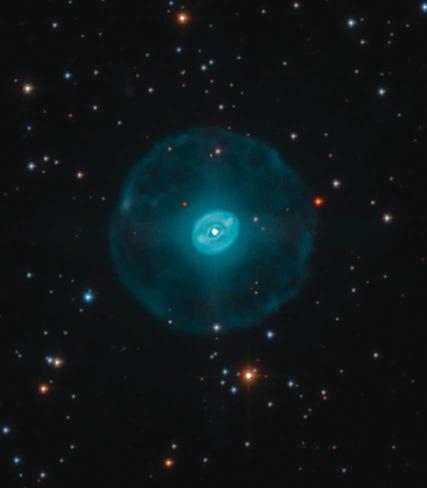
Find your sensitive side

This story is from the April 2023 edition of BBC Sky at Night Magazine.
Subscribe to Magzter GOLD to access thousands of curated premium stories, and 10,000+ magazines and newspapers.
Already a subscriber? Sign In
MORE STORIES FROM BBC Sky at Night Magazine
BBC Sky at Night Magazine
MOONWATCH
January's top lunar feature to observe

2 mins
January 2026
BBC Sky at Night Magazine
Speed up your processing workflow
How to use Photoshop's Actions tool to drastically cut your processing time
3 mins
January 2026
BBC Sky at Night Magazine
Chasing Canada's polar lights
With solar maximum peaking and a new Moon promising dark skies, Jamie Carter travels to Churchill, Manitoba to hunt the Northern Lights - and dodge polar bears – in Canada's far north
7 mins
January 2026
BBC Sky at Night Magazine
Beyond Pluto: The search for the hidden planets
Could one – or even two - undiscovered planets lurk at the edges of our Solar System? Nicky Jenner explores how close we are to finding the elusive 'Planet 9'
6 mins
January 2026
BBC Sky at Night Magazine
Jupiter moon events
Jupiter is a magnificent planet to observe.
2 mins
January 2026
BBC Sky at Night Magazine
What samples from space have taught us
Alastair Gunn explains what scientists have learnt in the 20 years since the first unmanned mission brought materials back from alien worlds
3 mins
January 2026
BBC Sky at Night Magazine
The Milky Way as you've never seen it before
This is the largest low-frequency radio colour image of our Galaxy ever assembled
1 min
January 2026
BBC Sky at Night Magazine
Merger of ‘impossibly' massive black holes explained
Scientists discover how enormous, fast-spinning black holes can exist after all
1 mins
January 2026
BBC Sky at Night Magazine
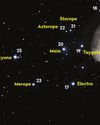
Lunar occultation of the Pleiades
BEST TIME TO SEE: 27 January from 20:30 UT
1 min
January 2026
BBC Sky at Night Magazine
The Universe's expansion may be slowing down
New study suggests current theories of dark energy could be wrong
1 mins
January 2026
Translate
Change font size