कोशिश गोल्ड - मुक्त
Master the art of averted vision
BBC Sky at Night Magazine
|April 2023
If you're new to stargazing, a faint object like C/2022 E3 ZTF, the comet that had us all excited earlier this year, isn't the best target for a first look through a telescope - the chances are you won't see a thing.

The eye is a remarkable detector, but to see faint objects like this it helps to understand both its limitations and the tricks you can use to coax the maximum out of its short-exposure capability (unlike a DSLR camera, long exposures aren't an option with the eye).
Of course there are other limiting factors. Light pollution, impatience, a poor night for seeing, and not spending long enough dark-adapting your eyes can all play a part, as can using the wrong magnification and not keeping your telescope's optics clean and well-collimated. But by mastering 'averted vision', you can train your eyes to get the most out of your observing nights and use your retina to greatest effect.
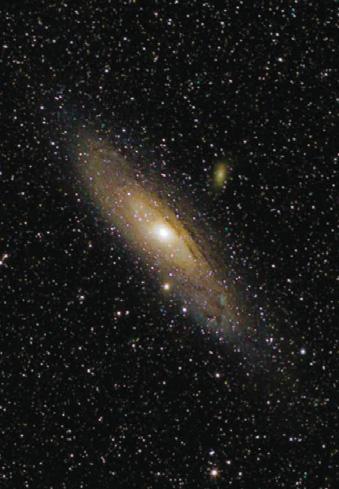
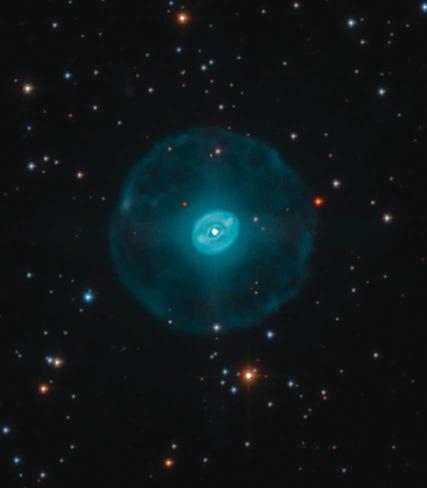
The retina is the thin layer of cells that line the back of the eyeball, where light entering from the pupil is converted into signals for the brain. The eye has two types of detector cells within the retina, called rods and cones. Rods are low-light detectors, whereas cones allow full-colour, high-resolution eyesight. The central one degree of the retina, the fovea, is packed with cones which you are using to read this sentence. Your brain creates the illusion that the whole magazine page is sharp, but in fact you are only seeing a few letters at a time at high resolution and in full colour; your eye muscles are swiftly zipping everywhere and creating the illusion.
Find your sensitive side

यह कहानी BBC Sky at Night Magazine के April 2023 संस्करण से ली गई है।
हजारों चुनिंदा प्रीमियम कहानियों और 10,000 से अधिक पत्रिकाओं और समाचार पत्रों तक पहुंचने के लिए मैगज़्टर गोल्ड की सदस्यता लें।
क्या आप पहले से ही ग्राहक हैं? साइन इन करें
BBC Sky at Night Magazine से और कहानियाँ
BBC Sky at Night Magazine
Crush: Close Encounters with Gravity
Gravity is something that we're all innately familiar with. It keeps our feet on the ground, fights against a rocket trying to leave Earth and governs the movement of the planets and stars.

1 mins
April 2026
BBC Sky at Night Magazine
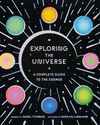
Exploring the Universe
There's no shortage of children's books about astronomy.
2 mins
April 2026
BBC Sky at Night Magazine
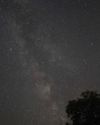
Make your Milky Way images pop
Simple, free processing techniques using FastStone Image Viewer
3 mins
April 2026

BBC Sky at Night Magazine
Nightfaring: In Search of the Disappearing Darkness
This book is a manifesto for dark skies, written as a travel memoir.
1 mins
April 2026
BBC Sky at Night Magazine
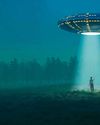
Flying saucers- The making of a modern myth
Our obsession with UFOs goes back further than you might think. Robert Pateman traces how early science fiction, dubious sightings and an alien-mad media led to the 1950s saucer fever
9 mins
April 2026

BBC Sky at Night Magazine
STAR OF THE MONTH
Alphecca, the brightest jewel in the Crown
1 min
April 2026
BBC Sky at Night Magazine
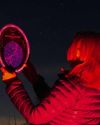
How to use a planisphere
Navigate the sky with the original stargazer's tool. No batteries, apps or Wi-Fi required!
3 mins
April 2026
BBC Sky at Night Magazine
Why rockets don't launch straight up
For a rocket to get its payload into space, it has to follow a curved path. But what would happen if it didn't?
2 mins
April 2026
BBC Sky at Night Magazine
Q&A WITH A DARK MATTER SPECIALIST
Dark matter makes up 27 per cent of all matter in the Universe. So why is it so hard to find? Meet one of the people making a map that leads us to it
3 mins
April 2026

BBC Sky at Night Magazine
Why I want to put a hotel on the Moon
Bored of the beach? Sick of city breaks? Step this way. Space entrepreneur Skyler Chan explains how he'll build a holiday destination on the Moon by 2030
2 mins
April 2026
Translate
Change font size