
Go Unlimited with Magzter GOLD
Get unlimited access to 10,000+ magazines, newspapers and Premium stories for just
How dark is your sky?
BBC Sky at Night Magazine
|November 2025
Discover the Bortle scale, a simple way to judge night-sky quality wherever you are
-
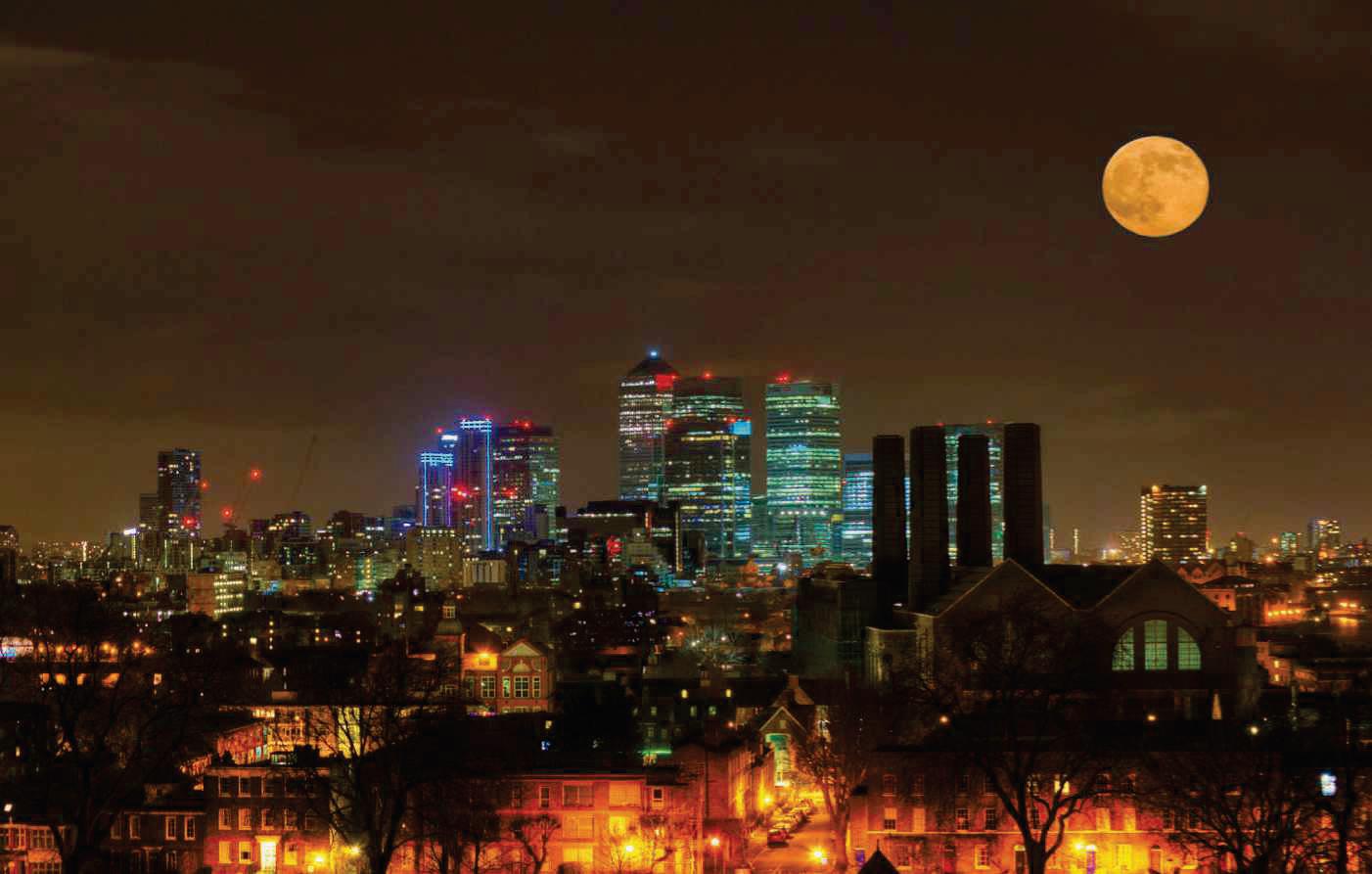
Your new telescope arrives and you plan to take it for a spin through the stars. But a smog of light sits low in the sky, washing away your views to distant galaxies - along with your astronomy dreams. Quickly you realise you need a quality dark-sky site. But how dark is dark? And how do we compare one location's sky to another? Enter the astronomer's friend: the Bortle scale.
Amateur astronomer John E Bortle set out to create a sky-brightness scale that would be easily accessible to stargazers and scientists alike. Launched in 2001, it was quickly adopted by anyone curious about the darkness of their skies, and how theirs stacked up against others.
Light pollution, even in small amounts, impacts our view of the cosmos. Sadly, 99 per cent of Americans and Europeans live under light-polluted skies. This means that the majority of us have to travel if we want to experience a truly dark sky that offers unobscured views of distant stars, galaxies and other phenomena that are otherwise lost to light.
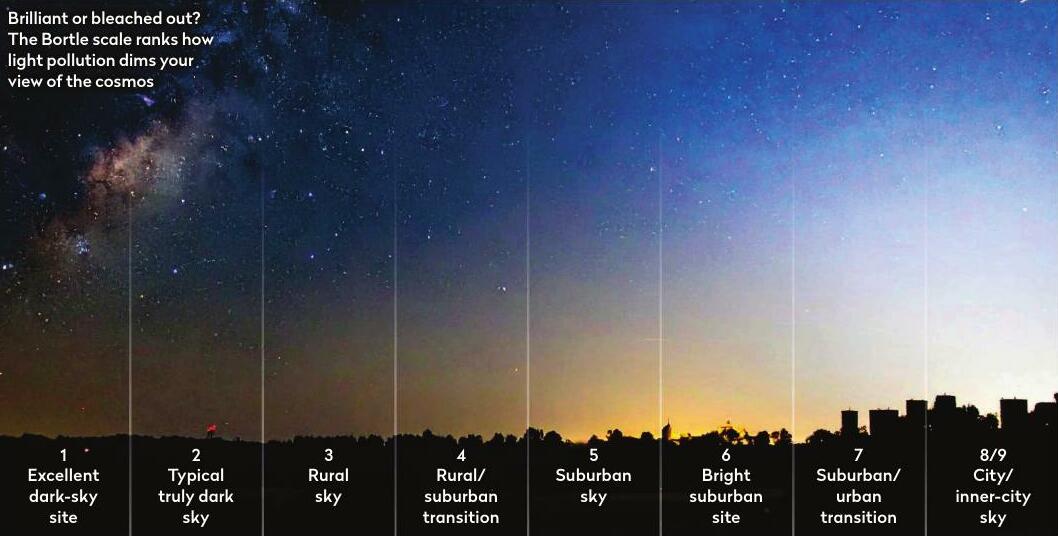 The Bortle scale runs from an increasingly rare Class 1: excellent dark-sky site, to the smothered skies of Class 9: inner-city sky. Here's a breakdown of what each level means, so you know what to expect from any rated stargazing site.
Class 1: Excellent dark-sky site

This story is from the November 2025 edition of BBC Sky at Night Magazine.
Subscribe to Magzter GOLD to access thousands of curated premium stories, and 10,000+ magazines and newspapers.
Already a subscriber? Sign In
MORE STORIES FROM BBC Sky at Night Magazine
BBC Sky at Night Magazine
MOONWATCH
January's top lunar feature to observe

2 mins
January 2026
BBC Sky at Night Magazine
Speed up your processing workflow
How to use Photoshop's Actions tool to drastically cut your processing time
3 mins
January 2026
BBC Sky at Night Magazine
Chasing Canada's polar lights
With solar maximum peaking and a new Moon promising dark skies, Jamie Carter travels to Churchill, Manitoba to hunt the Northern Lights - and dodge polar bears – in Canada's far north
7 mins
January 2026
BBC Sky at Night Magazine
Beyond Pluto: The search for the hidden planets
Could one – or even two - undiscovered planets lurk at the edges of our Solar System? Nicky Jenner explores how close we are to finding the elusive 'Planet 9'
6 mins
January 2026
BBC Sky at Night Magazine
Jupiter moon events
Jupiter is a magnificent planet to observe.
2 mins
January 2026
BBC Sky at Night Magazine
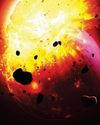
What samples from space have taught us
Alastair Gunn explains what scientists have learnt in the 20 years since the first unmanned mission brought materials back from alien worlds
3 mins
January 2026
BBC Sky at Night Magazine
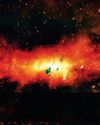
The Milky Way as you've never seen it before
This is the largest low-frequency radio colour image of our Galaxy ever assembled
1 min
January 2026
BBC Sky at Night Magazine
Merger of ‘impossibly' massive black holes explained
Scientists discover how enormous, fast-spinning black holes can exist after all
1 mins
January 2026
BBC Sky at Night Magazine
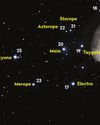
Lunar occultation of the Pleiades
BEST TIME TO SEE: 27 January from 20:30 UT
1 min
January 2026
BBC Sky at Night Magazine
The Universe's expansion may be slowing down
New study suggests current theories of dark energy could be wrong
1 mins
January 2026
Listen
Translate
Change font size