Try GOLD - Free
THE POWER OF HABIT
BBC Science Focus
|August 2023
Our lives are filled with habitual behaviours, both good and bad, but how do they form and how can we build better ones?

The word 'habits' gets thrown around a lot. Your GP encourages you to get into the 'good habit' of eating five portions of fruit and veg a day; your friend worries about their 'bad habit' of checking Twitter before bed; maybe you once had a music teacher who kept on at you to practise your scales until they 'feel habitual'. Or perhaps you've been telling yourself that you want to get into the habit' of going to the gym twice a week.
All this talk makes sense at a colloquial level, but psychologists are more pedantic about it. In fact, not everything you do, or aspire to do, frequently or regularly, is necessarily a habit. Some of the situations above are more about goals (what you hope to achieve at some point in the future), intentions (your plans for what you're going to do) and skills (such as being able to hit musical notes consistently), than about habits per se. Routines - such as going to the gym regularly have the potential to become habitual, but it's not inevitable that they will. So what exactly is a habit? And what does it take to make one that's 'good' or break one that's 'bad'?
WHAT MAKES A HABIT?
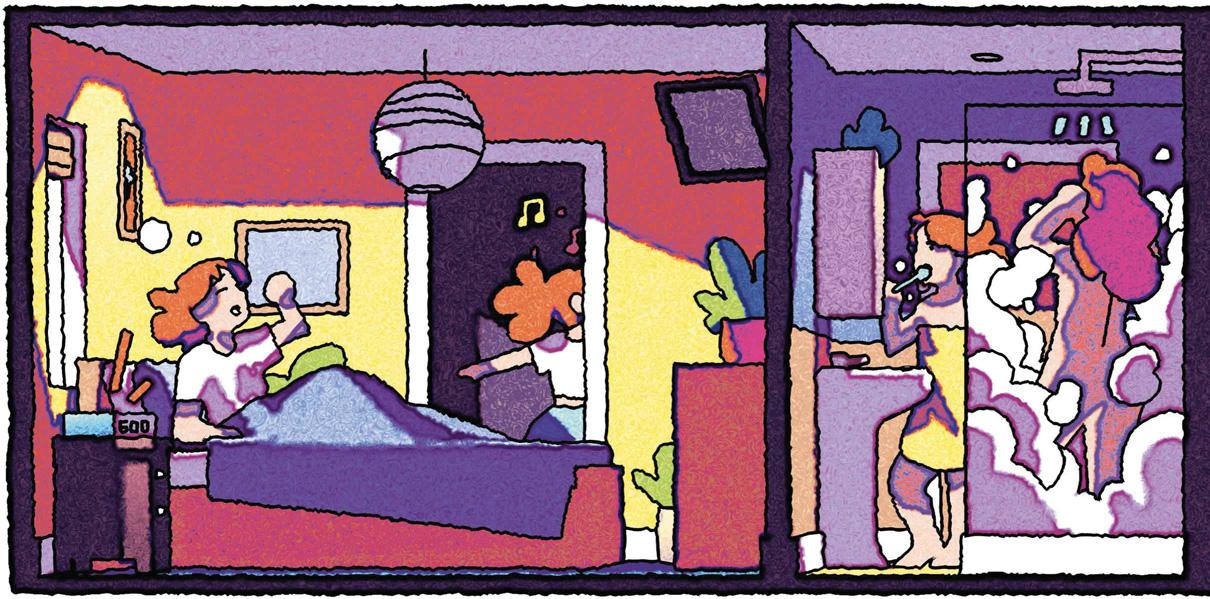
A habit is your brain on autopilot
In psychology, saying that a behaviour has become habitual means something very specific - although there are some niche controversies around the edges of the concept. One key feature of habits has been recognised since at least the time of William James, the American philosopher and historian who's regarded as one of the founders of functional psychology.
As he put it near the start of the 20th century, when it comes to habits, "action goes on of itself". What he meant by that is once something is habitual, you do it without thinking.


This story is from the August 2023 edition of BBC Science Focus.
Subscribe to Magzter GOLD to access thousands of curated premium stories, and 10,000+ magazines and newspapers.
Already a subscriber? Sign In
MORE STORIES FROM BBC Science Focus
BBC Science Focus
World's biggest cobweb is home to 100,000 spiders
Spiders don't normally create such large colonies, so there's no need to worry about finding one in your basement

1 min
February 2026

BBC Science Focus
A dementia vaccine could be gamechanging – and available already
Getting vaccinated against shingles could protect you from getting dementia, or slow the progression of the disease
1 mins
February 2026

BBC Science Focus
DATA IN SPACE
An unusual spacecraft reached orbit in November 2025, one that might herald the dawn of a new era.
7 mins
February 2026
BBC Science Focus
Climate change is already shrinking your salary
No matter where you live, a new study has found warmer temperatures are picking your pocket
4 mins
February 2026

BBC Science Focus
A MENTAL HEALTH GLOW-UP
Forget fine lines. Could Botox give you an unexpected mental health tweakment?
3 mins
February 2026
BBC Science Focus
Most people with high cholesterol gene don't know they have it
Standard testing struggles to detect the condition
1 mins
February 2026

BBC Science Focus
HOW CAN I BOOST MY IQ?
If you're serious about getting smarter, it's time to ditch the brain-training apps
4 mins
February 2026
BBC Science Focus
Humans are absolutely terrible at reading dogs' emotions
Think you can tell how our furry friends are feeling? Think again
1 mins
February 2026

BBC Science Focus
HOW TO TEACH AI RIGHT FROM WRONG
If we want to get good responses from AI, we may need to see what it does when we ask it to be evil
3 mins
February 2026

BBC Science Focus
What Australia's social media ban could really mean for under-16s
Many people think social media is bad for our kids. Australia is trying to prove it
5 mins
February 2026
Translate
Change font size