Try GOLD - Free
SET THE JUICE LOOSE
BBC Science Focus
|April 2023
This month, the JUICE mission blasts off on its eight-year voyage to Jupiter. Once there, it will peer at the planet's moons to find out if life could be lurking beneath their icy crusts...

The Earth has always been believed to be the gold standard for a habitable world. Lessons learnt from life on Earth have told us that if we want to seek life on other planets in the Solar System, we need to find three basic ingredients in the same place at the same time – liquid water, the chemical building blocks of life, and a source of energy. Previously, we thought that these could only be found within a narrow ring around the Sun called the ‘Goldilocks Zone’, or ‘Habitable Zone’. But we were wrong.
Images of Jupiter’s moons taken by the Voyager missions in 1979 and the Galileo spacecraft between 1995 and 2003 completely reshaped our view of the Solar System.
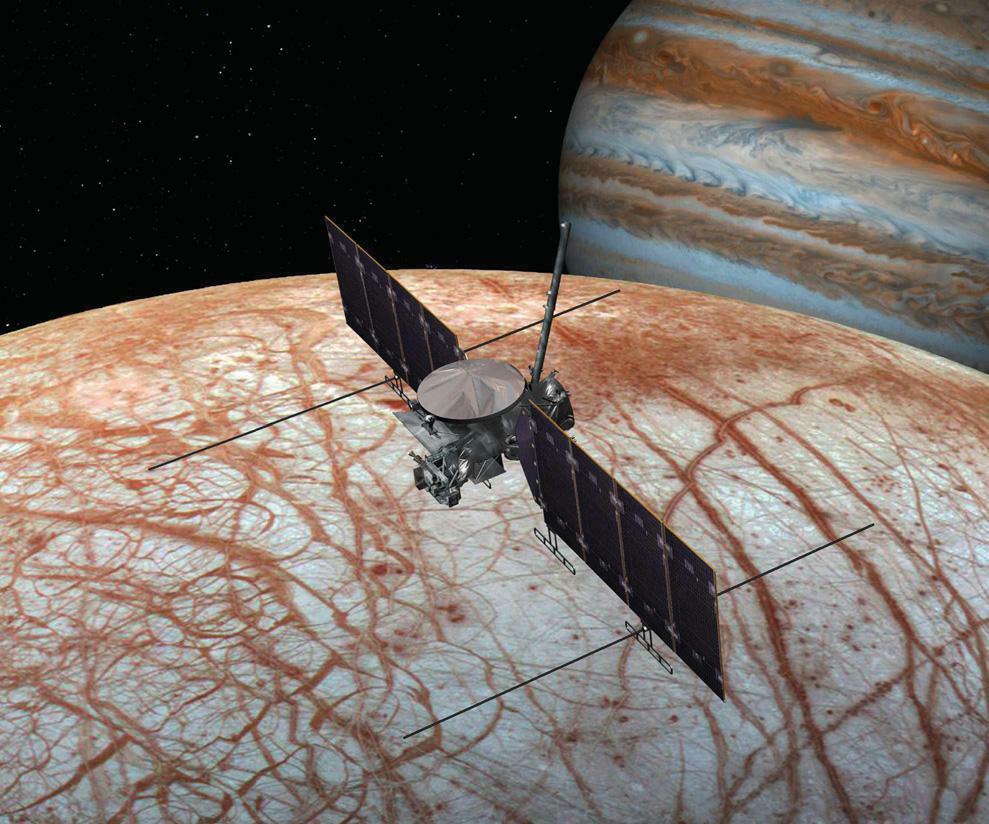
They exposed evidence for liquid water in the outer reaches of our planetary neighbourhood, far from where we thought it should be able to exist. Today, we know that the fourth largest moon of Jupiter, Europa, contains more water than all of Earth’s oceans combined. It turns out that Jupiter, despite being outside our Solar System’s traditional habitable zone, has created a habitable zone all of its own, driven not by the Sun’s warmth – sunlight at Jupiter is 30 times dimmer than at Earth – but by the effects of its incredibly powerful gravity. Given these new ‘cooler’ habitable options, in April this year the JUpiter ICy moons Explorer (JUICE) mission will be sent to Jupiter’s moons to help astrobiologists understand how habitable worlds have emerged in the outer Solar System.


This story is from the April 2023 edition of BBC Science Focus.
Subscribe to Magzter GOLD to access thousands of curated premium stories, and 10,000+ magazines and newspapers.
Already a subscriber? Sign In
MORE STORIES FROM BBC Science Focus
BBC Science Focus
DOES MY BRAIN LIVE A LITTLE IN THE PAST?
Yes, your brain does live a little in the past. It can't help it. The information it receives via your senses is always a little out of date. Whether it's light entering the retinas in your eyes, or sounds vibrating the hairs in your ears, it not only takes time for the data to arrive, but your brain then has to process it.

2 mins
March 2026
BBC Science Focus
ASTRONOMY FOR BEGINNERS
RETURN OF THE EVENING STAR (VENUS)
1 mins
March 2026

BBC Science Focus
CAN YOU STOP YOUR SENSE OF TASTE DULLING AS YOU AGE?
Sometimes I hear people say that food just doesn't taste the same as they get older. It's tempting to blame this on age, but there are other factors at play, too.
1 mins
March 2026
BBC Science Focus
MICROBIOMES OF THE SUPERAGERS
BY STUDYING THE INCREASING NUMBER OF PEOPLE WHO ARE LIVING BEYOND THEIR 100TH BIRTHDAYS, SCIENTISTS ARE DISCOVERING THAT THE SECRET TO REACHING A RIPE OLD AGE IN RUDE HEALTH MIGHT LIE IN OUR GUTS
8 mins
March 2026

BBC Science Focus
HOW BIG WERE MEDIEVAL WAR HORSES?
You might picture knights charging into battle on towering steeds, but medieval horses were typically no bigger than modern-day ponies.
1 min
March 2026

BBC Science Focus
FORCES OF HABIT
Could new research on setting up healthy habits resuscitate those stuttering New Year resolutions?
3 mins
March 2026

BBC Science Focus
5 DANGERS HIDING IN YOUR PROCESSED FOOD
We all know that ultra-processed foods are bad for us, but what ingredients should we particularly try to avoid? And what are they doing to our bodies?
9 mins
March 2026
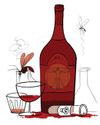
BBC Science Focus
Mosquitoes are becoming thirstier for human blood
Habitat loss may be pushing mosquitoes towards human hosts with deadly consequences
1 mins
March 2026

BBC Science Focus
HOW CAN I GET OVER MY EX?
Relationship breakups can be brutal, just look at the popularity of songs like 'Someone Like You' by Adele, or all the covers of 'Cry Me a River' by Julie London.
1 mins
March 2026
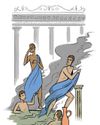
BBC Science Focus
The ancient baths of Pompeii were outrageously filthy
The pre-Roman baths of Pompeii would've been seriously grotty, according to an analysis of mineral deposits
1 mins
March 2026
Translate
Change font size