
Go Unlimited with Magzter GOLD
Get unlimited access to 10,000+ magazines, newspapers and Premium stories for just
YOGA AND AYURVEDA for Children with Autism
Heartfulness eMagazine
|June 2024
PRASAD VELUTHANAR shares a practical approach to autism that has evolved out of his role as an Ayurvedic doctor, and research in the field of Ayurveda.

The incidence of autism in modern societies continues to increase at rates never before observed. In the US and Canada, for example, diagnoses of autistism have increased nearly fiftyfold over the last forty years. Ayurvedic medicine has been very effective in supporting autism, utilizing specialized diets, herbs, yoga, and massage1. Children have improved through treatments that include food elimination, sensitivity testing, herbal supplements, yoga, and social normalization.
Nutrition, probiotics, and immune support
One factor thought to contribute to autism and autism spectrum disorders is impaired serotonin metabolism in the central nervous system. Autistic children contain significantly higher amounts of blood serotonin than normal, indicating a metabolic issue with serotonin (Hoshino et al., 2008).
Autistic children have digestive issues and food sensitivities. Certain foods, additives, and pollutants appear to have a significant impact, e.g., dairy products; nightshade vegetables like tomatoes, eggplants, potatoes, and peppers; citrus fruits; peanuts; preservatives, colors, food additives, insecticides, pesticides, and heavy metals. They may block serotonin metabolism or contribute to gastrointestinal discomfort. These issues may be reduced or avoided by eliminating some of these foods.
Digestion is supported by herbs like ginger, long pepper, black pepper, and the combination of all three, known as Trikatu. Trikatu stimulates the production of digestive enzymes and promotes the absorption of essential nutrients.
Autistic children are more likely to suffer from food sensitivities resulting from improper digestion, often a result of weakened digestive and immune systems. This may cause partially digested food to move into the bloodstream, causing an autoimmune response or a response similar to an allergic reaction.
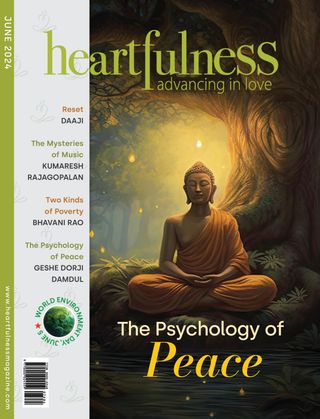

This story is from the June 2024 edition of Heartfulness eMagazine.
Subscribe to Magzter GOLD to access thousands of curated premium stories, and 10,000+ magazines and newspapers.
Already a subscriber? Sign In
MORE STORIES FROM Heartfulness eMagazine

Heartfulness eMagazine
A Touch of Heaven
Irish singer and teacher, EILISH BUTLER, combines the mystical chant of Saint Hildegard von Bingen (1098-1176) with the evolutionary path of Uncovering the Voice, satisfying her passion for mystical spirituality and music.

2 mins
November 2025

Heartfulness eMagazine
FROM INNER STILLNESS TO OUTER AGENCY:
How Heartfulness Builds an Internal Locus of Control and Workplace Success
3 mins
November 2025

Heartfulness eMagazine
Virtual Intelligence
Author and cultural commentator CHARLES EISENSTEIN extends last month's argument about virtual substitutes hollowing out reality-this time to Al's imitation of intimacy-and points to what only embodied relationships can restore.
10 mins
November 2025

Heartfulness eMagazine
Grace Is the Creative Spark
Do you sometimes feel that life is blessed and things are unfolding effortlessly, without force or struggle? Some people say it is because of “grace” or “God’s grace.
5 mins
November 2025

Heartfulness eMagazine
Zuri's Guiding Light
A luminous fable from LIAA KUMAR on self-trust, belonging, and inner guidance.
3 mins
November 2025

Heartfulness eMagazine
I AM
In a quiet meditation on desire, stillness, and the witnessing Self, JARNA KHIMANI traces the shift from seeking to being.
3 mins
November 2025

Heartfulness eMagazine
Courage: From Relief to Presence
JASON NUTTING on why relief is temporary-and how courage, rooted in the heart, endures.
3 mins
November 2025

Heartfulness eMagazine
Embracing The Value Within
DR. ROXANNE M. ST. CLAIR on seeing the value in you—and in others—and making it a daily practice.
4 mins
November 2025
Heartfulness eMagazine
Gratitude's Gift
A Creston woman recently recounted her experience in a checkout line.
2 mins
November 2025

Heartfulness eMagazine
HAPPINESS and Gut Health
Q: How does gut health influence mental well-being, and can practices like meditation actively support a healthier digestive system? The gut is often called the second brain because it has over 500 million neurons that constantly talk to the brain through the vagus nerve.
2 mins
November 2025
Listen
Translate
Change font size